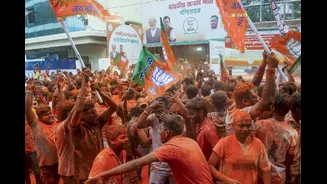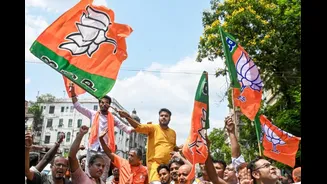





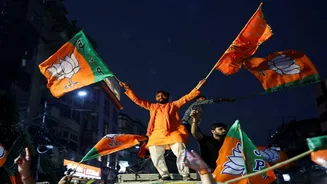


The Bharatiya Janata Party’s sweeping victory in the 2026 West Bengal Assembly elections is being seen as more than a state-level political change. Beyond ending the Trinamool Congress’s 15-year rule,
the result has renewed focus on India-Bangladesh ties, especially border security, illegal immigration and the long-pending Teesta water-sharing agreement.
West Bengal is central to this relationship because it shares a 2,216-kilometre border with Bangladesh, the longest stretch any Indian state shares with the neighbouring country. The border includes riverine areas, densely populated districts and routes that have long been associated with smuggling and illegal infiltration.
The election outcome has already drawn attention inside Bangladesh. Leaders of the Bangladesh Nationalist Party (BNP) welcomed the BJP’s victory and suggested that the political shift in Bengal could improve ties between Dhaka and Kolkata, particularly on the Teesta issue.
Why West Bengal Matters In India-Bangladesh Relations
India and Bangladesh have a relationship shaped by cooperation as well as unresolved disputes. The two countries have worked closely on trade, connectivity and security, while disagreements over river water sharing, migration, border fencing and border-related violence have periodically strained ties.
West Bengal sits at the centre of many of these questions. Any major discussion on Teesta water sharing, border fencing, illegal immigration or cross-border trade directly involves the state.
The BJP’s victory changes the political equation because the Centre and the West Bengal government will now be run by the same party. This could make coordination easier on border infrastructure, intelligence-sharing, trade routes and river negotiations that earlier became politically contentious between Delhi and Kolkata.
The Teesta Water-Sharing Issue Back In Focus
The Teesta River dispute has remained unresolved for decades despite repeated negotiations between India and Bangladesh. Dhaka has argued that reduced water flow during dry months hurts agriculture and livelihoods in northern Bangladesh.
Although India and Bangladesh signed the Ganga Water Treaty in 1996 and later the Kushiyara River Treaty, the Teesta agreement never materialised. India and Bangladesh share 54 rivers, but only two treaties have so far been signed.
During former Prime Minister Manmohan Singh’s Bangladesh visit in 2011, a draft proposal reportedly suggested that Bangladesh would receive 37.5 per cent of Teesta waters while India would retain 42.5 per cent. However, the proposal stalled after opposition from the West Bengal government, which argued that the arrangement would affect the state’s own irrigation and agricultural requirements.
An ad hoc agreement on Teesta waters had earlier been reached in 1983, under which Bangladesh was to get 36 per cent of the flow and India 39 per cent, with the remaining 25 per cent left to be decided later. That arrangement, however, was never fully implemented.
Now, with the BJP replacing the TMC in Bengal, sections within Bangladesh believe negotiations may move forward again.
Speaking to ANI, BNP Information Secretary Azizul Baree Helal directly blamed Mamata Banerjee for blocking the earlier agreement and linked the BJP’s victory to hopes of progress.
“Previously, we saw that Mamata Banerjee was actually the impediment to establishing the Teesta Barrage. Now, in my opinion, since the BJP won the election under Suvendu’s leadership, the Teesta Barrage agreement–which was very much desired by the Bangladesh government and the Modi government–will be helped by Suvendu. I think the Teesta Barrage project will be implemented under the BJP government now that they have seized power instead of the Trinamool Congress,” Helal told ANI.
Helal also said that despite ideological differences between the BNP and the BJP, the two sides were united on certain issues, including the Teesta Barrage and the broader relationship between Bangladesh and India.
The timing is important because the 1996 Ganga Water Treaty is due to expire later this year, making river water-sharing negotiations more significant in India-Bangladesh ties.
Will Border Security Become A Bigger Priority?
The BJP’s Bengal win is also expected to influence India’s security posture along the Bangladesh border.
For years, BJP leaders accused the TMC government of adopting a soft approach towards illegal immigration and demographic changes in border districts. The TMC repeatedly rejected those allegations, but the issue remained politically potent in Bengal.
India has fenced roughly 78-80 per cent of the 4,096-kilometre India-Bangladesh border, but several gaps remain, particularly in difficult riverine areas in West Bengal.
With the BJP now controlling both the Centre and the state, the government could push harder to complete fencing projects, strengthen surveillance and improve coordination between state police and central agencies such as the Border Security Force.
The issue has gained additional sensitivity following concerns over the growing influence of Jamaat-e-Islami in some Bangladeshi border districts adjoining West Bengal. Recent elections in Bangladesh saw the Islamist organisation perform strongly in regions such as Khulna, Rajshahi and Rangpur divisions, raising concerns about possible spillover effects involving radicalisation, smuggling networks and cross-border extremist activity.
Could Trade And Connectivity Move Faster?
While border security is likely to remain a major focus, the political shift in Bengal could also affect trade and connectivity projects between India and Bangladesh.
Kolkata is an important gateway for trade with Bangladesh. With the BJP in power in both Delhi and Kolkata, projects involving border haats, road and rail connectivity, port infrastructure and energy cooperation could see smoother coordination.
The shared Bengali language, culture and social links between West Bengal and Bangladesh also remain important in people-to-people relations. A BJP government in Bengal could try to expand such exchanges while taking a firmer position on border security and illegal immigration.
The Dinesh Trivedi Factor
Another development being closely watched is the appointment of former TMC leader Dinesh Trivedi as India’s High Commissioner to Bangladesh.
Trivedi, who joined the BJP in 2021, has experience in Bengal politics and familiarity with Bengali society. His appointment is significant because India’s engagement with Bangladesh involves issues where West Bengal has a direct role, including border security, trade, migration and cultural ties.
His appointment could therefore help New Delhi engage Dhaka with a better understanding of Bengal’s political and social sensitivities.
What Changes And What Remains Unresolved
The BJP’s victory removes one political friction point that had existed between the Centre and the West Bengal government. This could change the pace of discussions on border fencing, illegal immigration, connectivity and Teesta water sharing.
But the larger challenges remain complicated. The Teesta dispute still involves competing water needs on both sides. Border management remains difficult because of geography, migration pressures and local networks linked to informal trade and smuggling.
Bangladesh’s own political situation will also shape the relationship. The BJP’s win in Bengal may create more coordination between Delhi and Kolkata, but the future of India-Bangladesh ties will also depend on how Dhaka responds to issues such as Teesta, border security and minority concerns.