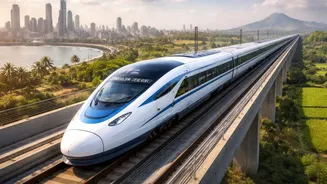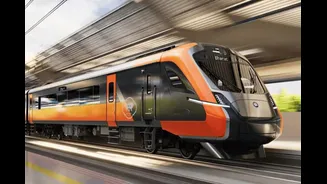






The Vande Bharat train is expected to achieve speeds of up to 350 kmph in the future, positioning it among the world’s fastest train systems. The Ministry of Railways said this development underlines India’s
growing focus on next-generation high-speed rail travel.
Railway officials said the upcoming Vande Bharat 4.0, scheduled for launch in 2027, will initially be designed for operations at very high speeds on dedicated corridors. As part of its long-term vision, the Rail Ministry has also stated that nearly 4,500 Vande Bharat trains are planned to be running across the country by 2047, marking a major expansion of the network.
The Vande Bharat journey began in February 2019 with the launch of its first trainset. This was followed by Version 2.0 in September 2022 and Version 3.0 in 2025. In 2026, Indian Railways introduced the Vande Bharat Sleeper variant to support long-distance overnight travel.
Building on this evolution, Indian Railways is now developing Vande Bharat 4.0, which is aimed at setting new benchmarks in speed, safety and passenger comfort. Railway expert Sudhanshu Mani said the next-generation train is being planned for high-speed corridors, with the Ahmedabad–Mumbai route under consideration.
According to official details, Vande Bharat 4.0 is envisaged to be equipped with Kavach 5.0, the latest version of India’s indigenous Automatic Train Protection system, strengthening safety standards.
Officials said the new model will focus on superior passenger experience, with upgrades planned in seating, toilet facilities, interior finish and overall coach quality. The trainsets are also being positioned as a potential export product, reflecting the increasing maturity of India’s indigenous rail technology.
Key Features Of The Vande Bharat:
Semi-permanent jerk-free couplers and improved suspension for smoother ride comfort
Regenerative braking system to improve energy efficiency
Indigenous KAVACH Automatic Train Protection system to prevent collisions, overspeeding and signal violations
Centrally controlled automatic plug doors with wider, fully sealed gangways
Modern air-conditioning with indigenously developed UV-C lamp-based disinfection
CCTV cameras, emergency alarm push buttons and passenger–crew talk-back units in all coaches
Coach Condition Monitoring System (CCMS) with remote monitoring
Bio-vacuum toilets and Divyangjan-friendly lavatories
GPS-based passenger information system and ergonomically designed seating for improved travel comfort
In the long term, Indian Railways aims to operate future versions of Vande Bharat on dedicated high-speed corridors capable of supporting speeds of up to 350 kmph, marking a significant milestone in the country’s railway modernisation drive.