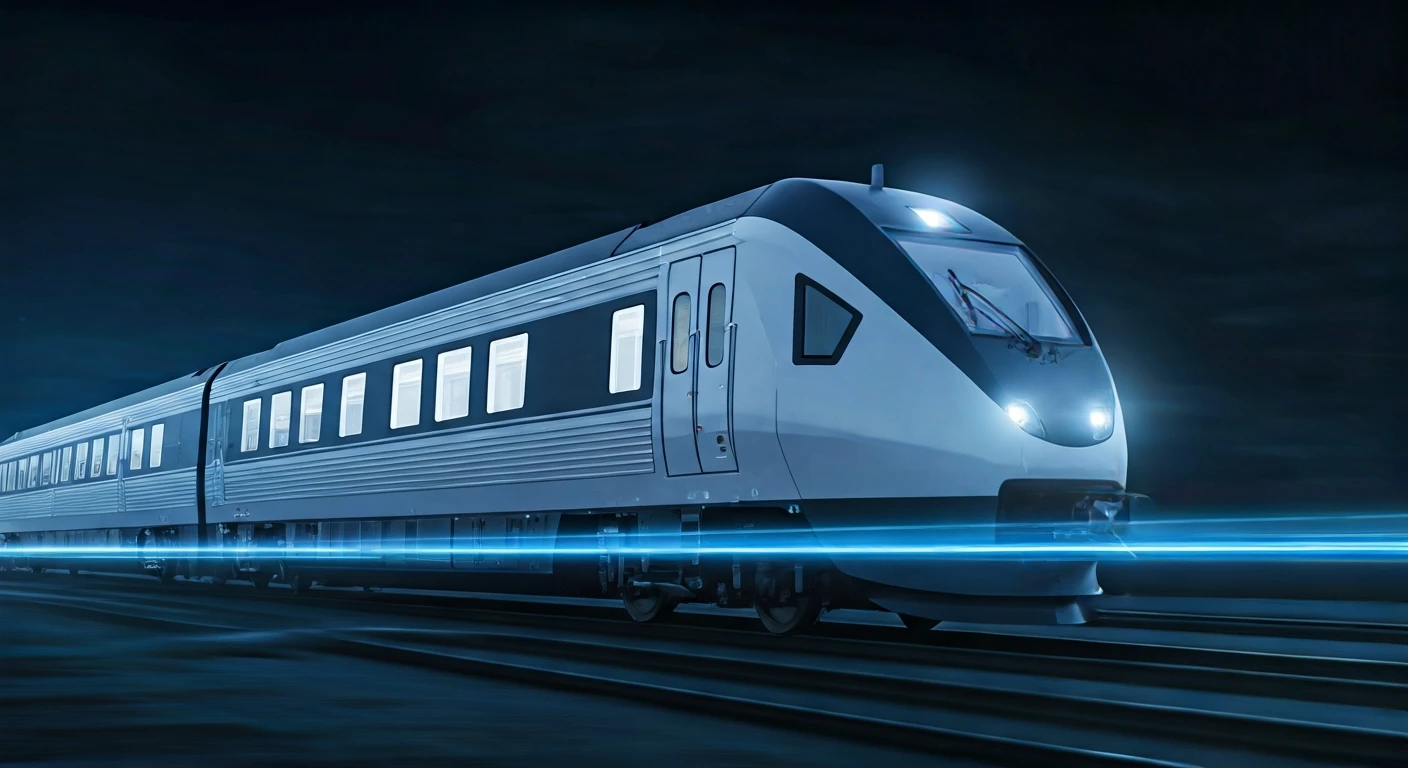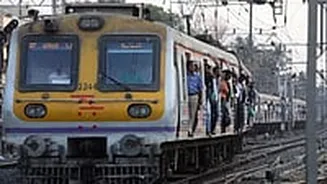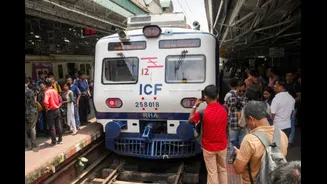




In a move that could fundamentally reshape daily commuting in the country’s busiest rail network, Railways has unveiled India’s first non-AC local train with automatic doors, a long-awaited safety intervention
triggered by years of fatal overcrowding incidents, The Indian Express reported.
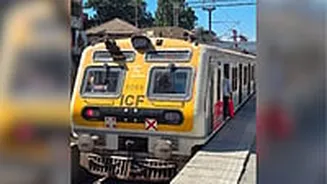
The 12-car rake, rolled out at the Kurla Carshed in Mumbai, is yet to enter passenger service and will first undergo mandatory certification trials by the Research Designs and Standards Organisation (RDSO). Officials said that the process could take around 3 months before the train is cleared for public use.
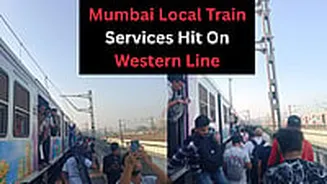
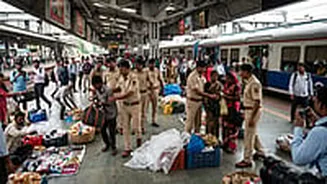
The introduction of closed-door non-AC trains follows the June 2025 Mumbra tragedy, where five commuters died after falling off overcrowded locals. Within hours, the Railway Board mandated automatic door systems for all new non-AC suburban rakes.
According to data cited by The Indian Express, between January 2014 and May 2025, as many as 6,760 commuters died after falling from overcrowded trains, while 14,257 were injured, incidents almost entirely linked to open-door non-AC coaches.
In stark contrast, AC local trains, which already have automatic doors, have recorded zero fall-related deaths.
Yet affordability remains a barrier. A non-AC ticket from Churchgate to Virar costs about Rs 20, compared to Rs 115 for an AC train, making non-AC locals indispensable for the majority of Mumbai’s 66 lakh daily commuters.
What’s inside the new train
The newly unveiled rake, manufactured by the Integral Coach Factory (ICF), is reportedly designed to balance safety with affordability.
Basic specifications
- Total coaches: 12
- Total capacity: 5,698 passengers
- Seats: 1,003
- Compartments: 19 (including luggage sections)
- Reserved coaches: Ladies, Divyang-friendly, First Class
The rake includes 8 second-class and 4 first-class coaches, with dedicated spaces for women and specially-abled passengers, along with luggage compartments.
How the automatic door system works
At the heart of the upgrade is a fully automated door mechanism designed to prevent footboard travel, a leading cause of fatalities.
- Doors open in about 3 seconds and close in 4 seconds
- 30-second dwell time aligned with station halts
- Obstruction detection system to prevent accidents
- Interlocking mechanism ensures the train cannot move unless doors are shut
- Anti-drag features prevent passengers from being pulled along
“The non-AC EMU is a significant upgrade over conventional open-door EMUs. It will prevent unsafe boarding and alighting from moving trains. It will also reduce accidents caused by open doors, and bring discipline among passengers with controlled boarding of the train,” Indian Express quoted an ICF official as saying.
The ventilation challenge
The biggest hurdle in designing a closed-door non-AC train has been ventilation. Earlier trials showed carbon dioxide levels rising up to 2.5 times inside sealed coaches.
To tackle this, Railways has introduced a redesigned airflow system:
- Louvred doors (angled slats) to allow air circulation
- Larger windows (nearly double width compared to older coaches)
- Upgraded roof-mounted ventilation units (10,000 cubic metres/hour vs 6,000 earlier)
- Three types of windows for airflow diversity
- Up to two-thirds openable window area
These changes aim to ensure passengers don’t feel suffocated even during peak-hour crowding.
Additional safety and comfort upgrades
Beyond doors and ventilation, the rake introduces several modern features:
- Fire detection systems
- Modified alarm mechanisms to reduce misuse
- Passenger information display systems
- Emergency talk-back units near doors
- Sealed gangways for movement between coaches
- Internal sliding doors for backup exit routes
- Improved seating layout with better legroom
Central Railway’s Chief Public Relations Officer Swapnil Nila reportedly said, “At this stage, we cannot specify the trial duration. RDSO will conduct multiple tests, including stability and obstruction checks.”
Mumbai’s suburban railway is among the busiest in the world, spanning 376 route kilometres across Central and Western Railways. Over 3,200 services run daily across five corridors.
- Western Railway: 1,414 services (including 133 AC)
- Central Railway: 1,820 services (including 94 AC)
Despite this massive capacity, overcrowding remains chronic, making safety upgrades like this critical. Officials told Indian Express that the current rake is still a prototype and must pass multiple rounds of testing, especially to ensure passenger comfort under extreme crowding.
Meanwhile, a larger transition is already underway. Under the Mumbai Urban Transport Project (MUTP)-III and IIIA:
- 238 AC trains have been sanctioned
- Estimated cost: Rs 19,293 crore
- Expected rollout: Starting 2028
These could eventually replace the entire suburban fleet with fully air-conditioned trains. For now, the new closed-door non-AC local represents a crucial middle path, combining the safety of AC trains with the affordability of traditional locals.