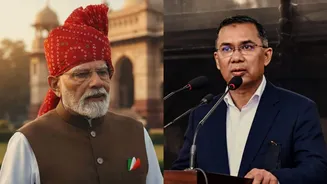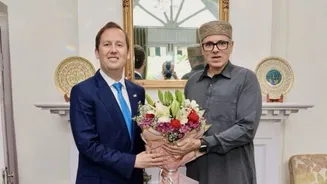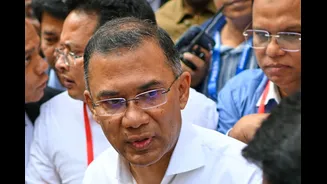





Bangladesh Prime Minister Tarique Rahman’s visit to India will hinge on an appropriate environment based on “mutual trust” and “confidence”, said the country’s Foreign Affairs Adviser Humaiun Kobir, adding
that no top-level visit should come at the expense of national interest.
In an interview with state-run BSS News, Kobir said that Dhaka will show a “positive attitude” towards participating in the BRICS Summit only if a “suitable environment is created based on consensus” between the two nations.
“There is no justification for rushing into a top-level visit by going beyond the national interest,” he said, while terming reports of Rahman’s visit to New Delhi “baseless and assumption-driven”.
On India-Bangladesh Relations
Kobir, who also serves as the Joint Secretary General of BNP’s International Affairs Committee, shed light on the relations between India and Bangladesh, with special reference to the 2024 mass uprising in Dhaka that led to the fall of Sheikh Hasina government.
Speaking to the BSS News, he said that the future course of bilateral ties with India as well as a top-level visit by Bangladesh’s head of State would depend on a “change in the mindset” or the approach of India’s leadership.
“The neighbouring country must properly understand the reality of Bangladesh’s July Mass Uprising, which took place through the sacrifices of more than 1,500 people,” he said.
Sheikh Hasina’s 1st Appearance Since Unrest
Bangladesh’s former Prime Minister Sheikh Hasina made her first virtual media appearance from New Delhi on August 5, 2026. Since her exile from Bangladesh –– following massive student-led protests –– Hasina has been residing in India, a source of friction in ties between New Delhi and Dhaka.
During the address via audio link hosted through the Foreign Correspondents’ Club of South Asia, the Awami League leader vowed to return to Bangladesh in December despite facing legal cases and a death sentence.
Bangladesh had lodged protest over Hasina’s event and asked India to clarify its stance. However, the country also maintained that it did not want to “spoil ties” with New Delhi.
After this, India stated that the programme was wholly organised by a private entity and that the Centre had no role in it.