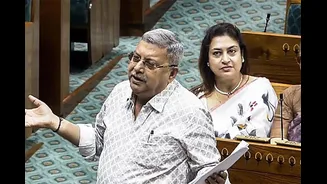











The battle within the Trinamool Congress (TMC) is set to enter a crucial phase as rebel MPs travel to Delhi ahead of a planned meeting with Lok Sabha Speaker Om Birla on Monday. The dissident lawmakers
are preparing to seek recognition as the “Asli TMC” and are expected to finalise their strategy before meeting the Speaker.
The development comes amid a widening confrontation between the rebel camp and the Mamata Banerjee-led leadership, with both sides citing legal arguments to support their claims.
What are the rebel TMC MPs planning?
The rebel TMC MPs left for Delhi on Sunday and are expected to hold discussions before meeting the Lok Sabha Speaker.
According to sources, the agenda includes taking stock of the signatures already secured by the group, assessing whether more MPs are likely to join, and examining the legal provisions on which they believe they have a strong case.
The group is also expected to prepare its response to legal objections raised by the Mamata Banerjee camp. All MPs who have signed the letter backing the rebel move have reportedly been asked to be present ahead of the Speaker meeting.
Kakoli hints at more MPs support
Rebel MP Kakoli Ghosh Dastidar indicated that the dissident camp could grow further.
“We are all kings. There are two more leaders as well. I had earlier spoken about 20; that number will become 22. Those who are joining are in regular contact with us,” she said. Her remarks came amid speculation over the future role of senior TMC leader Sudip Bandyopadhyay and reports that more leaders could align with the rebels.
Legal notice from Kakoli’s son
The political dispute has also taken a legal turn. Baidyanath Ghosh Dastidar, son of rebel MP Kakoli Ghosh Dastidar, has issued a legal notice to Mamata Banerjee and several senior TMC leaders, including Mahua Moitra, Kalyan Banerjee, Sougata Roy and Sonali Guha.
In the notice, he denied allegations that he had sought a party ticket from the Barasat Assembly constituency. He stated that he had no political ambition regarding the seat and demanded a public clarification and apology within 15 days, acknowledging that he neither sought nor desired a nomination from the constituency.
What is TMC’s legal argument?
The Mamata Banerjee camp has relied on the Anti-Defection Law to challenge the rebels’ position.
TMC Rajya Sabha MP Sagarika Ghosh cited Paragraph 4 of the Tenth Schedule of the Constitution and argued that MPs or MLAs can avoid disqualification only if their original political party merges with another party.
According to her, there is no legal provision for a separate group operating within Parliament or an Assembly while retaining membership won on the original party’s symbol. She argued that lawmakers must either be part of a merger or face disqualification.
TMC MP Kirti Azad made a similar argument, saying there is no constitutional provision for a separate faction. He said that even if two-thirds of MPs or MLAs leave, the political party consists of more than just legislators and that a merger of the party itself is required under the law.
Paragraph 4, Tenth Schedule (Anti-Defection Law) of the Constitution of India. An MP or MLA will LOSE THEIR SEAT or be DISQUALIFIED under anti-defection law UNLESS their original political party MERGES with another party; and
They either:
*Join the new/merged party, or
*Refuse to… pic.twitter.com/lpreoNgY6h— Sagarika Ghose (@sagarikaghose) June 14, 2026
What does the Anti-Defection Law say?
Paragraph 4 of the Tenth Schedule provides protection from disqualification in cases where a political party merges with another party.
The provision requires the support of at least two-thirds of the members of the party in the legislature. Legislators who are part of such a merger are protected from disqualification under the Anti-Defection Law. The provision was designed to permit genuine political mergers while discouraging smaller breakaway groups.
An earlier provision, Paragraph 3, allowed splits if one-third of legislators disagreed with the party. However, that provision was removed through the 91st Constitutional Amendment Act, 2003. As a result, mergers supported by at least two-thirds of legislators remain the only exemption available under the law.
With both camps preparing competing legal arguments, the Speaker meeting on Monday is expected to become the next major stage in the fight over who can claim to represent the “Asli TMC”.