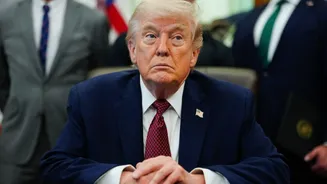



At a time when the United States and Iran appeared to be on the brink of renewed escalation, US President Donald Trump announced an indefinite extension of the ceasefire, citing a direct request from Pakistan’s
leadership. The move not only delays potential military action but also places Islamabad at the centre of a fragile and evolving diplomatic process.
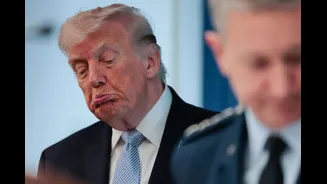
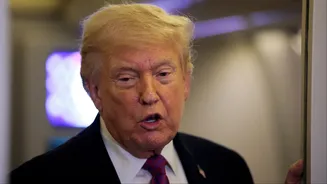
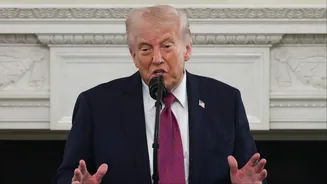
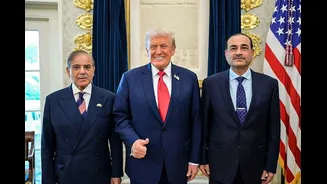
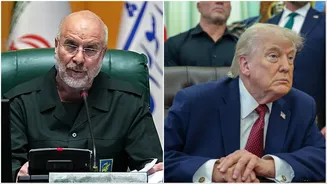
In a Truth Social post, Trump said the United States had agreed to “hold our Attack on the Country of Iran” “upon the request of Field Marshal Asim Munir, and Prime Minister Shehbaz Sharif, of Pakistan”, adding that the decision was also driven by the assessment that Iran’s government is “seriously fractured” and needs time to present a “unified proposal”.
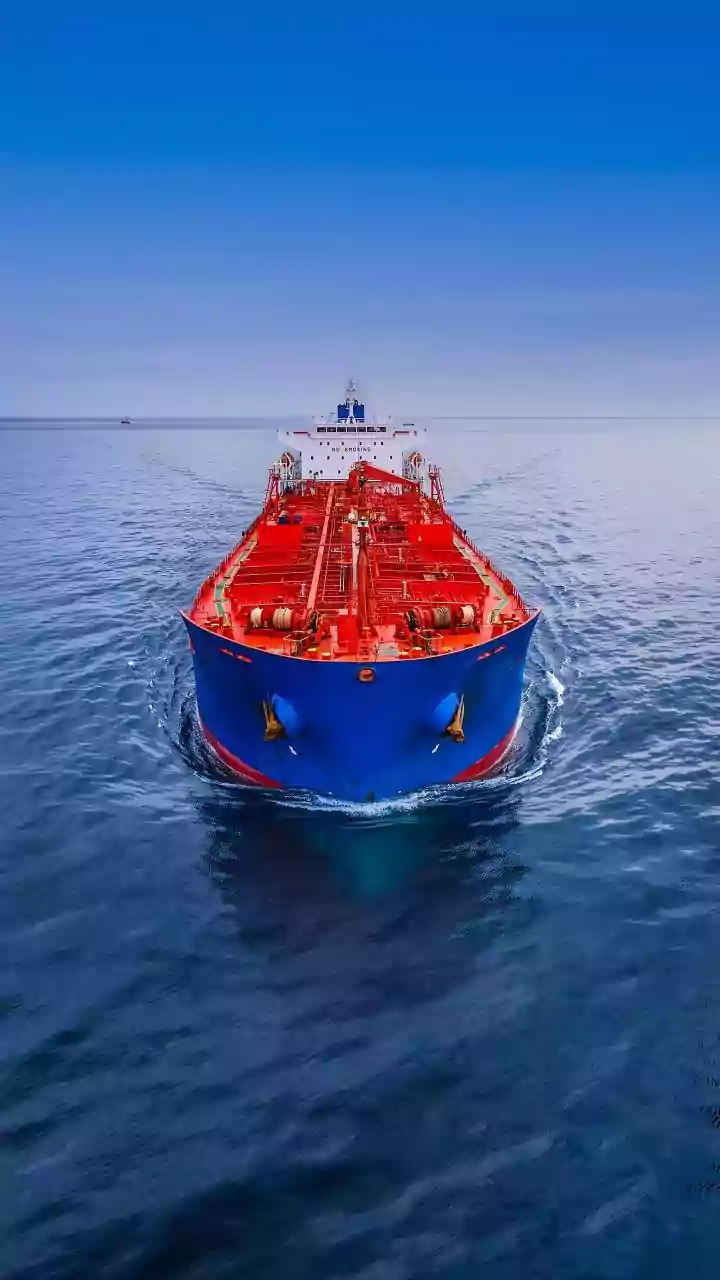
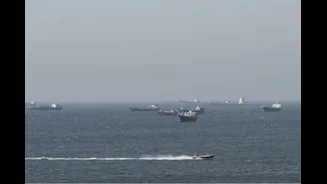
He further said the ceasefire would remain in place “until such time as their proposal is submitted and discussions are concluded, one way or the other.” Even as the ceasefire has been extended, the US has kept pressure intact, maintaining the blockade of Iranian ports along the Strait of Hormuz and signalling that its military remains “ready and able”.
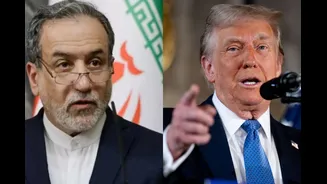
The timing of the announcement is significant. Just hours before the ceasefire was about to end, there was deep uncertainty around the talks process. A planned visit by US Vice President JD Vance to Islamabad had been called off, Iran had refused to negotiate under what it described as the “shadow of threats”, and tensions escalated further after the capture of an Iranian vessel. Against this backdrop, Pakistan’s intervention appears to have helped avert immediate escalation, at least temporarily.
Why Is Pakistan Pushing So Hard To Mediate?
Pakistan’s role as a mediator is driven less by ambition and more by necessity, shaped by economic vulnerability, geographic exposure, and complex geopolitical ties.
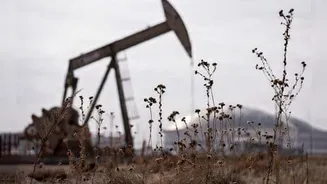
At the core is energy dependence. Pakistan relies heavily on fuel imports routed through the Strait of Hormuz, making any disruption in the region immediately damaging. A report by the Pakistan Institute of Development Economics warned that “rising oil prices increase the import bill, intensify inflationary pressures, and place downward pressure on the exchange rate, thereby slowing economic activity.” It added that prolonged disruption “can elevate industrial input costs and weaken overall business confidence” while widening the trade deficit and straining external financing.
These pressures are particularly acute because Pakistan is currently operating under an IMF programme that requires maintaining foreign exchange reserves. Increased spending on energy imports directly undermines that requirement. The crisis has already forced austerity measures, including reduced working days for public employees and temporary closures of schools to conserve energy.
Geography adds another layer of urgency. Pakistan shares a 900-km border with Iran, making it vulnerable to instability spilling over into its territory. The border region, particularly Balochistan, has a history of insurgency and cross-border militant activity, raising concerns that prolonged conflict could intensify security challenges.
There is also a domestic dimension. Pakistan has a Sunni majority but also one of the world’s largest Shia populations, estimated at between 10 and 25 per cent. While sectarian violence has generally been contained, tensions have deep historical roots and have resurfaced during the current conflict, including protests linked to developments in Iran.
Geopolitically, Pakistan is balancing multiple relationships—with the United States, China, Iran, and Gulf countries such as Saudi Arabia. A prolonged war risks straining these ties simultaneously. As Ali Chishti, a defence and security expert, noted, Pakistan’s concerns are twofold: preventing instability from a weakened Iran and avoiding the regional consequences of an emboldened one. In that sense, mediation efforts are effectively “survival tactics”.
How Did Pakistan Become The Key Intermediary?
Pakistan’s emergence as a mediator is rooted in both historical positioning and recent strategic developments.
Iran’s lack of trust in traditional Western diplomatic venues created space for alternative intermediaries. Pakistan, with longstanding ties to both Washington and Tehran, was able to step into that role. It has also represented Iranian interests in Washington since the 1979 revolution, adding to its credibility.
Former Pakistani diplomat Ali Sarwar Naqvi told The Guardian “Pakistan has the confidence of all the permanent members of the [UN] Security Council. And Pakistan also has the trust of Iran…Pakistan is a big country with nuclear capability, and it is strategically located.”
A crucial factor has been the role of Army Chief Asim Munir, widely seen as the most powerful figure in Pakistan’s political structure. His personal rapport with Trump has been described as a key driver of Islamabad’s diplomatic leverage. Close ties between US administrations and Pakistan’s military leadership are not new, but recent engagements—including high-level meetings in Washington—have reinforced this channel.
Pakistan’s internal power structure has also shaped its approach. While Prime Minister Shehbaz Sharif has handled outreach to regional partners, Munir has taken the lead in engaging with Washington, reflecting what analysts describe as a “hybrid regime”.
“This hybrid regime in Islamabad, with Field Marshal Munir and PM Sharif, has cracked the code for Pakistan. Asim Munir, due to his intel jobs, has a strategic mind which is reinforced by PM Sharif’s great diplomacy. A win-win for Pakistan in geopolitics, geoeconomics and geostrategy,” said Chishti.
What Does Pakistan Stand To Gain?
Pakistan’s mediation efforts have already begun to reshape its global image.
From being described in 2022 by then US President Joe Biden as “may be one of the most dangerous” countries in the world with “nuclear weapons without any cohesion”, Islamabad is now being seen as a key actor in preventing escalation in a conflict with global implications.
This shift could translate into diplomatic and economic gains. Pakistan hopes that a stronger international profile will help attract foreign investment and improve access to financial support, which is critical given its economic challenges. There are already signs of this, including economic engagements with the US in areas such as critical minerals and digital finance.
The role also strengthens Pakistan’s case for greater participation in global forums. Recognition from international actors, including the European Union and Gulf countries, has added to this momentum.
However, there are cautions. Chatham House associate fellow Dr Farzana Shaikh wrote in an article that while Pakistan’s emergence as a mediator represents a “dazzling reinvention”, its credibility is complicated by ongoing military campaign against Afghanistan, historically uneasy relations with Iran, and the ambiguous terms of its yet to be ratified mutual defence agreement with Saudi Arabia.
Historical precedent also tempers expectations. Pakistan played a key role in facilitating US-China rapprochement in 1971, anticipating strategic gains that ultimately did not materialise in the way it had hoped.
What Are The Risks For Pakistan?
The risks associated with this role are significant.
If negotiations collapse—particularly given the unpredictability of US decision-making—Pakistan could be blamed for the failure. There are already concerns that it may be perceived as advancing US interests rather than acting as a neutral mediator.
Moonis Ahmar, former head of the International Relations department at the University of Karachi, warned that while Pakistan’s role has been “pivotal”, it could find itself in an “awkward” position if the US shifts its stance or fails to follow through.
“Pakistan’s diplomatic role to stop the war has been pivotal. Pakistan has been able to make sure that it has regional clout. However, it needs to be careful. If the US again tries to betray Iran, Pakistan’s position will be very awkward,” he told Indian Express.
Domestically, the optics are sensitive. Sections within Pakistan remain sceptical of the US, and any perception of bias could trigger backlash.
There is also the broader question of whether Pakistan’s diplomatic gains will translate into lasting economic or strategic benefits, especially given past experiences where expectations from US partnerships have not been fully realised.
What Does This Mean For India?
For India, the implications are mixed.
In the immediate term, de-escalation in West Asia is positive. Stability in the region helps ease pressure on global oil prices and ensures smoother energy flows, both of which are critical for India’s economy.
However, the longer-term picture is more complex.
A Pakistan that is diplomatically active and internationally engaged is not necessarily aligned with India’s strategic interests, particularly if it reduces Islamabad’s isolation.
More importantly, the developments highlight the growing influence of Pakistan’s military leadership. Historically, periods of stronger civilian control in Pakistan have coincided with relatively more stable ties with India, while a dominant military establishment has often taken a harder line.
The increased global visibility of Pakistan as a “facilitator of peace” could also reshape international engagement with it, including in defence and economic cooperation. That, in turn, could have implications for regional dynamics.