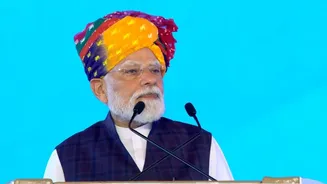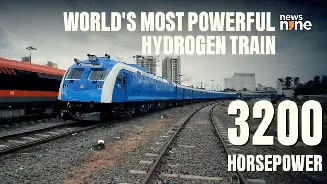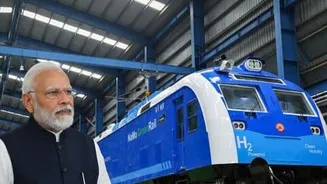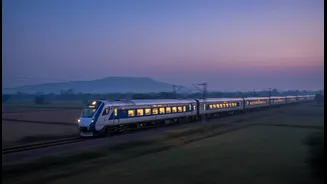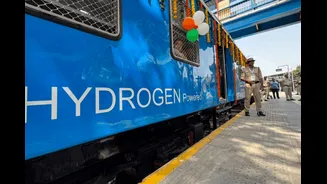







Prime Minister Narendra Modi on Friday flagged off India’s first hydrogen-powered train in Haryana, marking a significant step in the country’s efforts to adopt cleaner transportation technologies. The
train is a milestone for Indian Railways. How much does a hydrogen train cost?
The hydrogen train project was first conceived in 2020-21, when Indian Railways sanctioned Rs 136 crore for a pilot project to retrofit a Diesel Electric Multiple Unit (DEMU) rake for the 89-km Jind-Sonipat section in Haryana. In 2022, Hyderabad-based Medha Servo Drives was awarded the contract to convert the diesel train into a hydrogen fuel-cell-powered train. The company later partnered with Canada’s Ballard Power Systems to supply the fuel-cell system, while Green H Electrolysis built a 1 MW green hydrogen production and refuelling facility at Jind.
Over the next three years, the Research Designs and Standards Organisation (RDSO) developed the technology by replacing the diesel propulsion system with hydrogen fuel cells, lithium batteries and new power systems. After completing technical and safety trials, including a top-speed trial of 120 kmph, the train received approval to begin operations on the Jind-Sonipat route in May 2026.
Rs 80 crore per train, plus Rs 70 crore for infrastructure
According to Indian Railways, each hydrogen-powered train under the ‘Hydrogen for Heritage’ initiative is estimated to cost around Rs 80 crore. In addition, around Rs 70 crore is spent on developing hydrogen production, storage and refuelling infrastructure for every route where these trains are introduced.
The Railways plans to deploy 35 hydrogen-powered trains on heritage, hill and other non-electrified routes where conventional electrification is either technically challenging or economically unviable.
A conventional diesel multiple unit (DEMU) is estimated to cost around Rs 20-40 crore, depending on its configuration.
Why is a hydrogen train so expensive?
Hydrogen trains are significantly more expensive than conventional diesel trains because they require advanced fuel-cell technology, high-pressure hydrogen storage tanks and dedicated refuelling infrastructure. Unlike diesel trains, they cannot use existing fuel depots and require an entirely new hydrogen ecosystem.
However, hydrogen-powered trains produce only water vapour as emissions, making them an attractive option for routes where electrification is difficult or not commercially viable.
Why is Indian Railways investing in hydrogen?
The hydrogen train project is part of Indian Railways’ broader strategy to achieve net-zero carbon emissions by 2030 while supporting the National Green Hydrogen Mission.
After this pilot project, similar trains are expected to be introduced on heritage and hill railway routes such as the Nilgiri Mountain Railway, Darjeeling Himalayan Railway and Kangra Valley Railway, reducing dependence on diesel-powered locomotives.
How much does a ticket cost?
Despite the advanced technology, passengers will not have to pay a premium to travel on the hydrogen train. According to railway officials, fares start at Rs 5, with the maximum ticket price capped at Rs 25, depending on the distance travelled. Passengers travelling on the inaugural service also purchased tickets priced at Rs 5.