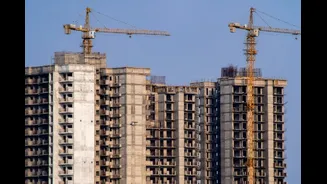










India’s residential real estate market has seen strong growth over the past years, with the average housing price in some cities growing at double digits between 2021 and 2025. However, this has also resulted
in a widening affordability gap. Tier-1 markets such as Gurugram, Bengaluru, Hyderabad and Mumbai have recorded unprecedented price appreciation, making homeownership increasingly difficult for lower and middle-income buyers.
According to PropEquity, the average housing price more than doubled between 2021 and 2025 in Gurugram and is growing at a CAGR of nearly 15.5–16.5%, almost three times faster than the growth in urban household incomes. Bengaluru also recorded a robust annual appreciation of 11-12%, Hyderabad saw growth of 6-7% and Mumbai 5.5-6.5% during this period. While this reflects strong investor confidence and demand from high-income and NRI buyers, they have, however, pushed affordable and mid-income housing further out of reach for a large section of end-users.
PropEquity data further suggests that between 2021 and 2025, the share of affordable and mid-segment housing sales declined sharply in every market. Gurugram witnessed the most pronounced transformation, with the share of homes priced below Rs 1.5 crore falling from 69% to just 3% of total sales, reflecting its rapid evolution into a predominantly premium housing market. Bengaluru saw a sales share decline to 35% in 2025 from 82% in 2021.
Umesh Gowda H.A, chairman and founder of Sanjeevini Group, said the escalating land prices, higher construction costs, and increasing compliance expenses have significantly squeezed developers’ margins, making it difficult to launch projects at affordable and mid-income price points.
“Another challenge is the limited availability of well-connected land parcels within city limits. As a result, many affordable housing projects are pushed to peripheral locations where social infrastructure, public transport and employment hubs may still be evolving, impacting buyer interest. Access to low-cost financing for both developers and homebuyers also remain crucial. While demand exists, higher borrowing costs can delay purchase decisions among first-time homebuyers,” he added.
What has been simultaneously happening is that investment in urban infrastructure and improved connectivity has made tier-2 cities both attractive for investment and liveable. These cities have immense potential to bridge India’s housing gap, but unlocking this opportunity will depend on creating an ecosystem where affordability is sustained not just for buyers, but also on adequate and cheap capital being available for developers.
Lalit Parihar, managing director of Aaiji Group, said tier-2 cities are rapidly transforming into the next frontier of real estate in India, driven by a combination of infrastructure development and evolving business strategies. “Government-led investments in highways, airports, metro connectivity and digital infrastructure have significantly enhanced the ease of living and doing business in these cities. Simultaneously, the expansion of educational institutions has created a steady pipeline of skilled professionals, encouraging companies across sectors such as IT/ITeS, manufacturing, BFSI, GCCs and startups to establish a presence beyond traditional metros thereby creating a sustained demand for homes.”
ANAROCK Capital’s latest report projects that India’s real estate sector will require nearly Rs 50 lakh crore of capital over the next 10 years to support its growth into a $1 trillion market by 2030, and potentially $5-7 trillion by 2047. The report captures the most significant transformation in Indian real estate finance in decades – from a fragmented, NBFC-dominated ecosystem into a more institutional, transparent, regulated, and diversified capital market. The transformation is driven by banks, Alternative Investment Funds (AIFs), Real Estate Investment Trusts (REITs), private credit, and government-backed initiatives.
AIFs emerged as a key funding source for developers, especially after the 2018 NBFC crisis. As of Dec 2025, real estate accounted for the largest share (~12%) of total AIF investments (~USD 8 Bn), as per the SEBI.
Ankur Jalan, CEO, Golden Growth Fund said, “As the sector becomes more organised and demand continues to shift towards branded developers with stronger execution capabilities, institutional capital through AIFs is expected to play an even larger role in shaping India’s next real estate growth cycle. The growing participation of AIFs also reflects increasing investor confidence in Indian real estate as a long-term asset class.”
While tier-2 cities are expected to play a pivotal role in addressing India’s housing demand, the real challenge is whether this capital can reach smaller developers and emerging Tier II cities.