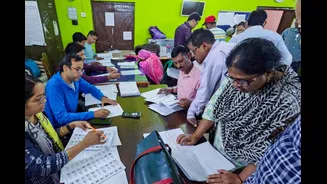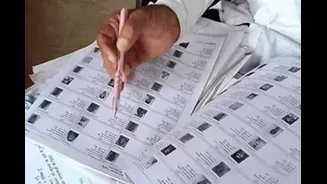








Karnataka’s Special Intensive Revision (SIR) of electoral rolls has reportedly led to the removal of 716 foreign nationals, including 583 cases in Bengaluru, according to media reports citing information
from the revision exercise. Bengaluru North accounted for the largest share of the cases, with 545 Nepali nationals among those reportedly removed from the voter list.
The figures have drawn attention to the verification of voter eligibility as Karnataka completes its electoral roll revision. The reported cases include nationals from Nepal, the United States, Australia, Canada and Yemen in Bengaluru, while other districts also recorded entries involving foreign nationals.
Chief Electoral Officer V Anbu Kumar said on Tuesday that the number of foreign nationals identified was below 1,000. However, the final electoral roll did not include a separate official breakdown of foreign nationals by nationality, and the reported figure of 716 has been attributed to media reports.
Bengaluru Accounts For 583 Reported Cases
Of the 716 foreign nationals reportedly removed from Karnataka’s electoral rolls, 583 cases were recorded in Bengaluru. Bengaluru North had the highest number, with 545 Nepali nationals identified during the exercise.
The reported breakdown for Bengaluru also included 24 American citizens, eight Australian citizens, three Canadian citizens and three Yemeni nationals. Together, these figures account for the 583 cases reported in the city.
The revision also identified cases in other parts of Karnataka, including Dakshina Kannada, Uttara Kannada, Udupi, Belagavi and Hassan.
In Dakshina Kannada, 40 foreign nationals were reportedly removed from the rolls. They included 17 Nepali nationals, two British citizens, five Canadian citizens, six Australian citizens, six American citizens and one each from the Netherlands, South Africa, Ireland and Norway.
Udupi reportedly recorded 44 cases involving nationals from Nepal, the United States, the United Kingdom, France and Canada. In Uttara Kannada, 22 foreign nationals were reportedly identified, including people from Nepal, Pakistan, the United States and Bangladesh. Belagavi and Hassan also recorded cases involving nationals from Nepal and Sri Lanka.
The figures reported for individual districts should be read as reported removals during the revision, rather than a complete official nationality-wise list released alongside the final electoral roll.
Karnataka CEO Says Foreign National Count Is Below 1,000
Responding to questions on Tuesday, Karnataka Chief Electoral Officer Anbu Kumar said the number of foreign nationals identified during the SIR was below 1,000.
The reported cases have raised questions about how foreign nationals came to be registered on Karnataka’s electoral rolls and how eligibility was verified during enrolment.
The SIR was intended to scrutinise voter records and identify entries requiring further examination. The cases identified during the exercise have drawn attention to the need for accurate voter records and proper verification of citizenship and voter eligibility.
Karnataka SIR Removes 99.32 Lakh Names From Voter Rolls
Karnataka’s final electoral roll was published on October 27 after a revision exercise lasting around 115 days. The state now has 4,55,00,011 registered voters, compared with 5,54,32,314 before the exercise.
This represents a net reduction of 99,32,303 names from the earlier roll. The final list includes voters retained after verification as well as eligible electors added during the claims and objections period.
During the process, notices were issued to around 43.8 lakh voters whose records required examination. According to figures reported by the Chief Electoral Officer’s office, 43,20,957 people were retained in the final roll following hearings, while 61,867 were found ineligible.
The exercise also involved scrutiny of voter entries marked as absent, permanently shifted, deceased or duplicated. Officials said the revision was conducted under the prescribed procedures, while questions over deletions and verification remained a subject of public debate.
Form 7 Applications And Voter Deletions Under Scrutiny
The revision also brought attention to Form 7 applications, which can be used to raise objections to the inclusion of a name or seek deletion from an electoral roll.
During the claims and objections process, 2,29,235 Form 7 applications were reportedly received, while 1,88,324 cases resulted in deletions after examination, according to the figures supplied for the exercise. These figures relate to the wider deletion process and should not be treated as a count of foreign nationals alone.
The SIR also prompted concerns about whether eligible voters could be removed incorrectly and whether all objections had been properly verified. Anbu Kumar maintained that eligible voters had not been removed arbitrarily and that the revision was carried out in accordance with the rules.
Eligible Voters Can Apply Through Form 6
Voter registration remains open after publication of the final list. Eligible Indian citizens who find that their names are missing can apply for inclusion by submitting Form 6, along with the prescribed supporting documents, through the election authorities.
The Election Commission’s electoral roll process allows eligible applicants to seek enrolment and permits corrections or other changes through the relevant forms.
The completion of the SIR marks the publication of the revised electoral roll, but voter registration and updates continue. The reported foreign-national cases have added to scrutiny of voter eligibility, while the wider exercise has also raised questions about the scale of deletions and the safeguards available to eligible voters.