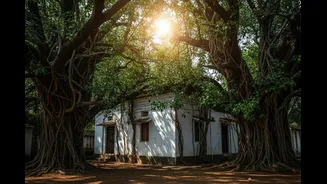









As cities grapple with rising temperatures and growing dependence on air conditioning, one home in Mumbai offers a striking alternative. Instead of relying on energy-intensive cooling systems, the residence
of Chetan Sorenji uses dense vegetation and rainwater harvesting to create a naturally cooler environment.
According to a report in The Better India, the house remains around 5°C cooler than the surrounding outdoor temperature, thanks to a carefully designed green cover that shields the structure from the harsh summer heat.
A House Wrapped In Greenery
Unlike conventional urban homes surrounded by concrete and glass, the Mumbai residence is enveloped by a lush layer of vegetation. Passionfruit vines climb across the structure, while a diverse collection of plants helps form a natural protective barrier against heat.
Within this living green cover, a micro forest of nearly 20 native Indian tree species has been cultivated. The plantation includes bamboo, coconut, mulberry, papaya and sitaphal trees, among others.
The dense foliage helps reduce the amount of heat absorbed by the building, creating a noticeably cooler indoor environment even during peak summer months.
Natural Cooling Instead Of Mechanical Systems
A significant portion of the greenery has been strategically planted along the south and west sides of the property, where sunlight is most intense during the day. By blocking direct solar radiation before it reaches the walls and roof, the vegetation acts as a natural insulating layer. This reduces heat gain inside the house and lowers the dependence on air conditioning, resulting in reduced electricity consumption.
Rather than relying on sophisticated cooling technology, the design uses plants and shade as its primary defence against rising temperatures.
Creating A Habitat In The Middle Of The City
The benefits extend beyond temperature control. The green ecosystem has transformed the property into a habitat for a variety of wildlife. The house regularly attracts carpenter bees, oriental white-eyes, munias, bulbuls and several other bird species.
As a result, the residence functions not only as a home but also as a small urban biodiversity pocket within the densely populated city landscape.
Rainwater Harvesting At The Core
Water conservation forms another key component of the property’s design. A 50-foot borewell enables the collection and storage of rainwater during the monsoon season. The system is capable of harvesting up to one million litres of rainwater, while overall seasonal collection is estimated at around four to five lakh litres.
The stored water serves multiple purposes, including groundwater recharge in the surrounding area. In addition, harvested rainwater is used for cleaning nearby roads and footpaths, extending the environmental benefits beyond the property itself.
A Simple Approach To Urban Sustainability
What makes the project distinctive is its simplicity. The cooling system does not depend on complex machinery or advanced technological solutions. Instead, it combines strategic planting, efficient use of space and rainwater harvesting to create a more comfortable and environmentally responsible living environment.
At a time when cities are increasingly searching for ways to tackle rising temperatures, the Mumbai home demonstrates how nature-based solutions can contribute to cooling, biodiversity conservation and water management simultaneously.
The project serves as a reminder that some responses to urban heat may lie not in additional infrastructure, but in integrating more greenery into the spaces where people live.