
Ever since the US-Israel-Iran war began, US President Donald Trump’s Iran policy has been built around the assumption that overwhelming military pressure would force Tehran to back down. This strategy
now appears to be running into limits.
The clearest sign is that while Washington has abandoned military force, the Trump administration is also increasingly talking about negotiations, concessions and an eventual end to the seven-month war even as it keeps military options on the table.
A New York Times report described the shift as a broader pattern of retreat, pointing to the withdrawal of 12 B-1 bombers from a US base in Britain. Trump and Secretary of State Marco Rubio played down the move, with Rubio saying the Pentagon was “constantly reallocating resources where they need to be.” But the report said the redeployment was another example of Washington pulling back forces that had been positioned as deterrence against Iran.
Military Option Becoming Harder To Sustain?
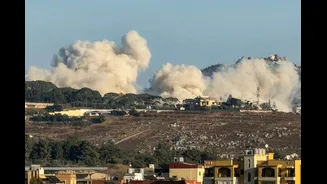
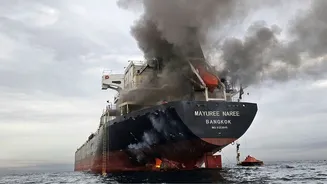
The first problem is that a prolonged war is consuming military resources. The US has demonstrated enormous conventional superiority over Iran. American and Israeli strikes have badly damaged Iran’s military infrastructure and nuclear facilities. But Tehran has shown that it can still impose costs through missiles, drones, maritime attacks and asymmetric tactics.
The Washington Post reported this week that US B-1 bombers were moved away from RAF Fairford after intelligence indicated a potential Iranian “swarm drone” threat. The episode highlighted how even a militarily weakened Iran can force the US to protect its bases and rethink the positioning of expensive assets.
A July New York Times report said Trump had held off on a major escalation partly because of concerns about dwindling US stocks of Patriot and other air-defence interceptors.
Iran Has Not Capitulated
The second problem is that military strikes have not produced the political outcome Washington wanted.
Iran’s conventional capabilities may have been severely damaged, but Tehran has not simply accepted US demands. The nuclear question remains particularly difficult.
Before the US-Israeli strikes, Iran had accumulated an estimated 440.9 kg of uranium enriched to up to 60 per cent, according to the International Atomic Energy Agency. Reuters reported this week that the whereabouts of a significant portion of that material remains unclear, while Iran has yet to allow inspectors to return to bombed sites.
That leaves Washington with an uncomfortable choice of whether it should continue bombing in the hope of eliminating Iran’s nuclear capability, or negotiate an arrangement that places verifiable limits on it.
Vance’s New Formulation
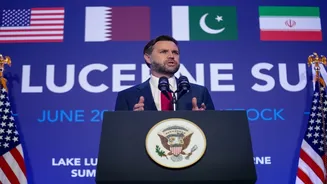
In a recent interview, US Vice President JD Vance said Iran must make a “meaningful” reduction in its nuclear enrichment capacity for the war to end. He questioned why Tehran would need uranium enriched to 60 per cent if it had no intention of developing a nuclear weapon.
“If you don’t want a nuclear weapon, then why do you need 60 per cent enriched fuel,” Vance said.
At the beginning of the conflict, Trump’s position was presented much more starkly that Iran should have no enrichment. Vance’s current formulation instead focuses on a “meaningful” reduction in enrichment capacity.
This appeared to represent a softening of Washington’s earlier demand for zero enrichment.
That does not mean Trump has suddenly accepted an Iranian nuclear programme. It suggests that Washington may be moving from an absolute demand towards a negotiable threshold.
But Will Iran Agree?
There is another reason the strategy is shifting: Iran and the US are negotiating from fundamentally different starting points.
Washington wants nuclear concessions. Tehran has focused heavily on the US naval blockade, sanctions and the Strait of Hormuz. Iran has sought guarantees that the fighting will end, sanctions and restrictions will be lifted and frozen assets released before fully reopening the strategic waterway.
This creates a classic diplomatic deadlock as Washington wants Iran to concede first, but Tehran wants Washington to make the first move.
Iranian officials have also insisted that recognition of its right to enrich uranium remains a red line, making the gap between the two sides substantial.
US Midterms
Trump’s Iran war has also become a domestic political problem.
The November midterm elections are approaching, while higher energy prices and the wider economic consequences of the conflict are creating pressure on the administration. The Atlantic reported that the White House has been weighing military options even before the elections, but that officials are divided over whether renewed strikes would actually improve Trump’s political position.
Trump himself has continued to threaten further action while simultaneously signalling that the war could soon end. On Wednesday, he said the conflict would end “very soon” and predicted oil prices would fall sharply once it did.
The Trump administration is not necessarily giving up on Iran. It may instead be recognising that maximum military pressure has limits, and that the quickest way to turn battlefield pressure into a political outcome could now be through a negotiated settlement.
For Trump, the challenge is finding a deal he can present as victory rather than retreat. For Iran, the challenge is deciding how much it can concede without appearing to have surrendered under American pressure.