







On days meant to celebrate freedom, movement and possibility, Dia Mirza chose to pause and ask an uncomfortable but necessary question. As National Girl Child Day and National Tourism Day were marked,
the actor, producer and UN Goodwill Ambassador used the moment to spotlight a reality many girls know too well — that stepping out into public spaces often comes with fear, not freedom.
In a strong statement, Mirza linked girls’ safety directly to their right to move, travel and dream without hesitation. She stressed that conversations around tourism, development and progress ring hollow if girls and women continue to navigate cities with caution rather than confidence.
Sharing her thoughts, Mirza said, “A girl who feels safe enough to travel independently today becomes the woman who will move through the world with confidence tomorrow. And yet, for far too many of our girls, public spaces come with a “safety tax” a price paid in fear, in lost time, in constantly calculating routes, clothes, hours… and in dreams that quietly shrink before they even take flight.”
Reflecting on the significance of the two national observances, she added, “As I mark National Girl Child Day and National Tourism Day, I feel this truth deeply: we cannot celebrate movement, exploration, and freedom while so many girls are still navigating the gap between mobility and fear.”
Mirza’s message draws attention to the sharp contrast between the idea of exploration and the lived experiences of millions of girls and women. She pointed out that freedom of movement remains deeply unequal, backed by data from both national and global reports. According to her statement, nearly 40 percent of women in urban India still feel unsafe in their own cities, while incidents of harassment involving girls and young women under the age of 24 continue to rise. On a global level, UN Women estimates that up to 70 percent of women face harassment in public spaces — a reality Mirza described as a “trust deficit” that limits a girl’s world before it fully opens.
Beyond the social impact, Mirza also framed safety as an economic concern. With tourism contributing close to 10 percent of global GDP, she underlined how fear-driven exclusion keeps girls and women away from education, employment and opportunity, slowing down sustainable growth in the process.
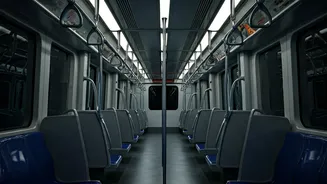
Calling for tangible change, Mirza emphasised the need for visible and measurable action — from improved lighting and safer public transport to strict zero tolerance for harassment. She concluded that cities designed with girls’ safety at their core ultimately become safer and more inclusive for everyone.