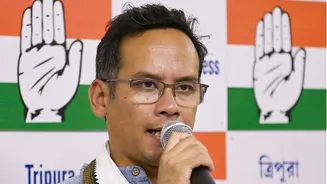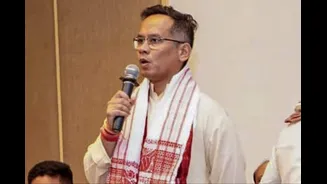






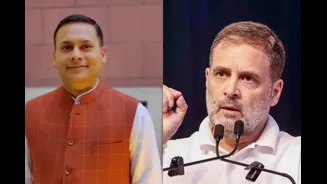
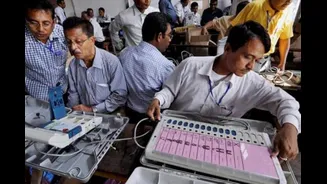
The defeat of Gaurav Gogoi in the Jorhat Assembly constituency is not just another electoral loss, it carries the weight of legacy, timing, and a shifting political landscape in Assam.
The son of former
Chief Minister Tarun Gogoi, whose demise in 2020 marked the end of an era for the Congress in the state, Gaurav Gogoi had been positioned as one of the party’s principal faces in Assam’s post-Tarun Gogoi phase.
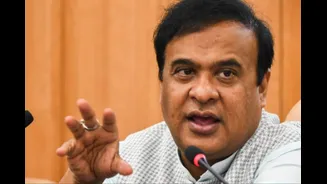
His entry into this Assembly contest, his debut at the state level, was widely seen as an attempt to consolidate that legacy and take on the entrenched BJP machinery led by Chief Minister Himanta Biswa Sarma.
However, the verdict suggests that legacy alone was not enough.
THE NUMBERS THAT DEFINE THE LOSS
According to Election Commission data cited, Gogoi lost to BJP’s Hitendra Nath Goswami by a margin of 23,182 votes.
Goswami secured 69,439 votes, while Gogoi trailed with 46,257.
This margin is politically significant. It is not a narrow upset but a decisive rejection in a constituency where Gogoi was expected to put up a formidable fight.
The BJP not only retained the seat but did so comfortably, reinforcing its organisational grip.
FROM PARLIAMENTARY WIN TO ASSEMBLY SETBACK
The contrast is stark. Just two years ago, Gogoi had won the Jorhat Lok Sabha seat in 2024 by over 1.4 lakh votes, defeating a BJP rival.
That victory had strengthened the narrative that he could emerge as a central pillar of the Congress in Assam.
However, Assembly politics operates on a different axis, more localised, more dependent on booth-level strength, and deeply influenced by state leadership.
The BJP’s ability to translate its governance narrative and cadre strength into votes appears to have outmatched Gogoi’s appeal this time.
BJP’S CONSOLIDATION AND CONGRESS’ EROSION
The BJP-led NDA surged past the majority mark comfortably, with the party eventually securing 82 seats in the 126-member Assembly.
Leaders within the BJP attributed this to “developmental work” under Sarma and the central leadership of Prime Minister Narendra Modi.
At the same time, opposition voices within the BJP narrative claimed that Congress lacked a “solid ground,” indicating structural weaknesses rather than just candidate-level setbacks.
More crucially, reports highlighted Congress’s inability to regain trust among key voter blocs in Upper Assam, Ahom communities, tea tribes, and segments of Muslim voters, once considered its core base.
This erosion directly impacted constituencies like Jorhat.
Interestingly, Goswami himself downplayed any personal rivalry, stating he had “nothing against” Gogoi and emphasising his commitment to public service.
This framing underscores that the contest was less about individuals and more about competing political ecosystems.
For Gaurav Gogoi, this loss raises immediate and long-term questions.
As deputy leader of the Congress in the Lok Sabha and a prominent national face, his inability to secure a state-level mandate weakens his positioning within Assam’s political hierarchy.
It also complicates the Congress’s leadership transition in the state.
After Tarun Gogoi’s passing, the expectation was that Gaurav would gradually inherit both organisational command and electoral credibility.
This result interrupts that trajectory.
Ultimately, Assam’s politics has moved decisively into a BJP-dominated phase where legacy, lineage, and even recent parliamentary success are insufficient without robust grassroots machinery.