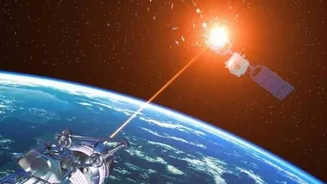








The United States has confirmed for the first time that it has deployed weapons in orbit, prompting Russia and China to warn against turning outer space into a new battlefield.
The US Space Force said on
Monday that it had deployed “on-orbit space control weapons” capable of defending American military forces against hostile action. However, it did not disclose what weapons had been deployed or how many.
“The US has on-orbit space control weapons capable of defending the Joint Force against hostile adversary action,” a Space Force spokesperson said.
The statement described space control as the ability to “contest and control the space domain” using both kinetic and non-kinetic means, adding that such capabilities could be used for offensive as well as defensive purposes.
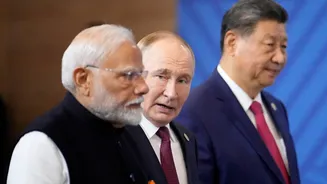
Russia on Tuesday called for weapons to be kept out of space.
“We believe that space must be free of any weapon,” Kremlin spokesman Dmitry Peskov told reporters, adding that Moscow was counting on greater international cooperation towards the “complete demilitarisation of space”.
China also criticised Washington’s announcement and warned against turning outer space into a “battlefield”.
“We urge the US side to stop expanding its military capabilities and preparing for war in outer space,” Chinese foreign ministry spokesman Guo Jiakun said at a briefing.
Analysts said the US announcement essentially confirmed what had long been suspected about American military capabilities in space, but warned that making it public could further fuel tensions between Washington, Beijing and Moscow.
What Are US Space Weapons?
The US Space Force has not provided concrete details about the weapons deployed in orbit. Its reference to kinetic and non-kinetic capabilities, however, points to a range of possible technologies.
Non-kinetic capabilities could include lasers designed to blind or disrupt satellites, as well as electromagnetic or cyber tools capable of interfering with satellite communications and data links.
For Washington, Russia and China are the two principal potential adversaries in space. The US Space Force says China is developing space and counterspace capabilities as part of its military modernisation, while Russia views space as a warfighting domain and considers control of space crucial to future conflicts.
Why Is This A Big Deal?
Space has long been part of military planning, with satellites playing a crucial role in communications, surveillance, navigation and intelligence. That makes them potential targets in any major conflict.
The militarisation of space is also not new. The US and Soviet Union began exploring military uses of space during the Cold War, soon after the Soviet Union launched Sputnik in 1957.
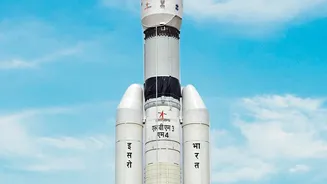
India joined the group of countries demonstrating anti-satellite capabilities in 2019, when it conducted Mission Shakti, destroying a satellite in low-Earth orbit.
The bigger concern now is whether the latest US announcement could accelerate an arms race in space, particularly as Washington, Beijing and Moscow expand their military capabilities beyond Earth.
What Does International Law Say?
The 1967 Outer Space Treaty, signed by the US, Russia and China, bans the placement of nuclear weapons and other weapons of mass destruction in orbit. It does not, however, prohibit military activity in space altogether.
Space law expert Laetitia Cesari said this has created a regulatory gap because the treaty’s Article 4 specifically addresses weapons of mass destruction rather than conventional anti-satellite or other space weapons.
The issue could return to the international agenda at the next UN disarmament meeting in November, with Moscow and Beijing pushing for restrictions on placing weapons in space while Western countries have advocated rules around “responsible behaviour” in space.