







India called for emerging technologies, including artificial intelligence (AI), to remain human-centric and serve as instruments of peace, warning that technological advancements must not deepen existing
inequalities or become tools of strategic dominance.
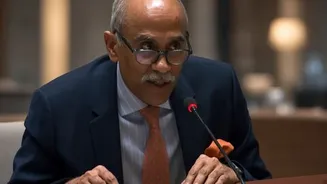
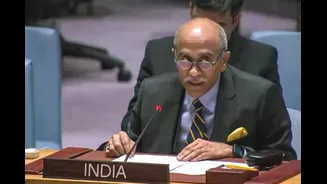
Delivering India’s statement at a United Nations Security Council (UNSC) high-level open debate convened by Latvia on the theme, “Conflict Resolution in an Era of Rapid Technological Change”, India’s Permanent Representative to the UN, Ambassador Harish Parvathaneni, outlined four key considerations for the responsible use of emerging technologies in conflict situations.
India stressed that technology must remain human-centric and contribute to peace, while its application in conflict settings must be responsible, respect national sovereignty and adhere to international law. It also called for addressing threats arising from the misuse of emerging technologies, particularly artificial intelligence and cautioned against technological transformation widening existing global inequalities.
India Flags Technology Denial, Strategic One-Upmanship
Highlighting concerns over unequal access to emerging technologies, Parvathaneni said technology denial and the instrumentalisation of technology for strategic one-upmanship through export control and licensing regimes needed to be addressed.
He stressed that countries of the Global South should not be treated merely as consumers of emerging technologies without having any agency or stake in how technologies such as AI are developed, regulated and deployed.
India Invokes Bengal Famine At UN Over Global Cost Of Conflicts
In a separate intervention at a high-level UNSC briefing on Monday, India invoked the 1943 Bengal famine to underline how the consequences of conflicts extend far beyond the regions directly involved, disproportionately affecting developing countries.
Addressing the briefing on ‘Protecting Critical Energy Infrastructure and Black Sea Lifelines of Global Food Supply’, Parvathaneni said countries of the Global South were bearing the brunt of food, fuel, fertiliser and energy shortages triggered by global conflicts.
“India has consistently emphasised that the costs of conflict are not shared equally,” he said, adding that developing countries were among those most adversely affected by the resulting crises.
Recalling the Bengal famine, which killed more than three million people, the ambassador described it as a stark reminder of the human cost of distant conflicts driven by unchecked wartime priorities and calculations.
“For the Global South, peace is not in the abstract. It is achieved when hungry mouths are fed, when a ship reaches a port, and when a seafarer returns home safe,” Parvathaneni said.