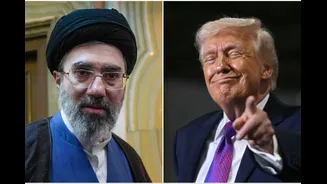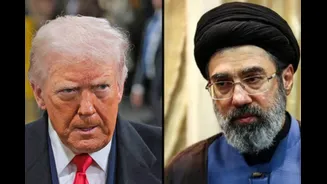


Donald Trump appears intent on securing an agreement with Iran aimed at ending hostilities in the Middle East, three senior Israeli officials told Reuters, even as doubts remain over Tehran’s willingness
to accept Washington’s key demands.
According to the officials, who spoke on condition of anonymity, it is unlikely Iran will agree to conditions expected to include limits on its nuclear programme and ballistic missile capabilities.
Negotiations between the two sides had earlier collapsed on February 28 when the US-Israeli war on Iran began.
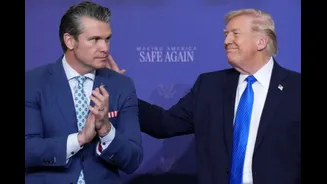
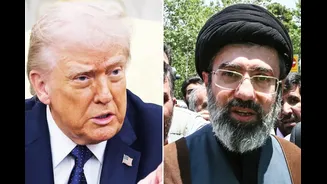
Trump mentioned on social media that Washington and Tehran had held “very good and productive” discussions on achieving a “complete and total resolution of hostilities in the Middle East.”
However, Iran rejected the claim, stating that no negotiations had taken place.
Israeli Prime Minister Benjamin Netanyahu said Trump believed the military gains made by Israel and the United States could be used to secure a deal that protects Israeli interests.
He said there was potential to “leverage the mighty achievements obtained by the IDF (Israel Defence Forces) and the US military” to meet the objectives of the war through diplomacy.
IRAN DENIES NEGOTIATIONS AS CONFLICT ESCALATES
Iranian officials strongly disputed the claim that talks were underway.
Parliament speaker Mohammad Baqer Qalibaf said reports of negotiations were “fake news” aimed at influencing financial and oil markets and diverting attention from the pressures faced by the US and Israel.
Iran’s Revolutionary Guards also dismissed Trump’s remarks as “psychological operations,” while signalling continued military action.
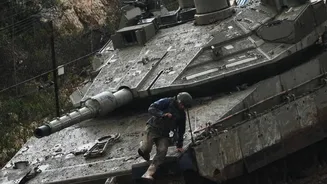
At the same time, the Israeli military said Iran launched multiple waves of missiles at Israel on Tuesday, triggering air raid sirens in cities including Tel Aviv.
A multi-storey residential building was damaged, with rescue teams searching for civilians trapped in affected structures.
US PAUSES STRIKES ON ENERGY INFRASTRUCTURE
The missile attacks came after Trump announced a five-day pause in US strikes on Iran’s power plants and other energy infrastructure, citing what he described as productive talks with Iranian officials.
However, the pause applied only to energy-related targets, with other US military operations continuing.
Israel’s military said its fighter jets had conducted a major wave of strikes in central Tehran targeting command centres linked to the Islamic Revolutionary Guard Corps’ intelligence arm and Iran’s Intelligence Ministry.
It added that more than 50 additional sites, including ballistic missile storage and launch facilities, were hit overnight.
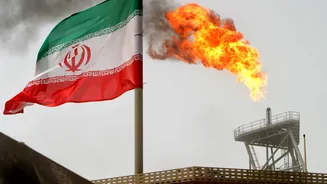
Iran has effectively closed the Strait of Hormuz since the war began on February 28, disrupting a vital shipping route that carries roughly 20 per cent of global oil and liquefied natural gas supplies, according to Reuters.
The conflict has resulted in more than 2,000 deaths so far.
DIPLOMATIC CHANNELS REMAIN ACTIVE
Despite Iran’s denial of direct negotiations, diplomatic efforts appear to be continuing through intermediaries.
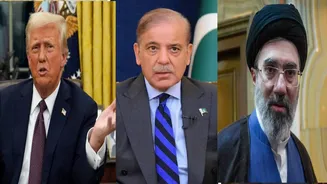
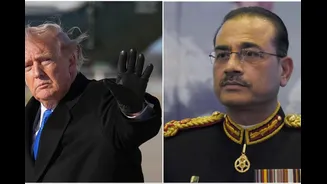
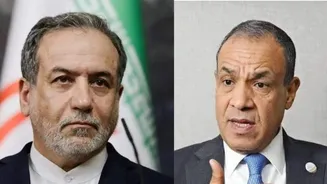
A European official told Reuters that Egypt, Pakistan and Gulf states were relaying messages between Washington and Tehran.
Sources cited by the report said Pakistan could host potential talks aimed at ending the war, with senior US officials, including Vice President JD Vance, special envoy Steve Witkoff, and adviser Jared Kushner, expected to meet Iranian representatives in Islamabad.
Pakistan’s foreign ministry said it remains open to facilitating dialogue to promote regional stability.
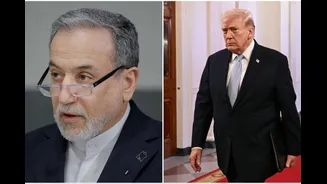
Meanwhile, Iran’s Foreign Ministry said Foreign Minister Abbas Araqchi had discussed developments concerning the Strait of Hormuz with Oman, signalling ongoing diplomatic engagement.
MARKETS REACT TO UNCERTAINTY
Global markets have responded to the rapidly evolving situation.
Oil prices initially fell after Trump indicated a pause in strikes, but later rebounded as uncertainty persisted.
Brent crude rose 4.2 per cent to $104.21 per barrel, while US crude increased 4.3 per cent to $91.93 per barrel.
Analysts warned that the geopolitical environment remains volatile, with energy markets particularly sensitive to developments surrounding the Strait of Hormuz and ongoing military activity.