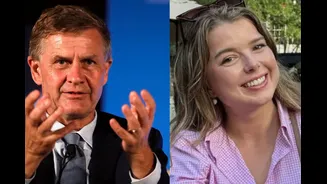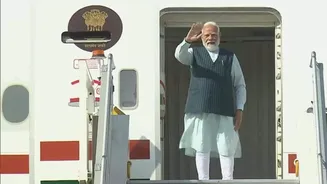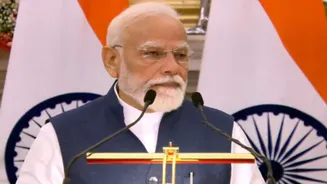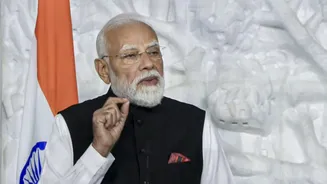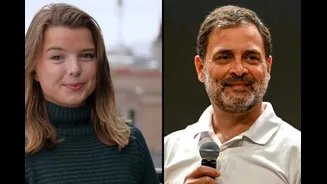




After triggering a political storm in India with her question to Prime Minister Narendra Modi during a press interaction in Oslo, Norwegian journalist Helle Lyng has now reached out to Congress leader
Rahul Gandhi seeking an interview in a move that has added a fresh political twist to the controversy surrounding PM Modi’s Norway visit.
The request came on X (formerly Twitter) after Gandhi accused the prime minister of “running away from questions”. “When there is nothing to hide, there is nothing to fear. What happens to India’s image when the world sees a compromised PM panic and run from a few questions?” he asked.
When there is nothing to hide, there is nothing to fear.
What happens to India’s image when the world sees a compromised PM panic and run from a few questions? https://t.co/tOO8vzESpf
— Rahul Gandhi (@RahulGandhi) May 18, 2026
This prompted a swift reaction from Lyng, who asked Gandhi for a “phone interview”. “Hello, would you be available for a phone interview Tuesday Norwegian time. It would be interesting to hear how you view the visit to Norway,” she asked. The Congress leader has not yet reacted to the journalist’s request.
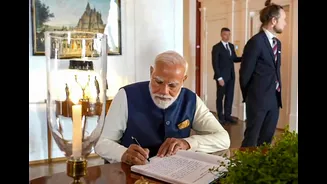
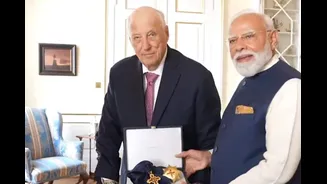
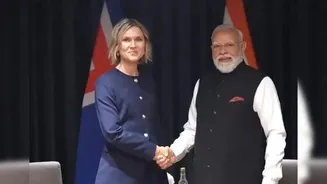
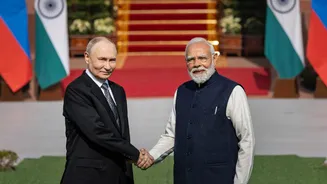
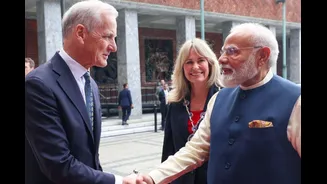
The development comes after Lyng drew widespread attention during a joint media appearance involving PM Modi and Norwegian Prime Minister Jonas Gahr Støre in Oslo. As the event concluded, the journalist shouted a question at PM Modi, asking why he did not “take questions from the freest press in the world,” sparking intense debate online and sharp political reactions in India.
Lyng’s outreach to Gandhi has further escalated the political row, with BJP leaders accusing sections of the opposition of amplifying what they described as an attempt to malign India internationally. BJP IT cell chief Amit Malviya had earlier dismissed the controversy and argued that even the Norwegian prime minister did not take questions during the interaction.
She also faced trolling on social media, with several users mocking Gandhi’s “absence” from political journalists and imploring Lyng to get an interview out of him.
On a serious note Rahul Gandhi is the leader of Opposition. I beg you PLEASE DO INTERVIEW HIM, if he is up for it.
I haven't watched a good comedy show long time😂
— Souvik (@souvikbasu1) May 19, 2026
You know what, I wish you interview him on zoom call and we want to see if your number 1 press can get something useful out of this Gandhi. Do share the video on youtube.
— Pinaki Pratihar (@pinakiR) May 20, 2026
Many users also labelled her a “Chinese agent” and accused her of grabbing eyeballs with her question to PM Modi.
ur publicity stunt was very effective. You are a better actor than a journalist,and you deserve an Oscar. However,the account that had been inactive for two years and had no followers suddenly became so active in a single day. This raises doubts about the independence of ur press
— Sunil Saini (@sunil_sain90550) May 20, 2026
Doesn't sound staged and planned at all. 🤡
— Urrmi (@Urrmi_) May 19, 2026
The controversy has put Lyng herself under intense scrutiny. Former Norway environment and international development minister Erik Solheim, speaking to CNN-News18, said the journalist’s questioning of PM Modi reflected “limited knowledge” and a lack of factual grounding.
“I think it is just an incident of an immature journalist who has, so to say, a very limited knowledge and understanding of India and is running by some headlines that she has been able to get,” Erik Solheim said. He added: “For example: these kinds of statistics that try to show that India is very low on press freedom and is very low on democracy. Some of these put Saudi Arabia, Pakistan or even Palestine ahead of India and claim that there are a lot of murders of journalists in India but all of this goes completely against common sense and as a journalist everyone should check their facts and then report things.”
Lyng also claimed that her Facebook and Instagram accounts had been suspended, calling it a “small price to pay for press freedom”.
On Wednesday, government sources told CNN-News18 that the episode reflected a broader ideological push linked to geopolitical competition over critical minerals and green supply chains. According to government sources, the line of questioning appeared “selective” and stood in contrast to what they described as the absence of similar scrutiny towards China on issues such as media controls, the Uyghur issue and broader authoritarian practices.