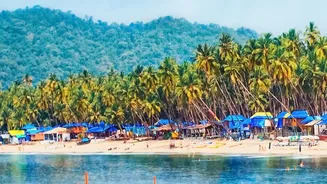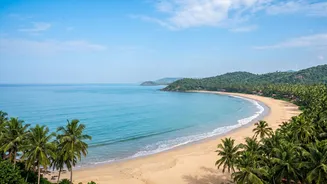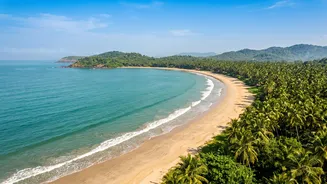







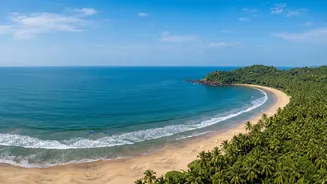


Goa’s beaches are wildly popular in India for one specific reason: their late-night parties amid beach shacks and restaurants that keep serving visitors long after sunset. But, if reports are to go by,
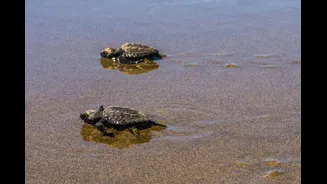
these beaches will have to make room for a new visitor—the olive ridley turtle.
As per a report in TOI, the state’s forest department has proposed declaring 24 beaches across North and South Goa as turtle nesting sites under the Coastal Regulation Zone (CRZ) Notification, 2019. If the proposal is accepted, it could bring tighter regulations on beach tourism and coastal activities, particularly during the olive ridley turtle nesting season. And this could have implications for some of Goa’s most popular tourist hotspots. The proposed list includes Baga, Calangute, Candolim and Vagator in North Goa, along with Palolem, Agonda and Cavelossim in the south. These are beaches that attract visitors for everything from sunset cocktails and seafood dinners to beach parties and late-night outings.
Which Goa beaches could become turtle nesting sites?
The forest department has written to the department of environment and climate change, requesting that 24 beaches be included as identified turtle nesting sites under the CRZ framework. The proposed list covers 10 beaches in North Goa and 14 in South Goa.
- The beaches identified in North Goa are Morjim, Mandrem, Vagator, Calangute, Candolim, Keri, Miramar, Ashvem, Baga and Arambol.
- In South Goa, the list includes Rajbag, Mobor, Cabo de Rama, Patnem, Baina, Palolem, Cola, Carmona, Cavelossim, Varca, Talpona, Agonda and Galgibag.
The assistant conservator of forests, in the letter to the environment department, requested that all the listed beaches be included as turtle nesting sites under the CRZ 2019 notification. The proposal comes amid concerns about a decline in olive ridley turtle nesting numbers. According to forest department data, Morjim, one of North Goa’s important nesting sites, recorded 83 nests during the latest season. These produced 8,599 eggs and 7,578 hatchlings so far.
The numbers were lower than the approximately 18,000 eggs recorded in North Goa until May 2025, when 12,857 hatchlings had been released into the sea at the time. The nesting season in 2025 had itself followed a stronger season in 2024.
How will this affect Goa tourism?
Beach shacks are an integral part of the state’s coastal experience. From seafood restaurants and sunbeds to music, drinks and sunset dining, they are a major attraction for domestic and international visitors. Several of the beaches on the proposed list are also known for their nightlife and busy evening scenes. A protected turtle nesting designation could bring tighter controls on artificial lighting, beach events, vehicle movement and other activities that may disturb nesting turtles or hatchlings. The impact could be particularly relevant during the nesting season, when turtles come ashore to lay eggs and hatchlings make their way towards the sea.
Bright lights along the beach can interfere with hatchlings’ ability to find the ocean. Noise, human activity and vehicles on the sand can also disturb nesting turtles or damage nests. This is why lighting and access management are important considerations around turtle nesting habitats.
The shacks would have to follow stricter lighting guidelines, manage activities closer to the shoreline differently or make seasonal adjustments if such measures are prescribed. Events and parties on the beach could also face tighter scrutiny, depending on the final regulations. For now, the proposal doesn’t have a set of restrictions.
Why does Goa want to protect these beaches?
Olive ridley turtles are known for their mass nesting behaviour, with females returning to sandy beaches to lay eggs. After hatching, the young turtles make their way towards the sea. The nesting process is vulnerable to disturbances from artificial lighting, human activity, vehicles and other coastal pressures.
The CRZ Notification, 2019, classifies ecologically sensitive areas and their geomorphological features under CRZ-I. These include mangroves, coral reefs, sand dunes, biologically active mudflats, national and marine parks, sanctuaries, reserve forests and wildlife habitats. Turtle nesting grounds, horseshoe crab habitats, seagrass beds and bird nesting grounds are also recognised as ecologically sensitive areas under the framework.
A senior forest department officer said such areas are important for maintaining the integrity of the coast. The officer also pointed out that a detailed environment management plan must be prepared by the respective state governments and Union territories for ecologically sensitive areas. These plans are to be based on maps prepared by the National Centre for Sustainable Coastal Management in Chennai.