





The United States and Iran are set to hold their first talks since the war began, with Pakistan stepping in as mediator and hosting the high-stakes negotiations in its capital under unprecedented security.
Islamabad has effectively been locked down with a two-day public holiday to secure the arrival of both delegations.
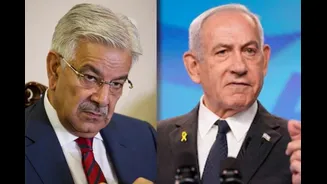
According to the White House, the US side will be led by Vice President JD Vance, along with special envoy Steve Witkoff and US President Donald Trump’s son-in-law Jared Kushner. Iran, meanwhile, will be represented by Parliament Speaker Mohammad Bagher Ghalibaf, Foreign Minister Abbas Araghchi, and Secretary of the Supreme National Security Council Mohammad Bagher Zolghadr.
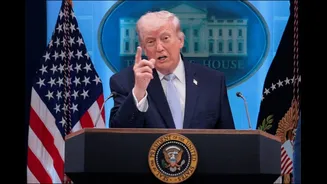
The talks follow a two-week ceasefire announced by Trump, who had earlier issued stark warnings of wiping out Iran’s “civilisation” before abruptly shifting to diplomacy. While the truce is holding for now, it remains fragile and deeply contested, both in terms of scope and implementation.
More importantly, the core issues that drove the conflict remain unresolved.
With talks set to begin on Saturday in Islamabad, here are six key challenges Washington and Tehran could face at the negotiating table.
Conflicting Proposals And No Common Ground
Even before negotiations begin, there is confusion over what exactly is being discussed.
Trump has said the US received a “10-point proposal from Iran” that he described as “a workable basis on which to negotiate.” At the same time, Iran’s Foreign Minister Abbas Araghchi has referred to a separate 15-point proposal from the US that could end the conflict.
However, neither proposal has been formally released. Leaked versions circulating in the media suggest both sides are “oceans apart” in their expectations, while the White House has insisted that the Iranian plan being publicly discussed is not the actual “working framework.”
With both sides working off competing proposals and vastly different expectations, finding common ground itself becomes the first major hurdle in the talks.
Nuclear Programme And Uranium Enrichment Deadlock
At the core of the conflict lies Iran’s nuclear programme.
Washington’s reported proposal calls for dismantling major nuclear facilities, ending uranium enrichment on Iranian soil, transferring stockpiles abroad and accepting intrusive international inspections. US Defence Secretary Pete Hegseth reiterated the red line, stating: “There will be no Iranian nuclear weapons. Period. Full stop.”
Yet key uncertainties remain. Around 440 kg of highly enriched uranium is still believed to be in Iran’s possession, reportedly buried under the rubble of the Isfahan nuclear site following earlier strikes.
Iran, however, insists that any agreement must recognise its right to enrich uranium for civilian use under the Nuclear Non-Proliferation Treaty.
This creates a structural deadlock: the US seeks zero enrichment capability, while Iran views enrichment as a sovereign right.
Missile, Drone Curbs And US Military Presence Dispute
For Washington, curbing Iran’s missile programme is central to preventing any future escalation. The US has long argued that Tehran’s growing arsenal of ballistic missiles and drones not only strengthens its own deterrence, but also enables its network of regional allies and proxy groups, including Hezbollah, to operate more aggressively across West Asia. This concern sharpened during the conflict.
Part of Washington’s justification for the war was that Iran’s advanced missile programme had provided a protective umbrella under which its nuclear programme could continue.
US military assessments suggest that recent strikes have significantly degraded this capability. Chairman of the Joint Chiefs of Staff General Dan Caine told the BBC that around 80 per cent of Iran’s missile facilities have been destroyed, along with 80 per cent of its air defence systems and 90 per cent of its weapons factories.
Iran, however, has consistently refused to negotiate on its missile programme, viewing it as a core pillar of its national defence.
At the same time, Tehran has raised the issue of continued US troop deployment in West Asia, arguing that the presence of thousands of American personnel, along with aircraft and naval assets, fuels instability rather than containing it. Iran has demanded a reduction or complete withdrawal of US forces as part of any broader agreement. Washington, however, sees its military presence as essential for regional security and deterrence.
Strait Of Hormuz Control
The Strait of Hormuz remains one of the most sensitive flashpoints in the crisis.
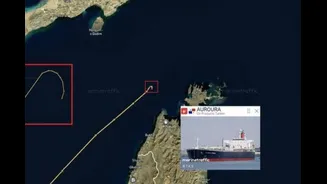
Carrying nearly 20 per cent of the world’s oil supply, the narrow waterway is central to global energy flows. During the war, Iran effectively shut down tanker movement through the strait, triggering disruptions in global oil markets and halting a key international shipping route.
As part of the ceasefire agreement, Iran had indicated it would reopen the strait to restore energy flows. However, that reopening proved short-lived. Within hours of the truce coming into effect, Israel launched fresh strikes in Lebanon, after which Iran moved to shut the strait again, linking its actions directly to what it described as ceasefire violations.
Reopening the Strait is seen as a key condition of the ceasefire. However, Iran has signalled that any resumption of traffic could come with new terms. Foreign Minister Abbas Araghchi has said safe passage would be allowed for a limited period, in coordination with Iran’s armed forces and with “due consideration of technical limitations.”
At the same time, proposals around imposing transit fees have added to tensions. Some reports suggest charges as high as $2 million per ship or per-barrel levies. Anwar Gargash, senior diplomatic adviser to the UAE president, called it “totally unacceptable,” warning of dangerous precedents for international trade.
The US has also tied the issue to the ceasefire’s survival. JD Vance has warned that failure to reopen the strait could collapse the truce, while Trump has cautioned against Iran imposing tolls, even floating a possible joint arrangement.
Given its economic impact, Hormuz remains a major pressure point.
Sanctions Relief And Economic Pressure Standoff
Sanctions remain central to Iran’s negotiating position.
Years of US sanctions, combined with the impact of the recent conflict, have placed significant pressure on Iran’s economy. For Tehran, any long-term agreement is unlikely without meaningful relief from these restrictions, which have limited its oil exports, financial access and broader economic activity.
Iran has therefore demanded the removal of all primary US sanctions as part of a future deal, positioning it as a non-negotiable condition for moving forward.
Washington, however, has taken a more cautious approach. While President Donald Trump has acknowledged that discussions on “tariff and sanctions relief” are underway, the US has not committed to lifting restrictions, and is expected to link any relief to concessions on nuclear and military issues.
Lebanon Conflict
Iran insists the truce must include its ally Hezbollah, describing Lebanon as an “inseparable part of the ceasefire.” Pakistan’s initial announcement also suggested the pause applied “everywhere including Lebanon.”
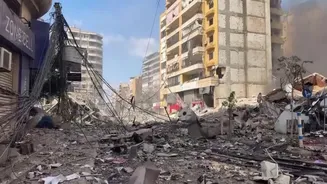
However, the US and Israel have rejected this interpretation. Israel has continued strikes, including a major wave that killed more than 300 people within hours of the ceasefire taking effect.
The escalation has now directly impacted the talks. Iran has officially communicated to Pakistan that it will not participate in peace negotiations with the United States in Islamabad until a ceasefire is established in Lebanon, according to Iran’s Fars News Agency, citing sources. The report also denied claims that an Iranian delegation had reached Islamabad, stating that Tehran has no plans to negotiate while the bombing continues.
This has not only complicated the ceasefire but also raised the risk of the talks being delayed or derailed altogether.
Will The Talks Achieve Anything?
Despite deep divisions, both sides have strong incentives to engage.
The ceasefire has created a narrow window for diplomacy, and officials suggest the Islamabad meeting is likely to be the first in a series of negotiations aimed at a longer-term agreement.
Trump has said he is “very optimistic” about a deal, suggesting Iran has shown flexibility in private. “They’re much more reasonable,” he told NBC. “They’re agreeing to all the things that they have to agree to. Remember, they’ve been conquered. They have no military.”
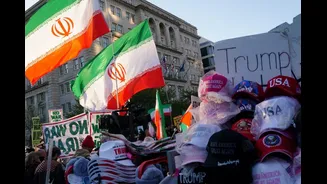
Iran’s public messaging, however, remains sharply different, with state media portraying the country as having emerged strong and forced Washington to negotiate.
For now, Islamabad offers an opportunity, not a resolution. Whether it becomes the starting point of a sustained peace process, or just another pause before escalation, will depend on whether these core challenges can be bridged.