





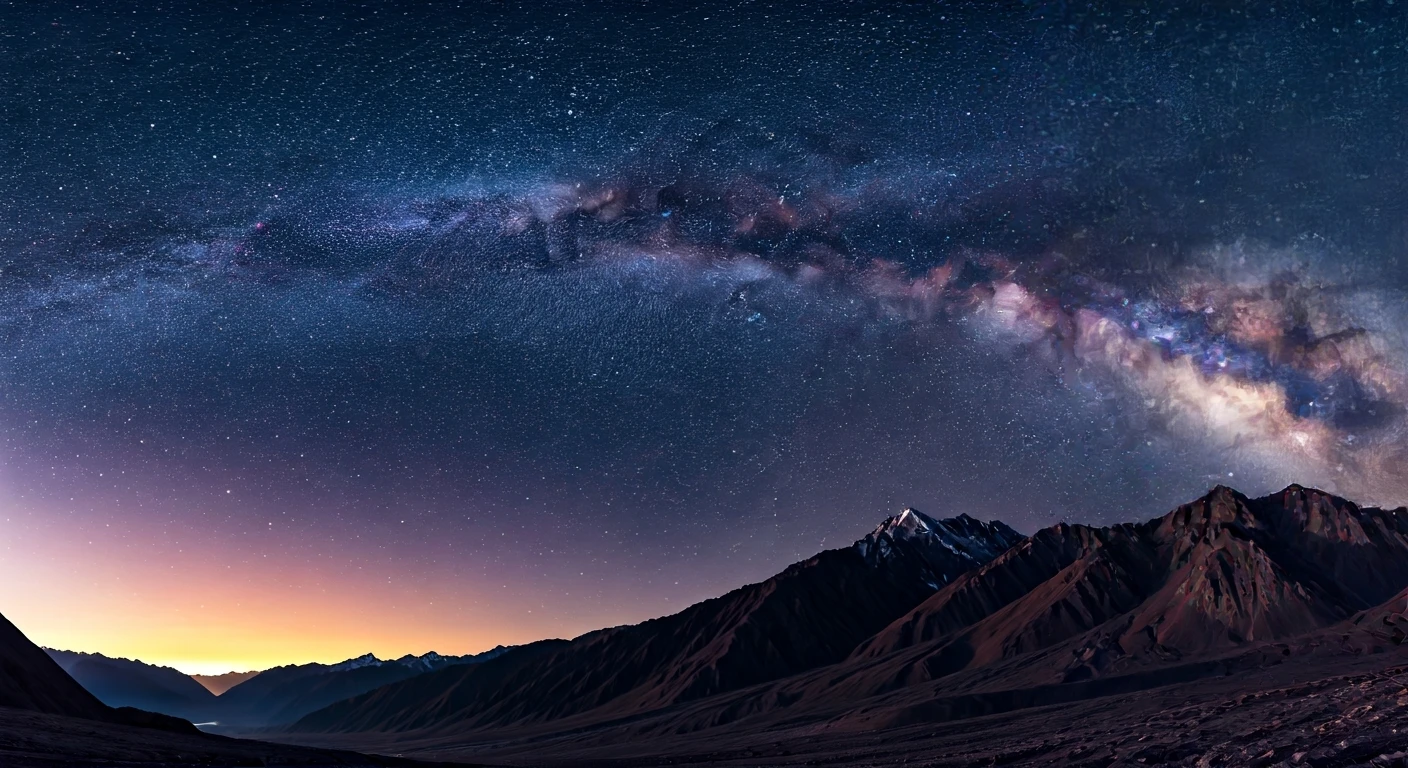
Skywatchers are in for a treat this June as three planets—Venus, Jupiter, and Mercury—come together in a stunning celestial display often referred to as a “planet parade.”
The highlight of the event will
occur on June 9, when Venus and Jupiter appear exceptionally close to each other in the evening sky. According to NASA, the two planets will reach their closest apparent approach, creating a striking sight visible without any special equipment.
What Is Happening In The Sky?
On June 9, Venus and Jupiter will appear just 1.6 degrees apart, making them look almost as if they are touching from Earth’s perspective. While the planets are actually separated by hundreds of millions of kilometres in space, their positions along a similar line of sight create the illusion of a close encounter.
This celestial pairing will be visible low in the western sky shortly after sunset and is expected to be one of the most eye-catching astronomical events of the month.
When Can You Watch It?
Venus and Jupiter will remain within five degrees of each other from June 4 to June 14, allowing several evenings to enjoy the spectacle.
Although the closest approach occurs on June 9, skywatchers will have a much larger viewing window.
The display becomes even more impressive between June 11 and June 15, when Mercury joins the lineup, creating a three-planet alignment that many astronomy enthusiasts call a planet parade.
Where To Look
To catch the event, head outdoors about 45 minutes after sunset and look toward the western horizon.
Venus will be the brightest object in the group and the easiest to spot. Jupiter will appear nearby, while Mercury will sit lower in the sky, beneath and slightly to the right of the two planets.
A location with a clear, unobstructed view of the western horizon will offer the best chance of seeing all three planets, especially Mercury, which remains close to the twilight glow.
The conjunction will take place within the constellation Gemini, near its well-known bright stars Castor and Pollux. This will add another point of interest for those familiar with the night sky.
Do You Need A Telescope?
No. The event will be visible to the naked eye under clear skies. However, binoculars can provide a closer look at the planetary grouping, while small telescopes may reveal additional details, such as some of Jupiter’s largest moons and the partially illuminated disc of Venus.
During the event, Venus will outshine Jupiter and become the most prominent object in the western sky. Often called the “Evening Star,” Venus appears brighter because it is much closer to Earth and is covered by highly reflective clouds that bounce sunlight back into space.
Despite their apparent proximity, the planets are not actually near one another in space. The alignment is a visual effect caused by the planets appearing along a similar path across the sky, known as the ecliptic, the route followed by the planets as they orbit the Sun.
At the time of the conjunction, Venus will be approximately 180 million kilometres from Earth, while Jupiter will be around 900 million kilometres away.
A Bonus Treat For Skywatchers
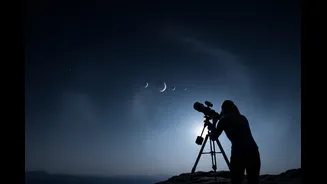
The celestial show doesn’t end with the planetary alignment. On June 16 and 17, a delicate waxing crescent Moon, illuminated between 5% and 11%, will join the planetary grouping, creating an even more picturesque scene in the evening sky.
Whether you are an experienced stargazer or simply enjoy looking up at the night sky, this month’s planet parade offers a rare opportunity to witness Venus, Jupiter, and Mercury sharing the same patch of sky. With no telescope required and multiple evenings available for viewing, it is one of the easiest and most rewarding astronomical events to observe this month.