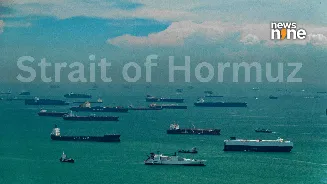










The Strait of Hormuz has begun reopening following the announcement of a US-Iran peace agreement, but the return of normal shipping through one of the world’s most important energy corridors is unlikely
to be immediate.
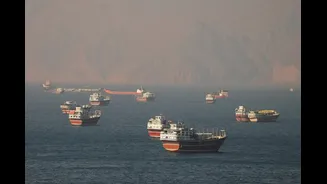
A small number of vessels have started moving through the strait, including Iranian oil tankers and cargo ships as well as the Malta-flagged Disha gas tanker, which is travelling towards India. However, hundreds of ships remain stranded in and around the Persian Gulf, and analysts estimate that clearing the accumulated backlog alone could take about a month.
Restoring traffic to pre-war levels could take considerably longer — possibly eight weeks or more — as shipowners assess security conditions, the threat posed by naval mines and whether the agreement between Washington and Tehran will hold.
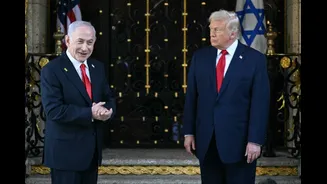
US President Donald Trump has said the memorandum of understanding with Iran has already been signed electronically and that the Strait of Hormuz will be completely open to shipping by Friday, when a formal signing is expected in Switzerland.
However, reopening the waterway politically does not mean commercial shipping will immediately return to normal. Shipowners, insurers and vessel operators will need to be convinced that ships can cross safely and without facing renewed military action, mines, tolls or other restrictions.
How Large Is The Shipping Backlog At Hormuz?
Around 500 ships are estimated to be waiting to leave the region through the Strait of Hormuz, according to Thomas A Kazakos, secretary general of the International Chamber of Shipping.
The disruption has also left approximately 20,000 seafarers stranded in the waters during more than three-and-a-half months of conflict.
“Their safe departure from the region must be a top priority but will take time… will require coordination,” Kazakos said.
He said the International Maritime Organisation would have an important role in coordinating with the shipping industry and regional governments to ensure that vessels could leave safely and as quickly as possible.
The immediate challenge, therefore, is not merely allowing ships to enter the strait. Authorities and maritime operators must manage the movement of hundreds of vessels that have been waiting in the Gulf, while preventing congestion and reducing the possibility of an accident or security incident.
How Quickly Can The Backlog Be Cleared?
Only a handful of vessels have crossed the strait since the peace agreement was announced. Most of the ships trapped in the Persian Gulf are expected to wait until the formal signing of the agreement on Friday before beginning their journeys.
Ana Subasic, a trade risk analyst at maritime data firm Kpler, estimated that about 15 ships could initially cross the strait each day.
“In that scenario, it would take about 30 days to clear out the backlog of ships,” Subasic told the New York Post.
The pace could accelerate if the first crossings take place without incident. Kpler analysts have estimated that as many as 118 tankers could pass through the reopened route during the first 15 days.
However, this initial surge would largely represent pent-up traffic rather than a permanent return to normal activity. Once the stranded ships have passed through, the more important question will be how many vessel operators are prepared to resume regular voyages through Hormuz.
When Could Shipping Return To Pre-War Levels?
Kpler has projected that shipping through the strait could recover to around 50 per cent of its pre-war level within a month, provided that the peace agreement is implemented without major obstacles.
According to The Post, more than 130 ships used to pass through the waterway daily before the conflict.
“All in all, it could take eight weeks to tackle all the constraints and issues surrounding the Strait of Hormuz,” Subasic said.
Dimitris Ampatzidis, a maritime risk and compliance manager at Kpler, similarly cautioned that the reopening would occur in stages.
“The key point is that the Strait may reopen quickly from a political or security perspective, but the commercial shipping system is likely to normalize gradually,” he said.
Why Are Shipowners Still Reluctant?
The head of Japanese shipping company Mitsui OSK Lines reportedly said vessels would not resume normal transit until shipowners were confident that the agreement would hold. After multiple false starts over previous attempts to reopen Hormuz, some operators believe it could take weeks for regular shipping to recover.
Other companies expect movement to resume faster. Frontline, an oil tanker operator with five vessels stranded in the Gulf, said “vessels will start to move very quickly once a deal is signed”.
Matthew Reisner, a senior national security analyst at the Center for Maritime Strategy, said ships would probably seek confirmation from both the US Navy and Iran’s Islamic Revolutionary Guard Corps before attempting to cross.
Confidence is expected to build gradually. If the first group of ships crosses without being attacked, intercepted or damaged, more operators could follow. Conversely, even one security incident could slow the reopening and prompt shipowners to pause their voyages again.
Could Naval Mines Delay The Reopening?
The possible presence of naval mines remains one of the most serious uncertainties.
Trump has played down the risk, but US Secretary of State Marco Rubio previously said Iran had mined large sections of the strait. The extent of the danger and whether the waterway has been fully cleared remain uncertain.
“The threat of mines in the area remains a concern,” shipping industry group Bimco said.
Jakob Larsen, Bimco’s chief safety and security officer, warned against assuming that ships could immediately return based on official reassurances.
“Due to lack of details and a history of overly optimistic reassurances, we believe the security situation for the shipping industry remains volatile, and we still consider it very risky for ships to commence transits at this point,” Larsen said.
Will Ships Be Allowed To Pass Without Paying A Toll?
Trump has said the Strait of Hormuz will be reopened on a permanently toll-free basis, while Vice President JD Vance has said Washington expects ships to be able to use the waterway “in a toll-free way for the long term”.
Vance, however, indicated that the precise arrangements would be worked out during the 60-day period of technical negotiations between the United States and Iran.
“Our expectation is that the Strait is going to be opened in a toll-free way for the long-term,” Vance said. “That’s the sort of thing that we’re going to figure out in these technical negotiations.”
Iran has previously denied that it intends to impose tolls, although it has acknowledged collecting fees for what it describes as navigational services.
The Iranian foreign ministry on Monday said the country would charge maritime service fees on vessels transiting through the crucial Strait of Hormuz, rather than imposing tolls, as part of the agreement.
“We have always maintained that we do not seek to collect transit tolls, but fees for navigation services, environmental protection, ship insurance and other necessary services will be charged,” said foreign ministry spokesperson Esmaeil Baqaei during a press briefing.
For shipowners, any uncertainty over future charges would add to the commercial and security considerations already slowing the return of traffic.