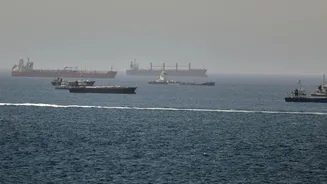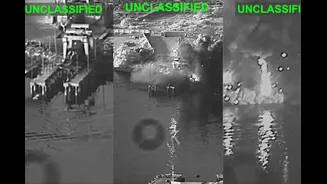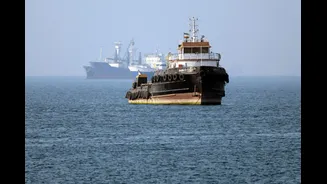




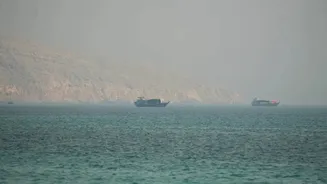


Iran’s Islamic Revolutionary Guard Corps (IRGC) on Tuesday claimed responsibility for striking and disabling two oil tankers in the Strait of Hormuz, alleging the vessels were involved in “illegal activities”,
had switched off their navigation systems and ignored repeated warnings from Iranian authorities.
The claim came hours after the United Arab Emirates accused Iran of launching cruise missile attacks on two UAE national tankers, killing one Indian crew member and injuring eight others.
In a statement, the Islamic Revolutionary Guard Corps (IRGC) said: “A few hours ago, the child-killing U.S. military, which has not learned from its repeated failures, attempted to guide several vessels through an illegal route. Two oil tankers involved in illegal activities, which were deceived by the United States, turned off their navigation systems, ignored repeated warnings from the Strait of Hormuz security control centre, and endangered navigation by passing through a minefield. These vessels were targeted and disabled.”
Iran’s Revolutionary Guard releases a statement about the two UAE tankers it attacked pic.twitter.com/j5YA7ZZGx1
— Steve Lookner (@lookner) July 14, 2026
The IRGC further warned against cooperation with the United States, saying: “The IRGC Navy announces to everyone that cooperation with the aggressor enemy, which has come from thousands of kilometres away to violate the rights of the people of the region, will only result in regret, damage, and delays in reopening the Strait of Hormuz, as well as creating an energy crisis in the world. There is no benefit to passing through the minefield.”
Also Read: One Indian Crew Member Killed, 6 Injured As Iran Strikes UAE Tankers in Strait of Hormuz
‘Serious Violation’ Of International Law: UAE Condemns Strikes On Tankers
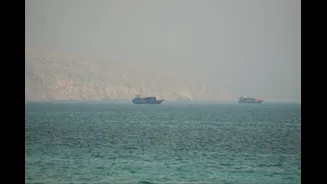
Earlier, the UAE’s Defence Ministry said Iran attacked the national tankers Mombasa (oil tanker) and Al Bahiyah (LNG tanker) with cruise missiles while they were transiting the southern shipping lane of the Strait of Hormuz within Omani territorial waters.
According to the ministry, one Indian crew member aboard the Mombasa was killed, while eight others were injured, including four who sustained serious injuries.
The strikes also caused fires and material damage on both vessels, though authorities said the blazes had since been brought under control.
Condemning the attack, the UAE’s Defence Ministry said, “The Ministry of Defence condemned this flagrant attack, describing it as a grave violation and a clear breach of international law that threatens regional security and stability.”
The ministry said that the country reserves its full right to respond to this escalation and to take all necessary measures to protect its territories, people, and residents.
It added that the attack “also caused material damage… as a result of fires breaking out on board” the two tankers.
Iran Warns US Against Intervening In Hormuz Management
Earlier, the spokesperson for Iran’s Khatam al-Anbiya Central Headquarters had stated that Iran had warned that it would not permit the United States to intervene in the management of the Strait of Hormuz.
Iran Rejects Any US Role in Managing Strait of Hormuz
The spokesperson for Iran’s Khatam al-Anbiya Central Headquarters has declared that Tehran will not permit the United States to intervene in the management of the Strait of Hormuz. pic.twitter.com/fia6Ckw89N
— Tasnim News Agency (@Tasnimnews_EN) July 13, 2026
“The United States interference in the Management of the Strait of Hormuz has seriously jeopardised Regional Security and International Trade. The United States shall never be allowed to interfere in the management of the Strait of Hormuz. Leaders of Regional Nations are warned that any co-operation with the United States constitutes an Act of War against Iran,” it said.
Also Read: ‘Deal Is Possible’: Trump Says Iran Agreement Still Within Reach Despite Fresh Strikes
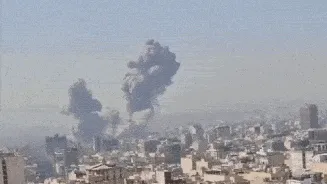
The missile strike marks another sharp escalation in tensions in the Gulf, coming after the United States launched a fresh wave of strikes against Tehran amid renewed hostilities in the region.
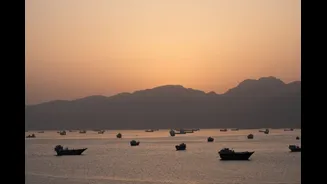
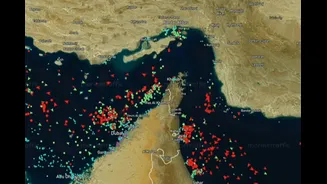
The Strait of Hormuz remains one of the world’s most strategically important maritime chokepoints, with roughly one-fifth of global oil supplies passing through the waterway before the conflict escalated earlier this year.
The latest exchange of accusations raises fresh concerns over the security of international shipping and the potential impact on global energy markets.