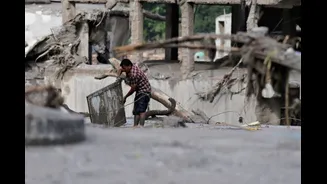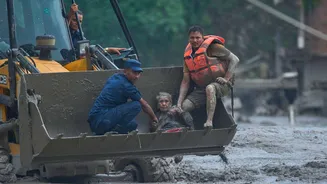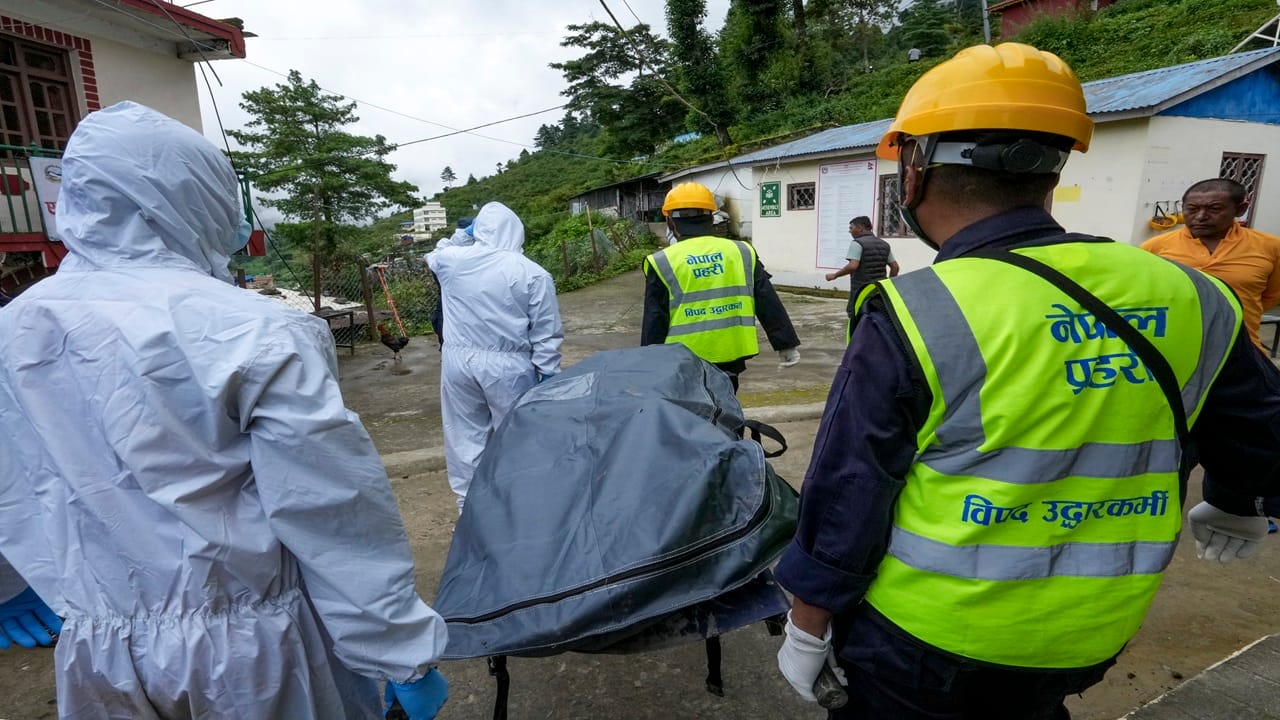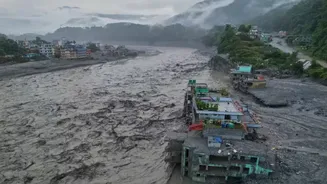



For hundreds of families in Nepal, the most agonising question after last week’s devastating floods is not how much was destroyed, but a much more personal one—Where are the children?
Around 600 children
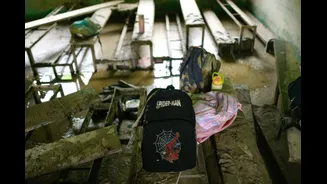
remain unaccounted for in the worst-hit districts of Rasuwa and Nuwakot, according to The Kathmandu Post. Schools that once helped families and authorities keep track of children have themselves been swept away or destroyed, while crippled communication networks have made even the most basic task—calling home and confirming that a child is safe—painfully difficult. At least 12 schools, four in Rasuwa and eight in Nuwakot, have been completely destroyed.
More than a week after the August 26 floods, the disaster is entering another, quieter phase; one of waiting, searching and trying to piece together fragments of information. For families who have not heard from their children, the absence of a phone call or a confirmed name on a list leaves them trapped between hope and fear. And until communications are restored and authorities can physically verify survivors, the fate of hundreds of children remains uncertain.
Communication Breakdown Complicates Search
The verification exercise has been particularly difficult because large parts of the affected region continue to struggle with damaged communication infrastructure. This has left authorities dependent on incomplete information from schools, local officials, families and rescue teams.
ALSO READ | Funerals Without Bodies: Locals In Nepal Hold Symbolic Cremation For Loved Ones Missing In Floods
The problem is especially serious for children because the destruction of schools has removed one of the key points through which officials would normally track students and contact their families.
Surya Bahadur Khatri, head of the Nuwakot Education Development and Coordination Unit, while speaking to The Kathmandu Post, said they were “actively liaising” with headmasters to collect verified data on missing students but blamed broken communication for being unable to provide exact figures. “Although a few missing students have been located, new reports of unaccounted-for children continue to arrive from various schools. We estimate that at least 300 pupils are missing in our district,” he said.
Navaraj Sapkota, school inspector of the municipality’s education unit, called the situation on the ground “deeply distressing”. “In some cases, we have located surviving parents who cannot find their children, while in other instances, surviving students are searching for missing parents,” Sapkota told The Kathmandu Post.
The report comes amid a much wider crisis in Nepal, where thousands of people remain missing more than a week after the disaster. Reuters reported on Thursday that more than 4,200 people were still missing and over 1,200 had been confirmed dead following the floods triggered by the August 26 glacier-related disaster.
12 Schools Completely Destroyed
The scale of destruction to educational infrastructure reveals the impact on children in the two districts.
ALSO READ | Rebuilt After 2015 Quake, Swept Away By 2026 Floods: Nepal’s Long Road Back Is Broken Yet Again
The Kathmandu Post reported that 12 schools were completely destroyed—four in Rasuwa and eight in Nuwakot. For thousands of other children, even schools that survived may be inaccessible because roads, bridges and other infrastructure connecting communities have been washed away.
A principal quoted by the newspaper said the entire premises “have been reduced to a barren riverbank. It feels as though we have been cast back into the Stone Age”.
UNICEF has separately estimated that at least 17,000 children were affected by the flash floods across Rasuwa, Nuwakot and Dhading. The UN agency said children urgently required humanitarian assistance in the immediate aftermath of the disaster.
Families Still Searching For Loved Ones
The uncertainty over the children comes as families across Nepal continue to search for relatives whose whereabouts remain unknown.
In Kathmandu, photographs and details of missing people have been collected at a “wall of the missing” at Tribhuvan University Teaching Hospital, where families continue to look for information about loved ones. Reuters reported that the wall has become a focal point for relatives trying to match photographs and information with unidentified bodies.
ALSO READ | ‘Save Me, I Don’t Want To Die’: Nepal Flood Leaves Children Battling Nightmares | Ground Report
The search is being complicated by destroyed roads, damaged bridges and disrupted communications. Rescue teams are also working in some of the country’s most difficult terrain, while hundreds remain feared trapped in damaged hydropower facilities.
A Humanitarian Crisis Beyond The Death Toll
The figure of 600 unaccounted-for children adds another dimension to Nepal’s disaster—one that goes beyond the already staggering death and missing-person figures.
Until communication is restored and authorities can physically verify the status of students, it remains unclear how many of the children are missing, how many have been rescued but are yet to be reunited with their families, and how many may have moved to safer locations.
For families, that uncertainty can be almost as agonising as confirmation of a loss. And for authorities, the first task is now to reconnect communities, restore communication and establish a reliable list of children who survived, those who remain missing and those who need to be reunited with their families.