





For decades, it thundered across the heart of the country, stitching together eastern and north-western India at a pace that once seemed astonishing. So swift was its run that passengers christened it the ‘Toofan
Express’, a name the Railways would later make official. After nearly 90 years of service across eight states, the iconic train has quietly slipped into history.
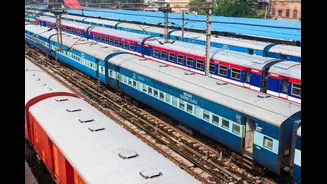
The Udyan Abha Toofan Express (13007/13008) was introduced on June 1, 1930, during British rule, to cover the 1,978-kilometre stretch between Howrah and Sri Ganganagar. At a time when long-distance rail travel was slow and uncertain, the train stood out for its speed and reliability, earning a reputation that travelled faster than the train itself.
Running through West Bengal, Jharkhand, Bihar, Uttar Pradesh, Delhi, Haryana, Punjab and Rajasthan, the Toofan Express connected major population centres and railway junctions. The journey from Howrah to Sri Ganganagar took 45 hours and 25 minutes, while the return trip took slightly longer at 46 hours and 20 minutes. With a maximum speed of 110 kmph and an average speed of 44 kmph, it was considered exceptionally fast for its era.
Initially, the train halted at only a handful of stations. Over the decades, as demand grew and rail infrastructure expanded, the number of stops swelled to around 110. Key stations on its route included Howrah Junction, Asansol, Mokama, Patna Junction, Pandit Deen Dayal Upadhyay Junction, Prayagraj Junction, Kanpur Central, Agra Cantt, Mathura Junction, New Delhi, Rohtak, Bathinda and, finally, Sri Ganganagar.
The beginning of the end came during the first wave of the Covid-19 pandemic. Like many long-distance services, the Toofan Express was suspended in March 2020 amid a nationwide lockdown. On May 19 that year, Eastern Railway quietly decided to cancel the service permanently. When the train failed to feature in the revised railway timetable issued on October 1, 2022, it became evident that the decision was final.
In 2025, members of Parliament and regular passengers raised demands for the revival of the historic train, citing its legacy and utility. The Railways, however, made no announcement, effectively drawing the curtain on one of Indian Railways’ longest-running services.
Such was the cultural imprint of the Toofan Express that its fame spilled beyond railway platforms. Between 1930 and 1940, at least three films were made with titles like Toofan Mail and Toofan Express, inspired by the train’s speed and symbolism.