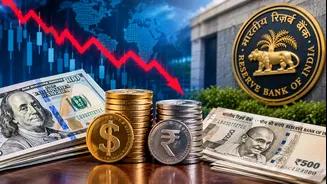







The US national debt has touched $40.33 trillion, raising fresh questions about the cost of America’s borrowing and its impact on global financial markets. As interest payments climb and US Treasury yields
remain elevated, investors are reassessing where to put their money.
For India, higher US yields can draw foreign capital away from emerging markets, put pressure on the rupee and increase the cost of dollar-priced imports such as crude oil.
On Monday, rupee gained 1% after the Reserve Bank of India eased pressure on the currency by shifting oil companies’ dollar purchases away from the spot market. The rupee was at 95.76 against the US dollar, compared with 96.73 on Friday.
Can America manage its growing debt without triggering prolonged volatility across the global economy?
How Did America’s Debt Cross $40 trillion?
The US national debt crossed the $40 trillion mark in August 2026. It includes money owed to investors, financial institutions and foreign governments, as well as debt held by US government accounts.
The debt has grown as successive administrations have spent more than the government collects in revenue. Major contributors include public spending, tax policies, economic stimulus measures, defence expenditure and rising interest payments on existing debt.
Borrowing is not unusual for a government. The challenge emerges when debt grows faster than the economy’s ability to support it, particularly when interest rates are high.
The US government must pay interest on its outstanding debt and refinance bonds as they mature. When borrowing costs rise, issuing new debt and replacing old debt can become more expensive, adding to the government’s financial burden.
Net interest payments are projected to exceed $1 trillion in the US financial year 2026. If current trends continue, the annual bill could rise substantially over the next decade, leaving Washington with less room to fund other priorities without increasing taxes or borrowing further.
However, the $40-trillion figure alone does not mean the US is on the verge of default. The country borrows in its own currency and benefits from deep financial markets and the dollar’s global role. The concern is whether its rising debt and interest burden will remain manageable over time.
Why Are Rising US Treasury Yields A Concern?
US Treasury bonds are among the most closely watched investments in the world. Their yields influence borrowing costs across financial markets, including government bonds, corporate debt and other forms of credit.
When Treasury yields rise, investors can earn higher returns from US government debt. This can make investments in emerging markets, including India, less attractive unless they offer sufficiently higher returns to compensate for additional risks.
The US 10-year Treasury yield has climbed above 5%, while the 30-year yield has also crossed that level. Such increases can raise the cost of borrowing across the economy and intensify concerns about the sustainability of America’s finances.
But rising yields do not necessarily indicate that investors are abandoning US debt. They can also reflect expectations of persistent inflation, stronger demand for credit or interest rates remaining high for longer.
This means a temporary rise in yields may cause short-term market volatility, while a sustained increase driven by concerns over government finances could have more lasting consequences for global investment.
How Could America’s Debt Problem Affect India?
The first major channel is foreign investment. Global investors compare returns across countries before deciding where to allocate their money. When US bonds offer more attractive yields, some investors may shift funds away from emerging market equities and bonds.
This could put pressure on the stock markets and the rupee. Foreign investors selling Indian assets typically convert the proceeds into foreign currency, adding to demand for dollars. However, investment flows also depend on India’s economic growth, corporate earnings, domestic interest rates and global risk appetite.
The rupee has already faced pressure amid foreign capital outflows and a global bond-market sell-off. A prolonged period of elevated US yields could make that pressure harder to contain, particularly if investors continue to favour dollar-denominated assets.
A weaker rupee also makes imports priced in dollars more expensive. If the rupee depreciates while global oil prices remain high, the cost of importing energy can increase, putting pressure on inflation and the current account.
For Indian households, a weaker rupee can raise the cost of overseas education, international travel and other expenses paid in dollars. Indian businesses that import machinery, electronics, chemicals and raw materials may also face higher costs. Depending on their ability to absorb these expenses, some companies could pass on part of the increase to consumers.
Higher US yields do not automatically translate into higher home loan interest rates in India. Domestic borrowing costs depend on several factors, including the Reserve Bank of India’s monetary policy, inflation, liquidity and credit demand.
However, if a weaker rupee contributes to inflation or global financial conditions tighten significantly, the RBI may have less flexibility to ease monetary policy.
How The RBI Can Intervene
India’s foreign exchange reserves provide a buffer that the RBI can use to manage excessive currency volatility. A large domestic investor base also helps reduce dependence on foreign portfolio capital.
The RBI can intervene in currency markets, provide dollar liquidity and adjust regulations to limit destabilising movements. Such measures can smooth sharp fluctuations, but they cannot permanently reverse the effects of sustained capital outflows, expensive imports or a stronger dollar.
The yield on the benchmark 6.94% government security maturing in 2036 rose to 7.35% at the open, from 7.29% at Friday’s close. On October 9, the RBI announced a Rs 25,000-crore open market operation (OMO) sale of government securities for October 13 and raised the minimum daily cash reserve ratio (CRR) maintenance requirement for banks to 99 percent from 90 percent, effective October 16. While the overall CRR ratio remains unchanged, the higher daily requirement reduces banks’ flexibility in managing funds. The OMO sale, meanwhile, will absorb liquidity as banks and investors pay for the securities.
Foreign exchange reserves also need to be viewed in context. Their adequacy depends on factors such as import requirements, external debt repayments and the scale of potential capital outflows.
India’s resilience will therefore depend not only on the RBI’s interventions but also on export performance, domestic growth, inflation management and the economy’s ability to attract stable long-term investment.
Is The Dollar’s Global Dominance Under Threat?
America’s rising debt has renewed questions about the long-term sustainability of its public finances. Yet the dollar remains central to international trade, financial transactions and global reserves. US Treasury markets also offer a scale and liquidity that few alternatives can currently match.
A growing debt burden does not automatically mean the dollar is about to lose its global position. A sustained loss of confidence would require more than a large debt figure; investors would need to question the reliability of US institutions, the stability of its currency or the attractiveness of its financial markets relative to alternatives.
For India, the immediate risk is not necessarily a collapse of the dollar-based system. It is the possibility that higher US borrowing costs keep global financial conditions tight, draw capital towards dollar assets and increase pressure on the rupee.
The $40-trillion debt milestone is therefore more than an American fiscal concern. It highlights how the cost of borrowing in the world’s largest economy can influence investment, currency stability and import costs in countries such as India. How Washington manages its debt, and how investors respond, could shape global financial conditions for years to come.