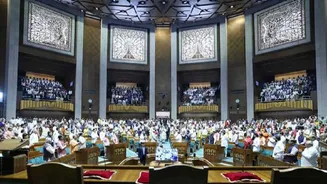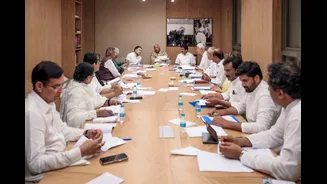






Representatives and vice chancellors from several National Law Universities, including Lucknow, Patna, Odisha, Kochi, Jodhpur, Meghalaya, and Shimla, appeared before the joint parliamentary committee (JPC)
on One Nation One Election on April 1 and presented their views on the proposed legislation.
The committee sought constitutional and legal inputs from the NLUs on various aspects of the Bill. During the meeting, the universities broadly backed the intent behind the legislation, saying it could improve administrative efficiency, reduce financial burden, address policy paralysis, and strengthen democratic functioning.
One of the key suggestions made during the meeting was the inclusion of a “constructive no-confidence motion” clause in the Bill. Representatives said such a mechanism has been adopted in countries such as Germany, Belgium, and Spain. Under this model, a no-confidence motion would not automatically lead to the dissolution of the House or Legislative Assembly. Instead, the House would be required to elect a successor at the same time as removing the sitting leader, thereby ensuring greater political stability.
The universities also proposed several technical amendments aimed at strengthening democratic safeguards. These included introducing procedural protections, reviewing the scope of powers proposed to be given to the Election Commission, and setting a statutory timeline for holding re-elections.
The meeting ended with members raising a series of questions. NLU representatives have now been asked to examine the legislative and constitutional concerns raised by the committee and submit a joint draft suggesting changes to the proposed Bill.
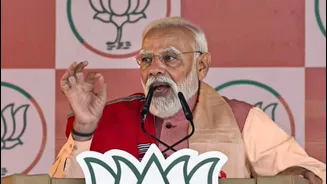
The proposal for One Nation One Election has been strongly advocated by Prime Minister Narendra Modi, who has argued that synchronising elections to the Lok Sabha and state assemblies would improve governance efficiency and reduce the financial and administrative burden of frequent polls.
The union government has initiated consultations with political parties, constitutional experts, and stakeholders, and a JPC is currently examining the proposal in detail. This committee is chaired by PP Chaudhary. From Supriya Sule (NCP) and Congress leaders Mukul Wasnik, Randeep Surjewala, and Priyanka Gandhi Vadra to Anil Desai (Shiv Sena UBT) and Kalyan Banerjee (TMC), the opposition benches are well represented.
On the NDA side are BJP leaders Anurag Thakur, Sambit Patra, Baijayant Panda, Anil Baluni, and Shiv Sena’s Shrikant Shinde, along with TDP’s GM Harish Balayogi.
Any move to implement simultaneous elections is expected to require significant constitutional amendments, as well as consensus among states and political parties.
The proposal has triggered a wider political debate, with supporters arguing it will streamline governance, while critics caution about possible implications for federalism and regional political dynamics.