





As the number of Ebola cases continue to increase, the World Health Organization (WHO) has confirmed that vaccine for the virus will not be available for another six to nine months.
The Guardian quoted
Dr Tedros Adhanom Ghebreyesus, the director-general of the WHO, saying that the outbreak in the Democratic Republic of the Congo and Uganda, that there had been 139 deaths, with numbers expected to rise.
At a press briefing, Dr Vasee Moorthy, who leads the WHO’s research and development blueprint, said: “There are no doses of this which are currently available for clinical trial … The information that we have is this is likely to take six to nine months.”
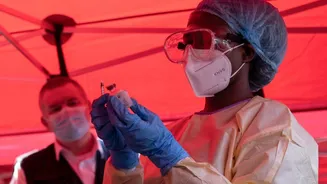
The Guardian quoted him saying that doses of an alternative, which uses the same platform developed by Oxford University as AstraZeneca’s Covid jabs, could be available for clinical trials in two to three months.
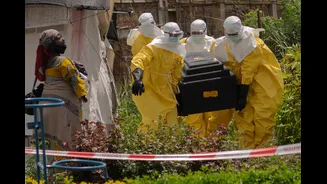
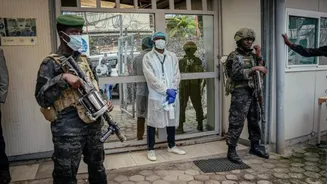
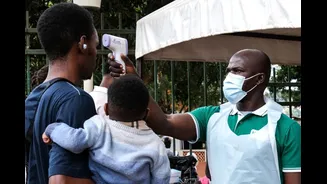
Ebola is a severe and often fatal disease transmitted through direct contact with bodily fluids such as blood, vomit or semen from infected individuals. The virus has historically spread rapidly during community funerals and caregiving activities. The outbreak was first announced by the African health officials last week and the WHO declared it a public health emergency on Sunday.
On Tuesday, US Secretary of State Marco Rubio accused the WHO of being “a little late” in identifying the deadly outbreak in Democratic Republic of the Congo and Uganda.
“The lead is obviously going to be CDC [Centers for Disease Control] and the World Health Organization, which was a little late to identify this thing unfortunately,” he said.
The WHO said it was first alerted on May 5 to around 50 deaths in Mongbwalu, including four healthcare workers. However, the first confirmed Ebola diagnosis only came on May 14 after initial testing for another, more common Ebola strain returned negative results
In response Rubio’s remarks, Tedros said the remark was probably based on “a lack of understanding”.
“Maybe on what the secretary said, it could be from a lack of understanding of how IHR [international health regulations] works, and the responsibilities of WHO and other entities. We don’t replace the country’s work, we only support them,” he said.