





West Bengal’s political landscape once again appears set for a closely watched electoral battle, with several constituencies emerging as decisive indicators of the state’s shifting political mood. From
urban strongholds in Kolkata to sensitive border districts in Murshidabad, these seats reflect a mix of historical loyalties, evolving caste and community equations, and intense party rivalries that could collectively shape the outcome of the next government.
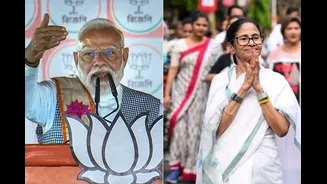
While the ruling Trinamool Congress (TMC) continues to hold a strong organisational presence across much of the state, the Bharatiya Janata Party (BJP), the Left Front, and the Congress are attempting to consolidate their positions in pockets where they see electoral openings. Many of these constituencies have witnessed repeated political swings over the past decade, making them unpredictable and highly competitive in the current context.
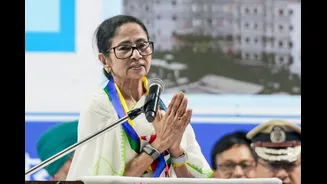
Bhabanipur, perhaps the most high-profile seat in the list, remains under intense national scrutiny. A TMC bastion since 2011, it gained prominence in 2021 when Chief Minister Mamata Banerjee contested and won a bypoll after shifting from Nandigram. This time, the BJP has fielded Suvendu Adhikari, who is also contesting from Nandigram, turning Bhabanipur into a symbolic battleground in Bengal politics.
In Nandigram, the political spotlight is equally intense. The constituency gained historic significance after Suvendu Adhikari defeated Mamata Banerjee in 2021, a result that briefly altered the state’s political narrative. The TMC has now placed Pabitra Kar in the field, while senior party leadership, including Abhishek Banerjee, has taken direct charge of campaigning, underlining the seat’s strategic importance.
Moving to Diamond Harbour, the constituency carries added weight due to its association with Abhishek Banerjee, who has represented the Lok Sabha seat since 2014. As one of the most influential leaders in the TMC hierarchy, his political standing is closely tied to the party’s performance here. Any shift in voter sentiment is likely to be interpreted as a reflection on his organisational influence.
In Murshidabad, the contest remains multi-layered, with Congress still maintaining a visible presence despite recent losses to both TMC and BJP. The constituency has changed hands in recent elections, and with candidates from all three major parties in the fray, the seat is expected to witness a tightly contested triangular battle.
Urban and semi-urban constituencies like Jadavpur, Ballygunge, and Kolkata Port bring their own unique political dynamics. Jadavpur, once a Left fortress, continues to see attempts by CPI(M) to reclaim lost ground against the TMC. Ballygunge, with its diverse electorate, remains a TMC stronghold but is being actively challenged by opposition parties. Kolkata Port, led by senior TMC leader Firhad Hakim, is also expected to see focused opposition campaigning due to its demographic significance.
Further south, Bhangar stands out as one of the most volatile constituencies. Known for political tensions and shifting alliances, it has seen strong performances from the ISF, supported at times by the Left. Internal factional issues within the TMC add another layer of complexity, making it a seat where ground-level organisation could prove decisive.
Finally, **Baruipur Paschim** continues to remain a firm TMC base under Assembly Speaker Biman Banerjee. However, the BJP’s improving vote share in recent elections suggests that even long-held bastions are not immune to changing political currents.
Taken together, these 10 constituencies highlight the diversity and competitiveness of West Bengal politics today.