





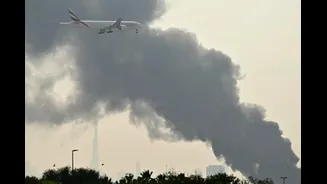
The West Asian conflict has massively disrupted the flight operations across the Gulf region. In the backdrop of the situation, the Directorate General of Civil Aviation (DGCA) has asked airlines to avoid
11 gulf airspaces.
Earlier, the aviation regulator had granted temporary relief to Air India on crew duty rules as the situation in West Asia continued to disrupt normal flight paths. With Iranian and Iraqi airspace currently restricted, the airline has been forced to reroute its flights along longer paths, leading to extended flying hours. In view of this, the DGCA has allowed short-term flexibility in duty norms for Air India until the situation stabilises.
“Operations to airports in the affected region, where other international carriers are currently operating, must involve robust contingency planning to cover all eventualities, as part of the safety risk assessments by the operators,” the DGCA said, according to news agency PTI.
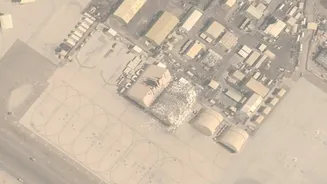
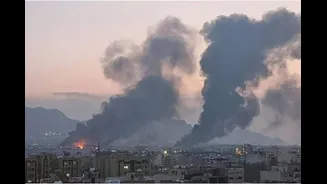
“Recent military strikes conducted by the United States and Israel against targets within Iranian territory have led to a high-risk environment for civil aviation. In response to these strikes, Iran has announced retaliatory measures,” said the DGCA.
DGCA Asked To Avoid These Airspaces:
Iran
Israel
UAE
Qatar
Lebanon
Kuwait
Saudi Arabia
Bahrain
Oman
Iraq
Jordan
On Wednesday, Union Civil Aviation Minister Ram Mohan Naidu had said that the government is pushing efforts to ensure smoother travel arrangements, also emphasising that West Asia is a “prime route” to travel to Europe and West Asia and the government is constantly engaging with different airlines and regulators.
“We have been engaged with the airlines right from day one because one thing we want is for the airlines to have very smooth operations. Now, when you talk about West Asia, it is one of the prime routes for us to travel to Europe and America, and there is also a lot of travel to West Asia. We have been in continuous engagement… Not only with the airlines but also with different regulators in these countries, we have been in continuous engagement,” Naidu had said.
“However, what we are observing is that in some places, it is an on-and-off situation. Some airports are not functional, so the challenge remains… We are trying to see how best we can accommodate all of this on behalf of civil aviation. The airlines’ continuity and stability must be maintained… Safe operations must be ensured… We have to facilitate the passengers. Keeping all this in mind, our interaction with the airlines is happening continuously,” Naidu added.
The latest conflict in West Asia began on February 28 after Iran’s Supreme Leader Ayatollah Ali Khamenei was killed in strikes and has since escalated into direct fighting between Iran on one side and the United States and Israel on the other.
(With ANI inputs)