









Cooking oil is one of those kitchen essentials people rarely think about, until prices suddenly rise. Unlike petrol price hikes, which often grab headlines instantly, edible oil inflation impacts everyday
cooking, restaurant meals, packaged snacks and street food. Behind every litre of sunflower, palm or soybean oil is a global supply chain that India has become increasingly dependent on over the last three decades.
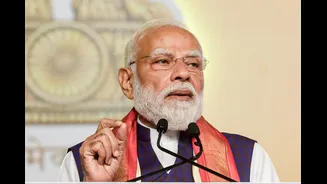
Prime Minister Narendra Modi’s recent appeal asking citizens to reduce cooking oil consumption by 10% has unexpectedly pushed the issue into the national spotlight. The message was not only about healthier eating habits. It also reflected growing concern around India’s rising edible oil import bill and the vulnerability of household kitchens to global disruptions.
With the Iran war, climate chaos, shipping crises and currency freefall disrupting commodity markets worldwide, cooking oil is increasingly emerging as one of India’s most sensitive economic pressure points.
Why Cooking Oil Has Suddenly Become A National Concern
India imports 60% of its total edible oil requirement, the total import volume at 16-16.7 million tonnes, according to industry estimates. India’s total edible oil production was recorded at 12.18 million tonnes during 2023-24, according to the Press Information Bureau (PIB), quoting a NITI Aayog report. The country is able to meet roughly 44% of its domestic demand for edible oils through internal production.
Thus, the cooking oil used daily in kitchens is dependent on the international markets. Palm oil largely comes from Indonesia and Malaysia. Sunflower oil depends significantly on supplies from the Black Sea region, especially Ukraine and Russia. Soybean oil imports are linked to global agricultural markets and weather conditions in countries like Brazil and Argentina.
This global dependence means any disruption, from wars and droughts to shipping bottlenecks or export restrictions, quickly affects Indian retail prices.
The Russia-Ukraine conflict offered one of the clearest examples of this vulnerability. In early 2022, sunflower oil imports fell significantly. From November 2021 to February 2022, India imported 843,377 tonnes of sunflower oil, about 85% of which came from Ukraine, 14.3% from Russia and the rest from Argentina. India typically imports 150,000-200,000 ton of sunflower oil each month, according to industry experts.
Similar volatility has also emerged when Indonesia temporarily banned palm oil exports from April 2022 to May 2022 or when climate events affected crop production in Southeast Asia.
“Increase in oil and gas prices is usually followed by rise in agriculture prices because naphtha/natural gas are used as feedstock in urea manufacture. In the current scenario, because of shutdown of Qatar’s LNG plant, and reduced oil flow from West Asia, there will be a physical shortage of urea, and consequently, a shortage of downstream agri-products. There are some reports of reduced sowing in East Asian countries,” said Amit Bhandari, senior fellow, energy, investment and connectivity at Gateway House.
“While India is self-sufficient in cereals, we are an importer of cooking oil. So, there will be the impact of shortage and rising price. Weaker rupee further heightens the impact,” Bhandari explained.
How India Became So Dependent On Imported Edible Oils
India was not always this dependent on edible oil imports. Several decades ago, the country was far more self-reliant in oilseed production through crops such as mustard, groundnut, sesame and coconut.
Up to the mid-1990s, India met 94% to 98% of its edible oil requirements domestically. This era of self-sufficiency was largely achieved through traditional oilseeds, including rapeseed-mustard, groundnut, sesame, and coconut, spearheaded by the Technology Mission on Oilseeds (TMO) in 1986, which triggered the ‘Yellow Revolution’.
But changing food habits, population growth, urbanisation and rising consumption gradually widened the gap between domestic production and demand.
According to historical industry analyses, India’s edible oil consumption has more than doubled over the last few decades as incomes rose and processed food consumption expanded rapidly.
Per capita consumption rose from 5-8 kg in the early 2000s to over 19 kg (with some reports suggesting over 23 kg by 2025), largely due to increased purchasing power and processed food intake.
While domestic production was 12.18 million tonnes in 2023-24, it fails to meet the rapidly rising demand, creating a significant reliance on palm, soybean, and sunflower oil imports.
Urbanisation has also transformed eating patterns such as more people now consume deep-fried foods and packaged snacks, and restaurant dining and fast-food culture have also significantly increased edible oil demand.
The expansion of India’s FMCG and food-delivery sectors further accelerated consumption. The FMCG sector, India’s fourth largest, is projected to grow at a 27.9% CAGR from 2021 to 2027, reaching over US $615 billion, while the organised food delivery market is expected to hit $23 trillion by FY30.
At the same time, domestic oilseed farming struggled to keep pace. Around 60-70% of India’s oilseed cultivation is rainfed, making it vulnerable to climate change and erratic monsoon. Oilseeds are often grown on marginal lands with poor soil fertility, while farmers prefer high-yield, irrigated food grains (like wheat or rice) over oilseeds.
Farmers often shifted towards crops that offered more stable returns or government procurement support, such as rice and wheat. Oilseed productivity also remained lower than global standards in several regions due to fragmented landholdings, weather dependency and limited technological upgrades.
Cheaper imported palm oil eventually became economically attractive for both consumers and food companies. Over time, India drifted from edible oil self-sufficiency towards structural import dependence.
Why Cooking Oil Prices Become Volatile So Quickly
Cooking oil prices react faster to global events than many consumers realise.
High Import Dependence: Since India imports such large quantities, even a weaker rupee can increase edible oil costs. When the rupee falls against the dollar, importing oil becomes more expensive, and those higher costs eventually reach consumers.
Geopolitics & Conflicts: Wars in Ukraine or West Asia disrupt supply chains and panic buyers. Attacks on shipping routes, rising freight costs or port congestion can all increase edible oil prices within weeks.
Climate Change: Palm oil production depends heavily on weather conditions in Southeast Asia. Soybean and sunflower crops are vulnerable to droughts, floods and unpredictable rainfall patterns across multiple countries.
Biofuel Competition: Edible oils are increasingly used for energy (biodiesel) rather than food. When energy prices rise, demand for soy and palm oil as fuel increases, leaving less for cooking and driving up costs.
How Indian Households Are Impacted
For many Indian families, edible oil is not an optional purchase. It is central to daily cooking habits across regions and cuisines.
Whether it is tadka in North Indian kitchens, deep frying in street-food stalls or snacks manufactured by FMCG companies, edible oil consumption cuts across class and geography.
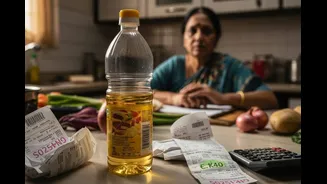
As prices rise, households often make silent adjustments such as reducing fried foods, switching to cheaper oil varieties or cutting back on discretionary spending elsewhere.
Restaurants and local eateries also face pressure because cooking oil forms a major operational cost. Higher edible oil prices often translate into costlier samosas, pakoras, chips, biryani and restaurant meals.
The impact spreads far beyond kitchens. Packaged food companies use edible oils extensively in biscuits, namkeen, instant foods and bakery products. Rising oil prices therefore influence FMCG inflation as well.
This is one reason why governments closely monitor edible oil prices alongside fuel and cereal inflation.
Can India Reduce Its Dependence On Imported Edible Oils?
The government has already increased focus on boosting domestic oilseed production through initiatives involving mustard, soybean and oil palm cultivation. The government has launched the National Mission on Edible Oils –Oilseeds (NMEO-Oilseeds) for 2024-25 to 2030-31 to achieve self-reliance (Atmanirbhar Bharat) by increasing primary oilseed production from 39 million tonnes (2022-23) to 69.7 million tonnes by 2030-31.
Policymakers are also encouraging higher productivity and diversification of oilseed farming. However, reducing import dependence will not be easy.
The Solvent Extractors’ Association of India (SEA) said reducing the use of cooking oil would help India curb its dependence on import, lessen vulnerability to global supply shocks and save foreign exchange amid rising geopolitical and climate risks.
“With climate uncertainties rising, biodiesel mandates tightening global vegetable oil supplies, and geopolitical tensions adding fresh risks, this is perhaps the right moment for the nation to think long term. Along with boosting domestic oilseed production, balanced consumption habits will play a crucial role in reducing vulnerability,” SEA Executive Director BV Mehta said.
Experts increasingly believe India may need a combination of solutions: higher domestic production, diversified import sources, improved agricultural technology and consumer awareness around healthier consumption patterns.
“In case of agro products, there is no real alternative to imports, as cultivable land is limited. We will remain dependent on imports for our needs. Higher cooking oil prices will get passed on to consumers as importers are private corporations. From a consumer point of view, there is going to be higher inflation going forward,” Bhandari warned.
As India continues balancing inflation, food security and household affordability, cooking oil may quietly become one of the country’s most important economic conversations in the years ahead.