
Germany’s leading industry bodies, economic think-tanks and corporate leaders have broadly welcomed the conclusion of negotiations on the India-EU Free Trade Agreement (FTA), calling it both an economic opportunity
and a strategic necessity at a time of rising global trade tensions.
Business chambers and industry associations see the agreement as a timely opening for German exporters to deepen their presence in one of the world’s fastest-growing major economies.
Sebastian Stiezel, President of the Berlin Chamber of Commerce (IHK Berlin), said the India-EU FTA was “an important step towards opening up in an increasingly tense global situation”. Stressing the urgency for German businesses, he added that “India is no longer a future market, but a market of the present, in which Berlin should now seize the opportunities.”
Industry groups in southern Germany echoed similar optimism. Bertram Brossardt, managing director of the Association of Bavarian Businesses (vbw), described the agreement as one that “sends a strong signal”, calling it a “crucial step towards benefiting from a dynamic market, diversifying our trade relations, and strengthening our position in the Indo-Pacific region”.
He underlined that diversification of trade partnerships has become increasingly important for German companies amid geopolitical uncertainty.
Germany’s powerful automotive sector also welcomed the deal. Hildegard Mueller, president of the German Association of the Automotive Industry (VDA), said the agreement “sends a strong signal of decisive action!”, describing it as “an important step for both regions, and especially for Germany as an export nation”.
Industry executives believe the FTA could ease market access barriers, support investments and improve supply chain integration between Europe and India.
Economic researchers highlighted the broader systemic impact of the agreement. Julian Hinz, Research Director at the Kiel Institute for the World Economy (IfW Kiel), said the FTA would “open substantial parts of the economy, strengthen supply chains, and reduce vulnerability to geopolitical shocks”.
His colleague at IfW Kiel, researcher Vasundhara Thakur, called the agreement a “stabiliser” at a time of global tariff uncertainty, noting that it “provides an insurance mechanism against global trade turmoil and sends a strong signal that rules-based trade cooperation still works”.
Manufacturing and engineering associations also framed the FTA in strategic terms. Thilo Brodtmann, managing director of the German Engineering Federation (VDMA), said the conclusion of negotiations shows that “Europe is sending an unmistakable signal for rules-based trade and against the law of the jungle”.
Export-oriented regions within Germany see the agreement as particularly significant. Thomas Bürkle, president of the Association of Entrepreneurs Baden-Württemberg (UBW), described the deal as a “breakthrough for Europe and a strong signal for the future of our export-oriented economy in Baden-Württemberg”, adding that it is “more than a trade deal – it is an instrument for strengthening our economic resilience”.
Senior executives from major German carmakers, including Volkswagen, BMW and Mercedes-Benz, have also welcomed the agreement, citing its potential to boost exports, encourage long-term investment and make global supply chains more resilient.
Taken together, the reactions underline a broad consensus within Germany’s business and policy ecosystem that the India-EU FTA is not only about trade liberalisation, but also about strategic positioning, economic resilience and reinforcing rules-based global commerce at a time of growing uncertainty.
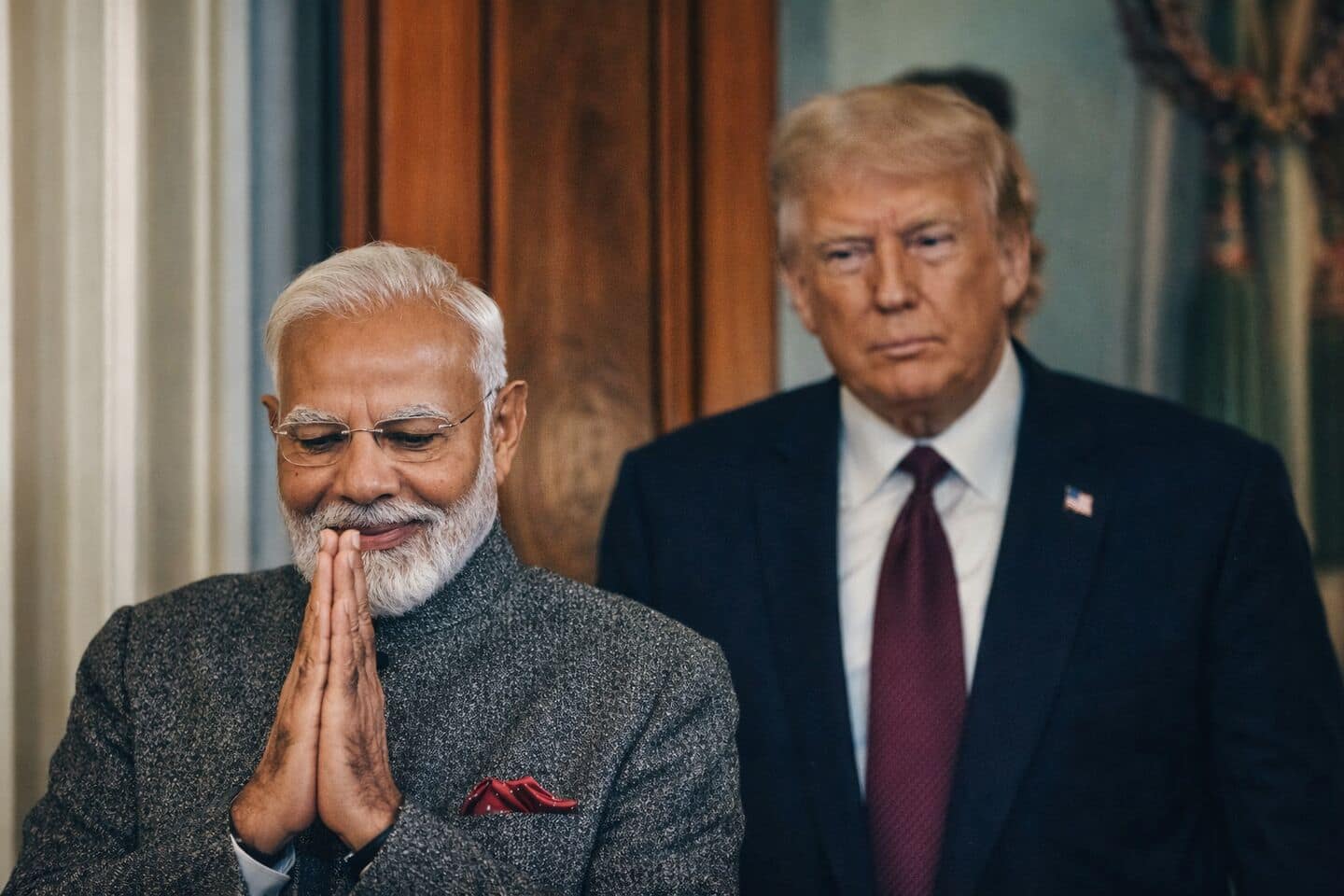
India and the European Union on Tuesday sealed a landmark free trade agreement (FTA) — billed as the “mother of all deals” — to create a market of two billion people with Prime Minister Narendra Modi and the top EU leadership unveiling a transformative five-year agenda to largely leverage trade and defence in protecting the rules-based world order.
The two sides also inked two crucial pacts — one on security and defence collaboration and another on mobility of Indian talents to Europe — after Prime Minister Modi hosted EU leaders Ursula von der Leyen and Antonio Costa for summit talks amid frosty ties with the US.