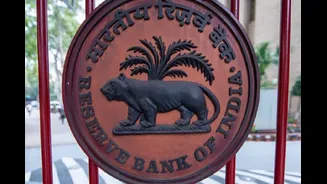

Whenever conversations turn to rising prices, joblessness or the everyday strain on household budgets, a familiar question surfaces with remarkable regularity. If the Reserve Bank of India (RBI) has the authority
to print currency, why doesn’t it simply print more money? And if it can, why doesn’t the government distribute cash freely to ease people’s lives?
The answer lies not in a lack of machinery or intent, but in history, law and the fragile balance that holds an economy together.
The RBI, the country’s central bank, was set up in 1926 following the recommendations of the Royal Commission on Indian Currency and Finance, better known as the Hilton Young Commission. At its inception, the RBI functioned as a private institution. That changed in 1949, when it was nationalised and formally entrusted with the responsibility of steering India’s monetary and banking system. Since then, it has operated under the overall framework of the Ministry of Finance though its day-to-day monetary decisions are taken independently.
Contrary to popular belief, the RBI’s role extends far beyond printing currency. Its core mandate is to maintain public confidence in the financial system, safeguard depositors’ interests and ensure the smooth functioning of banks. It is also responsible for maintaining monetary stability, managing government borrowing, overseeing foreign exchange reserves and regulating the issuance of currency.
The assumption that the RBI can print unlimited money simply because it operates currency presses ignores the legal and economic constraints under which it functions. In India, the responsibility for issuing money is split by law. Coins are minted exclusively by the government under the Coinage Act of 1961, while currency notes are printed by the RBI. Even then, the central bank’s powers are not unlimited.
India follows what is known as the Minimum Reserve System, a framework that has been in place since 1957. Under this system, the RBI is legally required to maintain a minimum reserve of Rs 200 crore at all times. Of this, at least Rs 115 crore must be held in gold, while the remaining Rs 85 crore must be backed by foreign currency assets. These reserves act as a guarantee of value for the rupee.
Every currency note issued in the country carries a promise signed by the RBI Governor stating, “I promise to pay the bearer the sum of….”. This is not a ceremonial phrase. It signifies that the note is backed by assets, gold or foreign exchange, held by the apex bank. If the RBI were to print currency far in excess of its reserves, it would no longer be able to honour that promise, severely undermining trust in the rupee and triggering economic instability.
Currency printing itself is a tightly regulated process. India has four currency presses; at Dewas in Madhya Pradesh, Nashik in Maharashtra, Mysuru in Karnataka and Salboni in West Bengal. The presses at Dewas and Nashik are operated by the government, while those at Mysuru and Salboni function under the RBI.
At the beginning of each financial year, the apex bank assesses how many new notes are required by factoring in the number of damaged and withdrawn notes, as well as expected demand in the economy. Based on these calculations, the RBI, in consultation with the Ministry of Finance, finalises the printing plan.
The dangers of excessive money printing are well documented. If large amounts of currency are injected into the economy without a corresponding increase in goods and services, inflation becomes inevitable. More money begins to chase the same quantity of milk, pulses, homes and vehicles, driving prices sharply upward. What initially appears to be financial relief quickly turns into a loss of purchasing power, as the value of money erodes.
Several countries offer stark warnings. In Zimbabwe and Venezuela, unchecked money printing led to hyperinflation so severe that people needed bags full of notes to buy basic necessities like bread. Savings were wiped out, currencies collapsed and public faith in the financial system was destroyed.
In India, even the denominations of currency are governed by law. At present, notes can be issued up to a maximum denomination of Rs 10,000. Printing higher-value notes would require amendments to existing legislation, underscoring how tightly controlled the system is.
The idea that printing unlimited money could solve economic problems is, therefore, deeply flawed. Such a move would rapidly deplete gold and foreign exchange reserves, weaken the rupee on the global stage, fuel runaway inflation and potentially plunge the economy into crisis.