
When US President Donald Trump announced that any country continuing trade with Iran would face an additional 25% tariff, the declaration sent ripples across global markets. In India, questions quickly
arose over the country’s exposure, that how much does India trade with Iran, what goods are involved, and could Indian exports be hit?
Asked about the possible impact, Commerce Secretary Rajesh Agrawal played down concerns, saying that India had not received details from the US on what items the tariffs apply to. In any case, India’s trade with Iran is “limited and largely humanitarian”, he said.
That clarification has put the spotlight on a term often used but rarely explained, humanitarian trade.
Q. What is humanitarian trade?
A: Humanitarian trade refers to the exchange of essential goods meant to sustain civilian life, not to generate profit or support a government’s military or strategic interests. Under international law and UN-sanction regimes, even countries under the harshest economic sanctions are allowed to import and export certain categories of goods. These exemptions exist to ensure civilians, particularly children, the sick, and vulnerable populations, do not suffer shortages of food or medical care. Goods falling under this category are not subject to punitive tariffs or sanctions.
Q: Why are tariffs or sanctions not applied to humanitarian trade?
A: International humanitarian law draws a clear distinction between governments and civilian populations. Even during geopolitical conflicts, economic wars, or sanction regimes, the principle is that ordinary people should not pay the price for political disputes. The United Nations and allied bodies monitor sanctions to ensure they do not trigger famine, disease outbreaks, or humanitarian crises. Blocking food and medicine would violate these norms, which is why such trade is generally protected.
Q: What items are covered under humanitarian trade?
A: Humanitarian trade excludes luxury or non-essential goods. It typically includes basic food grains, edible items, drinking water, life-saving medicines, vaccines, surgical equipment, medical devices, seeds, and fertilisers, goods that allow a country to feed its population and keep its healthcare system running.
Q: What does humanitarian trade mean for India’s trade with Iran?
A: India’s remaining trade with Iran falls almost entirely within this protected category. Indian exports include rice, tea, sugar, and other essential food items. The pharmaceutical sector supplies affordable generic medicines for cancer, diabetes, and other critical illnesses to Iran. Surgical instruments and hospital equipment also form part of this exchange. Because these exports are humanitarian in nature, they are not expected to attract additional tariffs.
Q: How will India avoid US tariffs under the new announcement?
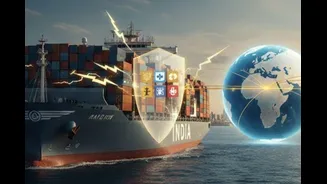
A: India no longer imports Iranian crude oil and does not export weapons or military artillery to Iran. With trade limited to food and medicine, India’s position is that punitive tariffs cannot legally or morally be imposed on such shipments. This argument is likely to hold weight even in the US, as the US itself would be reluctant to be seen as obstructing essential supplies to civilians. That said, Indian officials have indicated they will closely study the final US tariff framework once details are formally notified.
For India, the strategy is to maintain a centuries-old civilisational and economic relationship with Iran without inviting economic retaliation from the US.
Even as it navigates trade uncertainty with the US, India is simultaneously advancing talks with the European Union. Trade Secretary Aggarwal has confirmed that India and the EU are close to finalising a long-pending Free Trade Agreement (FTA), with negotiations entering their final stage.
The EU’s top leadership is scheduled to visit India around Republic Day on January 26, and officials indicate the agreement could be sealed during those engagements.
Why does the India-EU FTA matter?
For Europe, the prize is access to India’s vast and growing market of 1.4 billion consumers and an expanding middle class. European automobiles, high-end machinery, wines, and advanced technologies stand to gain easier entry into India.
For India, the benefits run just as deep. Key sectors such as textiles, leather, gems and jewellery, and IT services are expected to receive duty-free or reduced-tariff access to the affluent markets of the EU’s 27 member states.