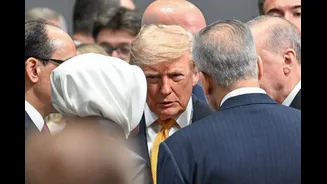








US President Donald Trump has said the United States had called off what he described as “the biggest attack since World War II” against Iran and would instead begin negotiations with Tehran on Monday
afternoon in a bid to reach a deal on reopening the Strait of Hormuz and ensuring Iran’s denuclearisation.
Speaking aboard Air Force One, Trump said regional allies had urged Washington to halt the planned military operation, arguing that such an attack could destroy the chances of ending the months-long conflict through diplomacy.
“Now what we’re doing is we’re talking to them in the form of a negotiation. It begins tomorrow afternoon, and we’ll see,” Trump said, adding that the proposed talks would focus on reopening the Strait of Hormuz and addressing Iran’s nuclear programme.
ALSO READ | Did Iran Reject Trump’s Deal Offer? Tehran Says ‘No Strait Of Hormuz Agreement Exists’
Asked if he had set a deadline for the negotiations, Trump said there was none. “We’ll just see how it is. We’re ready to go any time we want. Would I rather make a deal? I’m not looking to kill people… We don’t want that,” he said.
During his remarks, Trump revealed that the aborted operation would have been “the biggest attack since World War II”, but said he ultimately decided against it after appeals from Saudi Arabia’s Crown Prince Mohammed Bin Salman as well as US partners such as the United Arab Emirates and Qatar urged him against conducting strikes over the weekend.
“We were all set to go,” Trump said. “The reason they asked is [that] they think there’s a deal,” he said. “There’s a deal on Hormuz, and there will be a deal on the nuclear.”
Iran, however, rejected Trump’s account of events, with the semi-official Mehr News Agency dismissing his assertion that Tehran had sought a pause in US military action. The agency described the claim as “nothing but a new lie”.
ALSO READ | US-Iran War Stretching America’s Military Thin? Top General Warns Israel’s Defence Is At Risk
Meanwhile, Iranian Foreign Minister Abbas Araghchi said on Sunday that negotiations being mediated by Oman on a deal to reopen the Strait of Hormuz were progressing well and were “on track for finalisation”, according to Iranian media.
Trump’s latest diplomatic push follows a pattern of pairing sharp military threats with offers of negotiations. Earlier this year, on April 7, he warned that “a whole civilisation will die tonight” if Iran refused to enter peace talks, while also threatening strikes on civilian infrastructure and power facilities.
Those warnings were followed by rare face-to-face talks in Pakistan, led by US Vice-President JD Vance. Although the meetings marked a significant diplomatic breakthrough, they ended without an agreement.