








The UN Food and Agriculture Organization (FAO) has warned that any prolonged disruption around the Strait of Hormuz could trigger a food crisis within the next six to 12 months. The concern is not limited
to fuel costs alone. Instead, it centres on a cascading supply-chain disruption involving fertilisers, shipping, energy and agriculture.
The UN stressed that the decisions made now by farmers and governments on fertilizer use, imports, financing and crop choices will determine whether food prices spike later this year or in early 2027.
“Start seriously thinking about how to increase the absorption capacity of countries, how to increase their resilience to this choke, so that we start to minimize the potential impacts,” FAO Chief Economist Maximo Torero said in a podcast published on Wednesday.
India imports over 85% of its crude oil requirements from Russia, Saudi Arabia, the UAE and Iraq, and is also heavily dependent on fertiliser imports and Gulf shipping routes. If supply disruptions persist long enough, the effects may eventually hit ports, refineries, farms, crop production and household food prices.
Why Hormuz Matters Beyond Oil
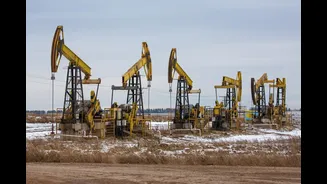
The Strait of Hormuz is one of the world’s most strategically important maritime chokepoints. Roughly one-fifth of global oil trade passes through the narrow waterway connecting the Persian Gulf to international markets.
Countries such as Saudi Arabia, Qatar, the UAE, Kuwait and Iraq rely heavily on the route to export crude oil, liquefied natural gas (LNG) and petrochemical products. But energy is only part of the story.
The Gulf region is also a major supplier of fertiliser feedstock, particularly ammonia and urea, both of which are essential for modern agriculture. Natural gas is a critical raw material in fertiliser production, especially nitrogen-based fertilisers widely used in countries like India.
Even before any full-scale blockade or military escalation, tensions around Hormuz have already begun pushing up shipping costs, marine insurance premiums and freight risks. The global shipping industry is facing daily losses of $394 million, according to the European Federation for Transport and Environment.
Global GDP losses are estimated to range from $330 billion in a short-term crisis to over $3.57 trillion in a prolonged scenario.
War risk insurance premiums for tankers have surged from historic lows to as high as 10% of vessel value. Additionally, diversions around the Cape of Good Hope add 10-14 days of travel.
Analysts warn that these costs gradually flow through supply chains, making imported fertilisers and agricultural inputs more expensive over time.
Unlike fuel spikes that hit logistics immediately, fertilizer shocks affect biological production cycles, a report by International Fresh Produce Association said. When fertilizer prices surge, the primary driver of food inflation is not just the higher input cost, it is the behavioural risk of farmers reacting by using less fertilizer, switching crops, or delaying planting. This results in lower yields and tightened supply, ultimately hitting consumer food prices with a 6 to 12-month lag.
That delayed timeline is exactly what worries global agencies.
Why Fertiliser Matters So Much
Modern agriculture depends heavily on fertilisers to sustain high crop productivity. India imports large quantities of urea, phosphatic fertilisers, potash and ammonia from Gulf nations and other international suppliers. According to government data, India imports nearly 20-25% of its urea requirements and almost its entire potash demand from overseas markets.
Despite producing 80% of its urea requirement domestically, the industry is heavily dependent on imported fuel. While green ammonia produced from the electrolysis of water using solar energy is an option, it is not sustainable in water-stressed areas.
In his 2017 ‘Mann Ki Baat’ address, Prime Minister Narendra Modi had urged the country to reduce fertiliser consumption by half within five years. But instead of declining, fertiliser use has continued to rise. Experts say one major reason is the lack of coordination between different ministries and departments handling agriculture, procurement and rural policy, Nandula Raghuram, Professor and Founder, Centre for Sustainable Nitrogen and Nutrient Management, Guru Gobind Singh Indraprastha University, said, as mentioned in The Hindu.
While the government announces Minimum Support Prices (MSPs) for more than 20 crops, large-scale procurement remains concentrated mainly around rice, wheat and sugarcane. As a result, many farmers continue prioritising these crops because they offer more assured returns. These three crops alone account for more than two-thirds of India’s urea consumption. Agricultural experts warn that this pattern has weakened traditional crop rotation practices involving pulses and legumes, gradually increasing farmers’ dependence on chemical fertilisers.
Agricultural economists say the real danger is not necessarily an immediate shortage, but rising prices and supply uncertainty during critical planting seasons.
Could Food Inflation Return?
Wholesale inflation in India jumped to 8.3% in April 2026, its highest level in 3.5 years, driven by the sharp rise in crude oil and natural gas prices. Inflation in this category stood at 67.2% in April.
Data on the Wholesale Price Index (WPI) released by the Ministry of Commerce and Industry on May 14 showed that the last time wholesale inflation in India was higher than this was in October 2022. It had stood at 3.9% in March 2026.
But experts warn that rising fertiliser and transport costs could quietly revive inflationary pressures.
The Confederation of Indian Industry (CII) has urged the government to adopt an integrated approach to tackle the challenges of fuel, fertilizer and food rising due to the West Asia conflict.
Chandrajit Banerjee, Director General of CII, said the three sectors are closely interconnected and directly influence inflation, fiscal stability and household welfare. “Fuel feeds into fertilizer, fertilizer feeds into food, and all three feed into inflation, fiscal stress, and household welfare,” Banerjee stated.
He stressed that India needs a coordinated and forward-looking strategy to reduce vulnerability to global shocks.
The risk is particularly sensitive because it overlaps with agricultural sowing cycles. Farmers make fertiliser purchase decisions months before crops reach markets. If fertiliser becomes expensive or difficult to access during this window, crop productivity could eventually suffer.
Rising crude oil prices increase logistics expenses, including transport cost, across the agricultural economy — from running tractors and irrigation pumps to transporting vegetables, grains and dairy products across states.
Global oil prices surged past $120 a barrel after the Strait of Hormuz was severely disrupted and partially shut following the US-Israeli attacks on Iran. Prices later eased, retreating to the $100-$105 per barrel range. Before the conflict in West Asia, crude oil was trading below $75 per barrel, indicating a more than 50% jump in just three months.
The direct impact of the fuel price hike would be muted at about 15 basis points on CPI, although the indirect impact will be larger, Madhavi Arora, chief economist at Mumbai-based Emkay Financial Services, told Reuters.
Elaborating on it further, Madan Sabnavis, Chief Economist, Bank of Baroda, said, as quoted by Mint, “Petrol and diesel together account for nearly 5% of the CPI. A Rs 3 increase roughly translates into a 3% rise in fuel prices, which alone could have a direct impact of around 0.15% on inflation. To this, we must also add the effects of the earlier hikes in LPG and CNG prices. So, there will certainly be upward pressure on inflation.”
He further said higher CNG prices typically lead to increase in auto fares, while higher diesel prices raise transportation costs. The impact would thus filter through multiple sectors of the economy, including agriculture. “This, in turn, can push up food prices.”
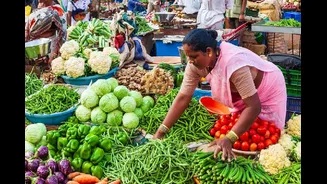
For ordinary consumers, this could eventually translate into higher prices for staples, vegetables, edible oils and packaged food products.
Can India Avoid The Worst?
India is not entirely unprepared for such disruptions. Over the past few years, the government has attempted to diversify crude oil imports beyond the Gulf, including increased purchases from Russia, the Americas, and Africa. The share of crude arriving via routes outside the Strait of Hormuz has increased from roughly 55% to about 70%, the government said.
The country also maintains strategic petroleum reserves designed to cushion short-term supply shocks. Fertiliser companies and government agencies maintain buffer stocks for certain nutrients, while foodgrain reserves under the Food Corporation of India provide some protection against immediate food shortages.
Government subsidies also continue to shield farmers from full exposure to global fertiliser price volatility.
Union Agriculture Minister Shivraj Singh Chouhan at a press conference on Tuesday acknowledged that sourcing adequate fertiliser stocks has become increasingly difficult, with the government actively seeking supplies from a network of 28 countries. Chouhan stressed that despite current stocks meeting immediate needs for the kharif season, the situation remains precarious due to persistent global instability.
To tackle the rising fertiliser prices on the international market, the central government has bolstered its subsidy programme. A recent allocation of Rs 41,534 crore for nutrient-based subsidies is set to make urea and DAP (Di-Ammonium Phosphate) more affordable for farmers, with capped prices at Rs 266 per bag for urea and Rs 1,350 per bag for DAP, according to government data. This intervention aims to insulate farmers from sudden price hikes and ensure continued access to essential agricultural inputs during the critical summer-sowing period.
India already spends massive amounts on fertiliser subsidies. In recent years, fertiliser subsidy bills have crossed Rs 1.5 lakh crore annually due to volatile global energy and commodity prices.
Chouhan further highlighted that two legislative overhauls for the upcoming session of Parliament: the new Pesticides Act and a new Seeds Act. These bills aim to tackle the widespread issue of counterfeit agro-inputs, including fake pesticides and seeds, which have been linked to declining crop yields and economic losses.