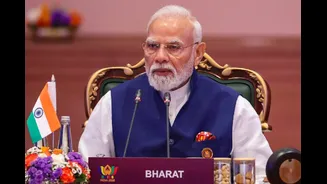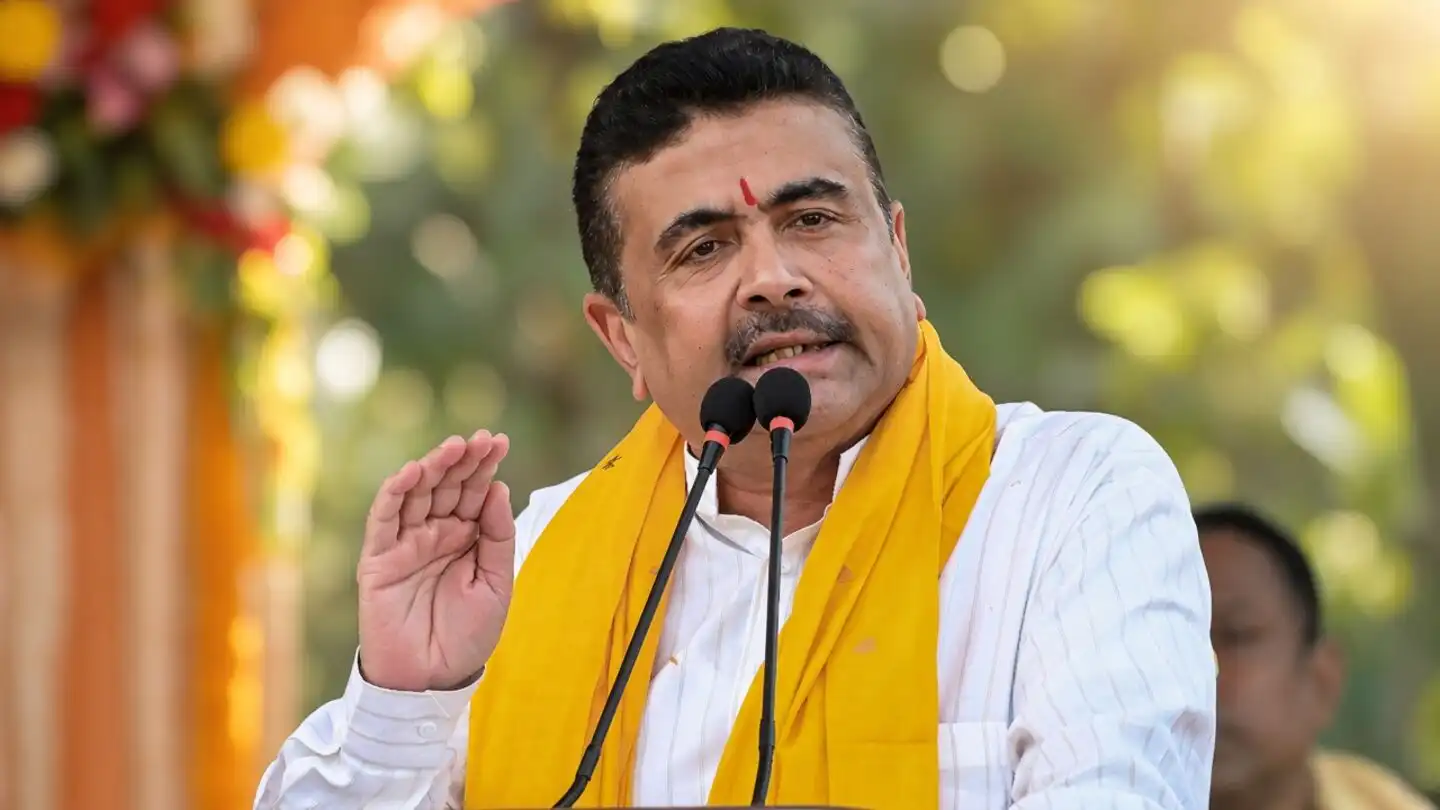








The Modi government has put Parliament back in the spotlight, but the real battle may not be over women’s reservation. It could be over who gets to decide India’s political future – and how much representation
each part of the country gets.
With Parliament set to reconvene from November 30, speculation is mounting that the government could revive its delimitation-linked legislation to fast-track the implementation of 33 per cent reservation for women in the Lok Sabha and state Assemblies. The official legislative agenda, however, is yet to be announced.
Read More: BJP’s Delimitation Push 2.0: DMK’s Possible Shift, Pawar’s Stand And The New Numbers Game
For the BJP, this is unfinished business. The Constitution (131st Amendment) Bill, which sought to advance women’s reservation alongside an expansion of the Lok Sabha, failed to secure the required two-thirds majority in April. Prime Minister Narendra Modi has since made it clear that his government intends to pursue the issue, accusing the Opposition of denying women their rightful representation. On the Constitution Day, in an Op-ed, he wrote, “It is imperative that the 2029 Lok Sabha elections and the Assembly elections to the various states in the coming times are conducted with women’s reservation in place.”
But there is a political complication that the government cannot wish away. Women’s reservation enjoys broad political support. Delimitation does not. By linking the two, the government risks turning a reform with considerable public appeal into a constitutional confrontation over federal representation.
The anxieties in southern India are not imaginary. Tamil Nadu, Kerala, Karnataka, Andhra Pradesh and Telangana have long argued that states which successfully controlled population growth should not be penalised through a redistribution of parliamentary seats that disproportionately benefits states with higher population growth.
Former Tamil Nadu Chief Minister MK Stalin had posed a particularly pointed question during the earlier confrontation: “When the Union government urged us to control population growth, to have smaller families, and to follow family planning measures, we complied. Is this now the punishment for having done what was asked of us with discipline?”
It is a question that goes beyond party politics. It touches the basic compact of Indian federalism.
The government’s argument, meanwhile, is that expanding the strength of legislatures while maintaining states’ proportional representation can accommodate both women’s reservation and the concerns of different regions. PM Modi has also assured states that there will be no discrimination in the exercise.
But assurances are not a substitute for legislative clarity. How many additional seats will each state get? What population benchmark will be used? Will the formula protect the relative political weight of states that have controlled population growth? These are questions that require transparent answers before Parliament is asked to vote.
There is also a simpler way of looking at the impasse. The 2023 Women’s Reservation Act had already established the principle of 33 per cent reservation. Why should its implementation remain tied to a delimitation exercise that is generating such serious disagreements? Could the government and Opposition not find a way to implement the quota on the existing strength of legislatures while separately debating delimitation?
That would require political accommodation, something that has increasingly become scarce in Parliament.
For the BJP, the temptation to frame the issue as a contest between those who support women’s empowerment and those who oppose it may be considerable. But such a narrative risks obscuring the substantive disagreement. Opposition to the delimitation formula is not necessarily opposition to women’s reservation.
The government has an opportunity to demonstrate that its commitment to Nari Shakti is larger than a political confrontation. Equally, the Opposition must explain how it proposes to deliver the promised representation without indefinitely postponing implementation.
The question before Parliament is therefore not simply whether India should reserve more seats for women. That principle has already been accepted. It is whether the country can achieve that objective without unsettling the federal balance that holds its diverse regions together.
India needs more women in its legislatures. It does not need their empowerment to become another North-versus-South contest.
But sources in the NDA alliance partners suggest, should it come to this legislative business, which still remains unclear, the government will have the numbers to sail through unlike last time, without creating any north-south spat, suggesting “backchannel reaching out to southern parties”, which has been in progress ever since.