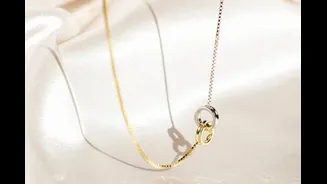

For decades, the jewellery industry has been organised around clear binaries, his and hers, masculine and feminine, occasion-led and ceremonial. Today, that structure is quietly but decisively collapsing.
Genderless jewellery is no longer an aesthetic experiment or a seasonal talking point; it has become a strategic shift in how jewellery is designed, marketed, and consumed.
At the heart of this change is a consumer who no longer shops by category, but by instinct. Jewellery is increasingly chosen for how naturally it fits into everyday life, easy to wear, simple to layer, and adaptable across moods, outfits, and occasions. According to Mehul Jain, founder, Everbrite Jewellery, this reflects a broader generational move toward confidence and lived-in style. When jewellery is designed around form, proportion, and craftsmanship rather than prescribed identities, it becomes inclusive by default and far more enduring.
That longevity is not just cultural; it’s commercial. Gender-neutral pieces typically have longer shelf lives and broader appeal, reducing the need for constant trend-driven refreshes. They also align with a growing rise in self-purchase across age groups, as jewellery shifts from being a gift-led category to an expression of personal identity. In business terms, inclusivity has become efficiency.
This evolution is particularly visible among Gen Z consumers, who treat style as fluid and instinctive rather than rule-bound. Yash Kataria, Director, Kataria Group of Companies, observes that the industry is undergoing a fundamental restructuring. Globally, brands are moving away from rigid classifications because the market is responding better to jewellery built around universal appeal and adaptability. Minimalist bands, chains, and clean silhouettes once considered neutral or secondary are now driving strong performance, particularly in digital retail environments.
The data supports this shift. Men’s jewellery categories are expanding rapidly, while women are increasingly embracing bolder forms that were once labelled masculine. When luxury houses and independent brands alike adopt adjustable formats, durable materials, and simplified design language, they signal that this is not a passing phase but a long-term recalibration of value.
Designers, too, are rethinking their creative starting points. For Tiara Dhody, founder, Treasures By Tiara, genderless jewellery is not about neutrality, but freedom. The freedom to stack a bold ring with a slip dress, share a pendant between partners, or pair refined cufflinks with a crisp shirt without explanation or permission. Her approach centres on symbolism rather than gender, using motifs like swords, coins, hearts, and talismans that carry universal meanings of power, protection, and legacy. From a business perspective, she notes, this makes jewellery more wearable, shareable, and commercially resilient.
Mainstream brands are responding in kind. At Kalyan Jewellers, the demand for unisex designs reflects a clear shift in consumer mindset. Ramesh Kalyanaraman, Executive Director, points out that customers today are less concerned with labels and more focused on how a piece integrates into their lifestyle. Chains, kadas, studs, pendants, and bold rings are seeing strong traction because of their versatility transitioning seamlessly from daily wear to festive occasions. Men are exploring earrings and layered necklaces, while women are gravitating toward stronger silhouettes, dissolving outdated boundaries from both sides.
What ties these perspectives together is a shared understanding: genderless jewellery is not about erasing identity, but expanding it. When jewellery is designed to “simply fit,” as Dhody puts it, it becomes more relevant to how people actually live. For brands, this translates into collections that scale better, last longer, and resonate deeper.
In a market increasingly driven by authenticity, flexibility, and longevity, genderless jewellery is no longer a trend forecast, it is the blueprint. The brands that recognise this aren’t just responding to cultural change; they’re building a more resilient, future-facing business.