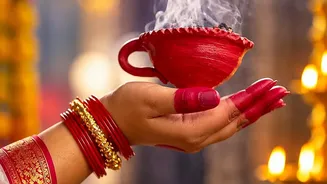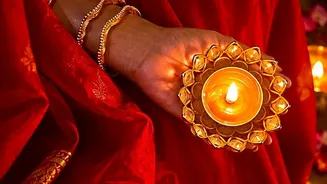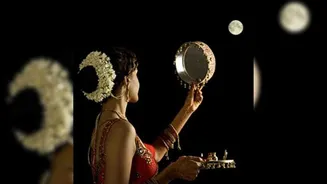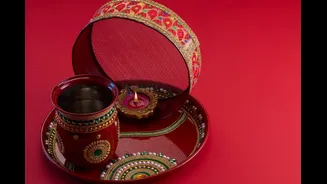






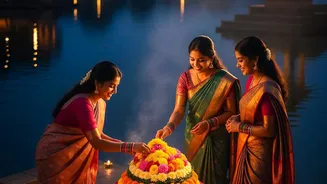
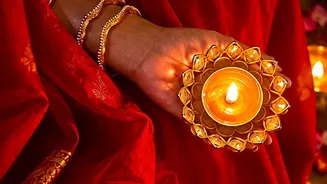
Every year, as the moon rises on Karwa Chauth, women across India reach for their puja thalis, look at the moon through a sieve and offer prayers before breaking their day-long fast. But behind this familiar
ritual lies a dramatic tale of seven brothers, a false moon and a wife whose devotion, according to legend, brought her husband back from the dead. This is the story of Veeravati, one of the most widely recited vrat kathas associated with Karwa Chauth.
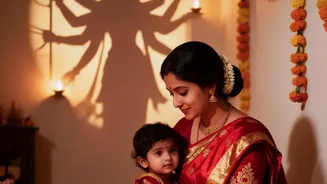
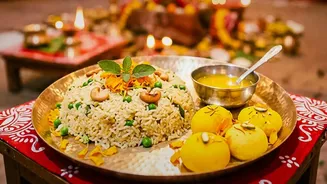
This year, Karwa Chauth falls on October 29, 2026. Married Hindu women traditionally observe the fast from sunrise to moonrise, praying for their husbands’ long lives and well-being. The day begins with sargi, the pre-dawn meal, and builds towards the evening puja, when families gather to worship and recite the vrat katha. Among the stories told that evening, Veeravati’s tale explains why devotees wait for the actual moonrise before completing the fast
The Legend Of Veeravati: How A False Moon Changed Everything
According to the traditional vrat katha, Veeravati was the beloved only daughter of a Brahmin named Vedsharma and his wife, Leelavati. She had seven brothers who doted on their sister, and she grew up surrounded by their affection. After her marriage, Veeravati observed her first Karwa Chauth fast at her parental home.
As the day wore on, however, the young woman began to struggle with hunger and thirst. Worried about their sister’s condition, her brothers could not bear to watch her suffer. They decided to find a way to end her fast early, hoping to spare her further discomfort.
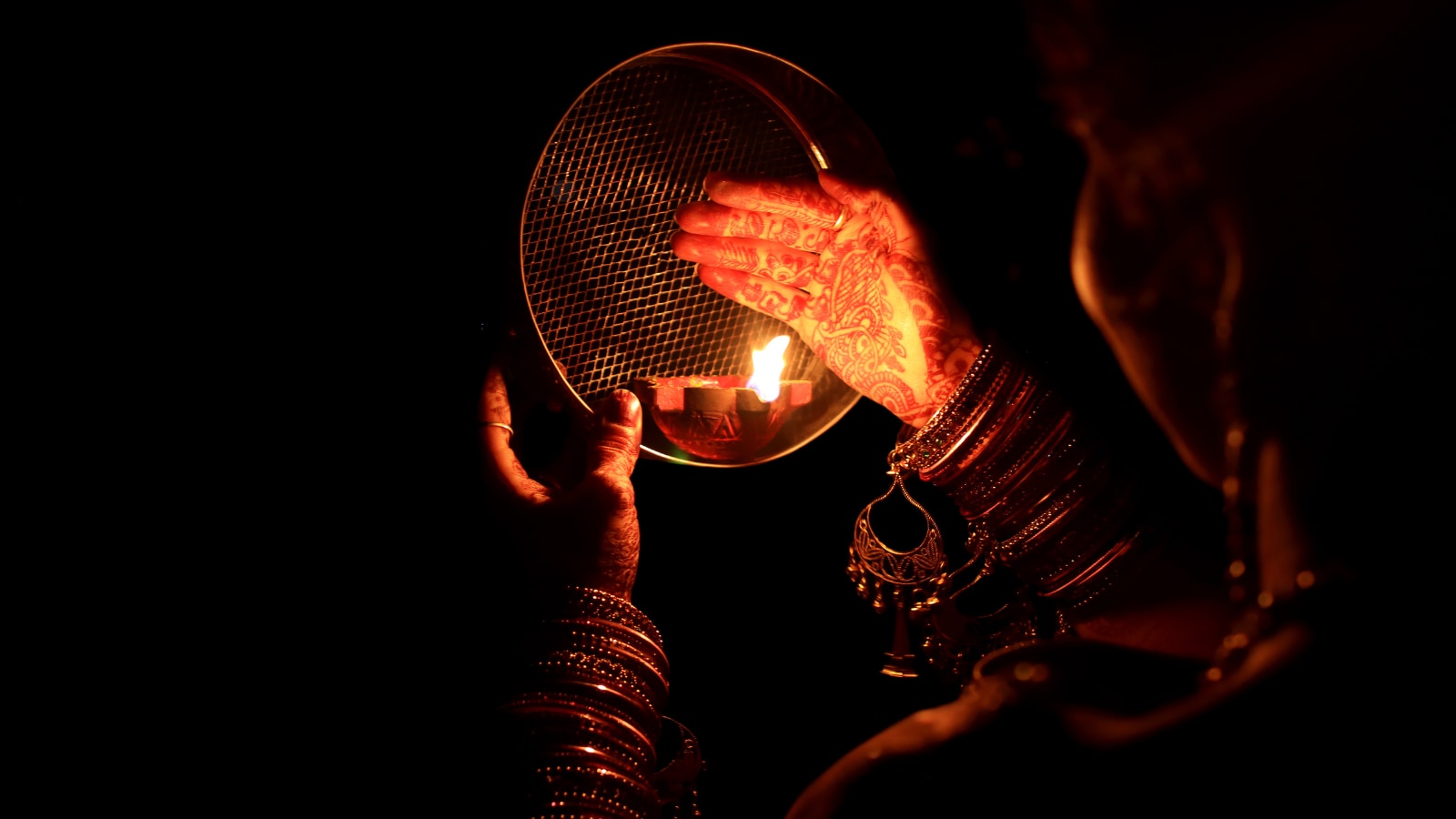
In the version most commonly told today, the brothers climbed a tree and created the illusion of moonrise by placing a light behind a sieve or a tree. From a distance, the glow resembled the moon. Convinced that the moon had appeared, Veeravati performed the customary ritual and broke her fast.
But the apparent moonrise was a deception, and the consequences were devastating. Soon afterwards, Veeravati received news that her husband had died. The young woman was heartbroken, and the story marks this moment as the tragic consequence of breaking the fast before the actual moonrise.
The precise details differ between tellings. Some versions describe a torch or fire held behind a tree, while the familiar sieve ritual features in later popular retellings. The central element remains the same: Veeravati mistakes an artificial light for the moon and breaks her fast prematurely.
How Veeravati’s Devotion Brought Her Husband Back To Life
Grief-stricken, Veeravati sought to understand what had gone wrong. In the popular account, she learns that she was deceived into ending her fast before the moon had truly risen. Determined to make amends, she turns to prayer and continues observing the Chauth fasts with renewed devotion.
One widely told version says that Indrani, the wife of Indra, the king of the gods, guides Veeravati and tells her to observe the monthly Chauth fasts faithfully for a year. Veeravati follows the instructions with unwavering resolve, waiting for the next Karwa Chauth to complete the observance properly.
When the time comes, her devotion is rewarded, her husband is restored to life. Other versions differ on who intervenes and how the miracle takes place, with some attributing the revival to Indrani and others to a divine figure associated with the festival.
The story is remembered as an expression of faith, perseverance and the importance of observing the vrat according to tradition. It also explains why the wait for the actual moonrise holds such significance during Karwa Chauth.
Some families also tell the story of Karwa, a devoted wife who confronts Yama, the god associated with death and dharma, to save her husband from a crocodile. Both tales celebrate a wife’s devotion and the power of steadfast prayer within the festival’s religious tradition.
Karwa Chauth 2026: A Tradition Carried Across Generations
Karwa Chauth will be observed on Thursday, October 29, 2026. For many families, the day begins before sunrise with sargi, continues with fasting and preparations for the evening puja, and culminates in the sighting of the moon. The vrat katha is recited before the fast is broken, keeping the story of Veeravati alive alongside the rituals themselves.
Ultimately, the legend of Veeravati gives Karwa Chauth its emotional centre, a story that has travelled through generations and remains woven into the rituals of the day. As families gather to hear the katha and wait for the moon, they revisit a tradition shaped by faith, devotion and the enduring power of stories.