

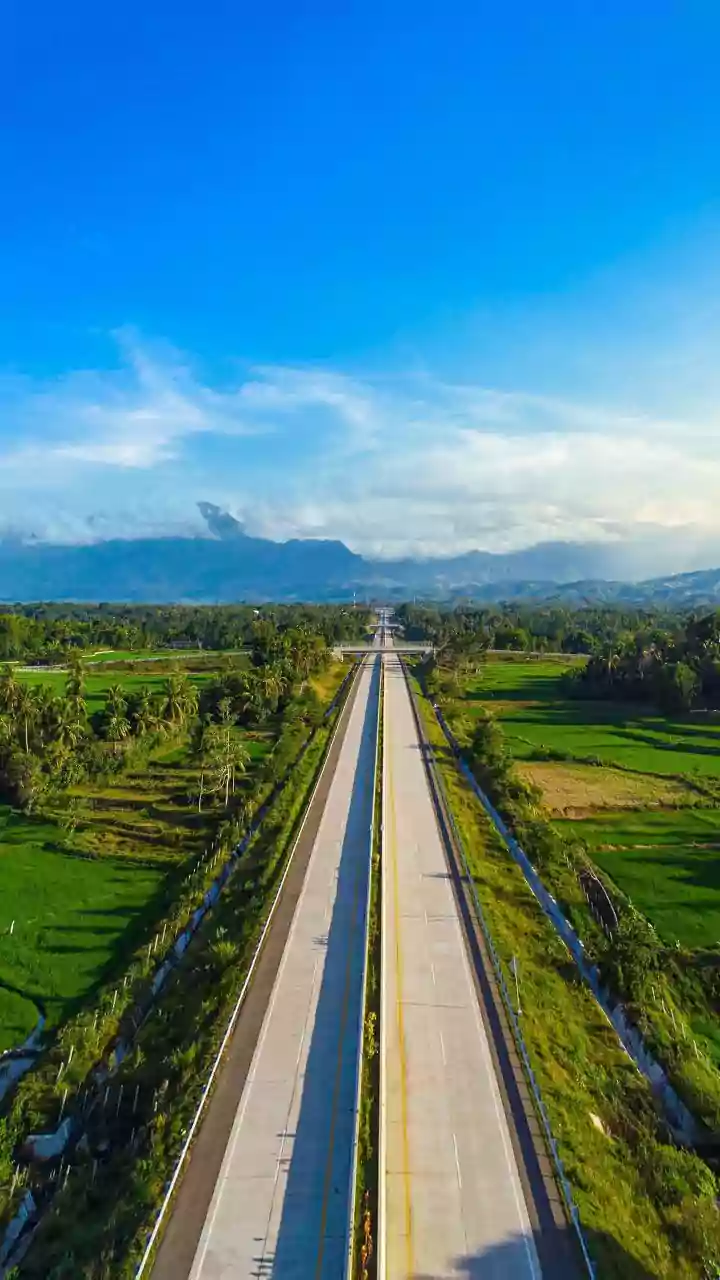

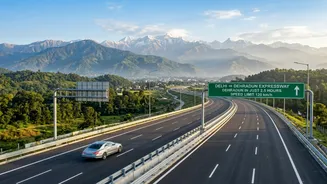

The route alignment for the upcoming 210-km-long access-controlled expressway connecting Delhi and Dehradun has now been made public. Designed as a 6 to 12-lane high-speed corridor, the Delhi-Dehradun
expressway is expected to significantly improve connectivity between Delhi and Uttarakhand.
Commuters from Ghaziabad will be able to access the expressway via Akshardham in Delhi, while travellers coming from Meerut can join the route near Baghpat.
Once operational, the expressway will reduce the distance between Delhi and Dehradun by nearly 70 km. Travel time, which currently ranges between 5 and 6 hours, is expected to drop sharply to approximately 2.5 hours, offering a much faster and smoother journey.
Four Key Phases
The expressway has been planned in four major construction phases:
- Phase 1: Extends from Akshardham in Delhi to near the Eastern Peripheral Expressway at Baghpat, covering roughly 32 km across Delhi and Ghaziabad. Certain stretches of this section have already been opened on a trial basis.
- Phase 2: Runs from the Eastern Peripheral Expressway to the Saharanpur East Bypass, spanning around 118 km. This is a greenfield segment passing through regions such as Baghpat, Baraut and Shamli. It includes seven major interchanges along with multiple underpasses.
- Phase 3: Covers approximately 40 km from the Saharanpur Bypass to Ganeshpur on NH-307.
- Phase 4: The final 20 km stretch from Ganeshpur to Dehradun features tunnels and elevated flyovers constructed through Rajaji National Park, ensuring minimal disruption to wildlife habitats.
Enhanced Connectivity Across Key Regions
The Delhi-Dehradun expressway is expected to provide seamless and faster road access to several key locations, including Delhi, Baghpat, Shamli, Saharanpur and Uttarakhand. It is set to become a crucial corridor for both passenger and commercial traffic.
A 50.7-km-long, six-lane spur is also under development, linking Saharanpur to the Roorkee-Haridwar route. This extension is expected to ease travel for pilgrims heading to Haridwar and the Char Dham circuit, further enhancing the project’s importance.
Modern Infrastructure And Project Cost
Built with advanced infrastructure, the expressway will include multiple interchanges, service lanes, wildlife crossings, and elevated corridors to ensure safety and efficiency. The total cost of the project is estimated to be around Rs 13,000 crore.
The new expressway will offer a direct alternative to the existing route, Delhi-Ghaziabad-Meerut-Muzaffarnagar-Saharanpur, helping reduce congestion on traditional highways. Travellers from Ghaziabad and Meerut, in particular, will benefit from a more direct and time-efficient connection.
Boost To Economy And Regional Development
Apart from reducing travel time and fuel consumption, the expressway is expected to ease traffic bottlenecks and promote tourism and trade across the region.
Officials from the National Highways Authority of India (NHAI) state that the project will significantly strengthen connectivity between Delhi-NCR and Uttarakhand, giving a fresh push to regional development.