




Young travellers are rewriting the rules of spending by ditching shopping bags for boarding passes, choosing cooking classes over couture, and chasing depth across continents in 2026.
An emerging pattern
across airports and Instagram feeds shows a shift away from luxury purchases and more toward local experiences. The generation that grew up online is choosing to log off and lean into the world. According to a February 2026 study by Klook, titled Travel Pulse 2026, 88% of global travellers plan to increase or maintain their travel budgets this year.
The report reveals that Asia Pacific (APAC) travellers show 50% higher intention to increase travel spending compared to Europe and the US, positioning the region as a major growth engine for global tourism. Nine in ten global travellers are planning an international trip in 2026, with 61% intending to travel in the first half of the year, up from 50% last year.
“Travel has remained resilient despite the rising cost of living. What we are witnessing is a fundamental shift in how travellers evaluate value,” said Marcus Yong, Vice President, Global Marketing at Klook, in the report.
“Instead of cutting back, they are spending smarter, prioritising richer experiences, flexible itineraries, and deeper discovery. They seek experiential value that goes far beyond simply ticking destinations off a checklist.”
Cutting Shopping, Not Experiences
The most striking takeaways from the Klook study are clear: when faced with rising costs, travellers are cutting back on shopping and material purchases, not on activities and experiences.
This shift is pronounced in APAC, where travellers are nearly twice as likely as their Western counterparts to increase spending on experiences. For Gen Z, travel is no longer a break from life; it is part of life’s investment portfolio.
Riya, a 26-year-old Delhi-based software engineer, embodies this change. “I would rather skip a shopping spree and spend on a local cooking class or a trekking adventure. To me, memories matter more than material things,” she says. Her sentiment echoes across social media, where curated travel diaries have replaced haul videos.
Bigger Budgets, Bolder Trips
The Klook Travel Pulse 2026 report also finds that Gen Z and Millennial travellers are not just maintaining travel budgets; they are spending on both domestically and internationally. Travel intent remains steadfast, with international trips dominating 2026 plans.
- Instead of luxury shopping districts, travellers are booking multi-city rail passes.
- Instead of five-star splurges, they are choosing boutique stays that promise authenticity.
- Instead of guided bus tours, they are seeking immersive workshops and locally led experiences.
APAC Gen Z travellers are leading this transformation. They prefer faster-paced, densely packed itineraries and actively venture beyond mainstream hotspots. Major cities are not gallery endpoints; they are gateways.
Beyond The Postcard, Japan
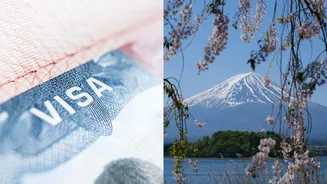
While Japan remains one of the most considered destinations globally, demand is spreading beyond Tokyo and Kyoto. Secondary cities like Yokohama, Hiroshima, and Nagoya are gaining traction among young travellers seeking breathing room and cultural depth.
Nysa, 25, a Bengaluru-based fashion designer, is preparing for her first international trip, and she has chosen Japan. “I’m planning my first international trip this year, and I know it may seem like a small achievement for some, but I saved all the stipend and pocket money to buy a ticket for myself. I’ll be exploring Japan, and the feeling is next level because there’s so much to explore beyond the usual hotspots,” she says.
Her excitement is not just about visiting landmarks; it is about navigating local trains, discovering neighbourhood cafés, and experiencing Japanese culture beyond curated tourist routes.
According to the Klook study, 42% of travellers cite authentic local experiences as their top reason for exploring lesser-known spots. Another 39% are motivated by discovering hidden gems, while 37% prioritise affordability. Discovery today is driven by depth and access, not novelty alone.
The Multi-Destination Mindset
Two-thirds of travellers now plan to visit multiple destinations in a single trip. This marks a shift away from single-stop itineraries. Major hubs are becoming anchors rather than endpoints.
The trend extends beyond Asia; in Australia, cities like Cairns and Hobart are drawing travellers. In Europe, regions like Baix Llobregat and Tromsø are seeing increased interest. In the Middle East, destinations such as Sharjah and Hurghada are gaining visibility.
Swati, a 45-year-old professor at Delhi University, sees this shift through a parental lens. “Raising a Gen Z is nothing short of an adventure,” she says.
“As parents, we love planning trips to offbeat destinations so my daughter can truly explore the world. The scenic views, local food, and warm, welcoming people are just the cherry on top. We are planning a trip to Baku this year, which has some really great spots, perfect for a once-in-a-lifetime experience.”
How Social Media And AI Are Boosting Tourism?
If social media is sparking the desire to travel, AI now helps execute those plans. The Klook study reveals that 80% of global travellers say social media influences the destinations or experiences they book. Platforms have become digital word-of-mouth engines, offering real-time validation and inspiration.
An overwhelming 91% of global travellers now use AI tools for trip-related tasks, according to the report. The most common uses include research, translation, organising itineraries, and managing budgets.
For Gen Z, AI is not replacing spontaneity; it is enabling it. Language barriers are shrinking through translation tools, budget trackers are keeping track to prevent overspending, and route planners are optimising tight schedules.
The traditional travel agent model is gradually being replaced by personalised digital assistants. Instead of relying on a single itinerary, travellers can compare options in seconds, simulate budgets, and adapt plans dynamically.
What Defines Travel In 2026?
Travellers are not abandoning spending, they are reallocating it. Shopping bags are lighter, but calendars are fuller. Luxury is no longer defined by brands but by access: access to culture, to authenticity, to lesser-known places.
Gen Z’s approach to travel reflects broader generational values. Experiences contribute to identity formation, and cultural exposure becomes social currency. Even amid global economic uncertainty, travel remains resilient because it is perceived as an investment.
The Klook report concludes that 2026 is shaping up to be a year of more distributed and experience-led travel. For Riya, it is about cooking classes and trekking trails. For Nysa, it is about a long-awaited ticket to Japan. And for Swati and her daughter, it is about exploring Baku together.