






Maharashtra Weather Update: The monsoon’s retreat is changing Maharashtra’s weather pattern, with temperatures rising and humidity adding to the discomfort across several parts of the state. As the southwest
monsoon withdraws, most areas are expected to turn increasingly dry, with only isolated pockets likely to receive light rain. The combination of stronger sunshine, high humidity and limited rainfall is expected to make the October heat more noticeable, particularly during the afternoon.
Recent weather reports have highlighted unusually warm conditions across parts of Maharashtra, with Mumbai and several Konkan districts experiencing temperatures in the mid-to-high 30s.
The India Meteorological Department’s current subdivision-wise warning issued on October 8 shows no warning for Konkan and Goa, Madhya Maharashtra, Marathwada or Vidarbha. However, the broader weather pattern remains predominantly dry, and temperatures are expected to remain uncomfortable in several areas.
Why Is Maharashtra Getting Hotter?
The withdrawal of the monsoon is reducing the widespread cloud cover and rainfall that had kept temperatures relatively moderated. Weather expert Mahesh Palawat of Skymet said Maharashtra is currently expected to receive very little rainfall as the monsoon retreats. Western disturbances are developing from the Pakistan region towards India, while rainfall activity is expected to be more prominent over parts of southern India.
At the same time, changing wind patterns over the Arabian Sea and surrounding regions are contributing to the hot and humid conditions being experienced in Maharashtra.
The current atmospheric setup is unusual, with different parts of the country experiencing contrasting weather conditions – heavy rain in some locations and intense heat in others.
Cyclonic circulations have also developed over Jharkhand and the Bay of Bengal, adding to the complexity of the weather pattern.
October Heat To Intensify As Rainfall Chances Remain Low
Most of Maharashtra is expected to remain largely dry as the monsoon withdrawal progresses. Some rainfall may still occur over Mahabaleshwar, Ratnagiri, parts of Sindhudurg and the Western Ghats. However, widespread or heavy rain is not expected.
The reduced rainfall is also raising concerns over water availability in parts of the state. Several areas are already facing rainfall deficits, with the possibility of worsening dry conditions adding pressure on farmers and residents. Maharashtra recorded 19% less rainfall than its seasonal average between June 1 and September 30, according to recent reporting based on IMD data.
October 8 Weather: Konkan Likely To Stay Mostly Dry
For October 8, most of the Konkan region is expected to experience dry conditions. Ratnagiri and Sindhudurg could see isolated light showers, but there is no indication of widespread heavy rainfall. Temperatures in the region could reach around 37°C during the day, while minimum temperatures may remain close to 24°C.
The combination of heat and humidity is expected to make conditions feel considerably warmer than the actual temperature.
North Maharashtra To See Temperatures Rise
North Maharashtra, which has received rain in recent days, is also expected to become predominantly dry over the next four to five days.
The maximum temperature could remain around 33°C, with the overall weather pattern shifting towards warmer conditions as rainfall activity decreases.
Western Maharashtra May Get Isolated Showers
Pune, Ahilyanagar, Satara and Solapur are expected to remain largely dry. Isolated light rain or thundershowers are possible around Kolhapur, Sangli and the Western Ghats, but significant rainfall is not expected.
Maximum temperatures across the region are likely to remain between 32°C and 34°C, while minimum temperatures could hover around 22°C.
Marathwada To Remain Hot And Dry
Chhatrapati Sambhajinagar, Jalna, Parbhani, Beed, Hingoli, Nanded, Latur and Dharashiv are also likely to experience predominantly dry conditions.
After recent rainfall in some areas, the return of clearer skies is expected to bring stronger sunshine and increased daytime heat.
Maximum temperatures are likely to be around 32°C, while minimum temperatures could reach 24°C.
Vidarbha Also Likely To Remain Mostly Dry
Vidarbha is not facing any major rainfall warning either.
The region is expected to remain mainly dry over the next few days, with maximum temperatures ranging from around 24°C to 35°C and minimum temperatures between 23°C and 27°C.
Sindhudurg Schools Face Demand For Morning Sessions
The rising heat is now becoming a concern beyond weather forecasts, particularly for school-going children in Sindhudurg.
According to a report in Times Now, former MLA Vaibhav Naik has written to Maharashtra School Education Minister Dadaji Bhuse seeking a change in school timings across Sindhudurg district. He has called for schools currently operating in the afternoon to instead conduct classes during the morning, citing the increasing heat and its impact on students’ health. The demand was made against the backdrop of declining rainfall and rising temperatures in the district.
According to the demand, children travelling to and from school during the hottest part of the day are being exposed to intense sunlight, creating additional health concerns for students as well as difficulties for parents.
The request is particularly significant because the demand concerns a change in school timings rather than a closure of schools. No blanket closure order is indicated in the material available.
Mumbai, Thane And Raigad Face Hot And Humid Conditions
Mumbai and surrounding areas are also experiencing the effects of the October heat. Recent reports said Mumbai’s maximum temperature had reached around 36°C, with hot and muggy conditions affecting residents. The IMD had issued a yellow alert for hot and humid conditions across Mumbai, Raigad, Ratnagiri and Sindhudurg earlier in October as the monsoon withdrawal progressed.
The current forecast indicates that Mumbai and Thane are expected to remain mainly dry, with the heat and humidity continuing to be a concern.
October Heat Reaches Mumbai’s Railway Tracks
The rising temperatures are no longer only affecting commuters’ comfort. Mumbai’s railway infrastructure has also felt the impact.
Central Railway had to introduce emergency distress blocks at several locations after rising track temperatures caused concerns over the expansion of railway rails. Blocks were taken in areas including Byculla, Parel, Diva and Digha as railway officials carried out urgent technical work and inspections.
The disruption affected local train services on both the main and Trans-Harbour routes, leaving commuters facing delays and diversions. Recent reports said eight localservices were affected, with five trains delayed and three diverted.
Why Does Extreme Heat Affect Railway Tracks?
Steel rails expand as temperatures rise. The risk becomes particularly important at vulnerable sections of track, including areas around joints and other points where thermal expansion can create alignment problems. If expansion is not managed properly, the resulting deformation can create safety risks for trains.
Similar temporary measures and blocks had been undertaken during the preceding 15 days as a precaution against heat-related technical problems. The emergency interventions are intended to address track-related issues before they pose a threat to train operations and passenger safety.
Byculla Block Taken As Track Temperature Rose
At Byculla, railway authorities imposed a block after track temperatures increased. The work was carried out separately on the Up and Down lines rather than stopping traffic across all lines simultaneously. This approach was intended to allow train movement to continue while the necessary technical work was completed.
Recent reports put the Byculla block at around 30 to 45 minutes, depending on the account and specific work undertaken.
Parel, Diva And Digha Also Saw Urgent Work
Emergency work was also carried out on the Down slow line at Parel during the afternoon. On the Trans-Harbour route, technical work was undertaken near Digha station as temperatures rose.
The combined impact of these blocks and associated maintenance work affected eight local services. Five trains reportedly ran 20 to 25 minutes late, while three were diverted.
Commuters Face Crowds And Delays
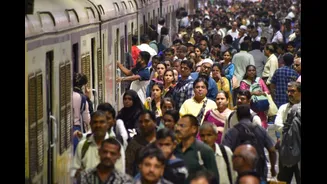
The disruption created additional difficulties for Mumbai’s already crowded suburban railway network. Passengers at Thane, Mulund, Bhandup, Ghatkopar and Kurla faced heavy crowds as delayed trains arrived on platforms.
Passengers also complained about a lack of timely information about delays and operational changes at stations and on running trains, according to reports.
With Mumbai’s suburban railway network serving as the city’s primary mode of daily commuting for millions of passengers, even short disruptions can quickly lead to overcrowding and delays across connected routes.
Heat And Humidity Could Affect Public Health
The combination of high daytime temperatures and humidity can make October conditions particularly uncomfortable.
Weather experts have warned that a sudden rise in both temperature and humidity can put additional stress on the body’s ability to regulate its internal temperature.
In Mumbai and the Konkan belt, the combination of strong daytime sunshine and occasional light rain or drizzle can further increase humidity, making conditions feel hotter than the recorded temperature.
Residents, particularly children, older people and those working outdoors, may therefore face greater discomfort as the October heat persists.
Maharashtra Weather Outlook: Dry Days Ahead
The overall picture for Maharashtra is one of a transition from the monsoon towards a hotter and drier phase.
While isolated showers remain possible in parts of the Konkan and Western Ghats, widespread rainfall is unlikely in most regions. Vidarbha, Marathwada and parts of Madhya Maharashtra are expected to remain particularly warm.
For Mumbai, the impact is already being seen beyond daily discomfort, with high temperatures contributing to operational challenges for the suburban railway network.
In Sindhudurg, the heat has prompted a demand for schools to shift to morning sessions, while across the state, residents and farmers are watching closely as rainfall decreases and temperatures rise.
For now, Maharashtra’s October weather story is not simply about the heat itself – it is about how the changing conditions are beginning to affect schools, commuters, railway infrastructure, farmers and everyday life.