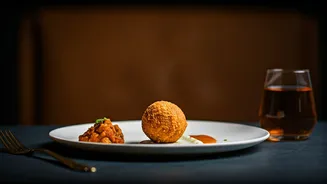




For years, luxury dining in India leaned heavily toward European fine dining, Japanese omakase counters, or contemporary global tasting menus. Meanwhile, some of the country’s most beloved cuisines, rich
North Indian gravies, slow-cooked niharis, smoky kebabs, and deeply nostalgic regional dishes, largely remained confined to casual family restaurants and comfort-driven dining spaces.
That, however, is beginning to change. A new wave of restaurateurs is now reimagining how Indian legacy cuisine can exist within premium hospitality formats without losing the soul that made it iconic in the first place. The shift is not simply about expensive interiors or elevated plating. It reflects a larger cultural change in how diners perceive luxury itself.
Today’s luxury diner is not only looking for exclusivity. They are searching for meaning, memory, craftsmanship, and emotional connection.
Few understand this transition better than Amit Bagga, co-founder, CEO and CMO, Daryaganj Hospitality, whose premium concept Daryaganj GOLD attempts to place classic North Indian cuisine within a more refined experiential setting.
“If we do not give our own cuisine the right platform, how will it evolve?” says Bagga. “Classic North Indian cuisine has always been loved, but it has rarely been presented within a true luxury dining environment.”
For decades, dishes such as butter chicken, dal makhani, kebabs, and tandoori specialities were associated more with familiarity than fine dining. While modern Indian restaurants experimented with molecular gastronomy and reinvention, traditional North Indian cuisine often remained visually and spatially unchanged.
Bagga believes the answer was never to alter the food itself.
“With Daryaganj GOLD, our intention was never to modernise the cuisine but to restore its rightful stature,” he explains. “The recipes remain unchanged and rooted in legacy and authenticity; what we have elevated is the experience around them, the space, the service, and the storytelling.”
That philosophy reflects a broader movement within India’s hospitality industry, where heritage is increasingly becoming aspirational again. Across premium dining spaces, chefs and founders are rediscovering the emotional weight of dishes that were once considered too familiar for luxury settings.
At SILQ, this idea takes shape through immersive storytelling inspired by the ancient Silk Route.
Deepak Chhabra, Co-Founder of SILQ, believes the evolution of premium dining is closely tied to how people now want to experience restaurants emotionally rather than transactionally.
“Luxury dining is no longer defined solely by exclusivity,” Chhabra says. “It is increasingly about storytelling, emotional connection, and immersive hospitality. Modern diners are seeking experiences that feel personal, intentional, and rooted in meaning.”
The modern luxury restaurant, therefore, extends far beyond food alone. Interiors, fragrance, lighting, music, service rituals, and spatial design now function almost like narrative devices, shaping how guests emotionally remember a meal.
“At SILQ, our inspiration comes from the ancient Silk Route, a meeting point of cultures, flavours, and traditions,” Chhabra explains. “We translate that into a contemporary dining experience that feels both transportive and intimate.”
This layered approach to hospitality also coincides with a renewed appreciation for slow cooking, artisanal techniques, and culinary nostalgia. Dishes once viewed as everyday staples are now being appreciated for the craftsmanship they demand.
“We are seeing a growing appreciation for slow-crafted cuisine and heritage-led narratives,” says Chhabra. “Handmade kebabs, nihari, and biryani are no longer viewed simply as traditional staples. They are being rediscovered as culinary expressions of craft, memory, and identity.”
Perhaps that is what defines India’s new luxury dining moment most clearly. The emphasis is shifting away from performative opulence toward experiences that feel emotionally resonant and culturally grounded.
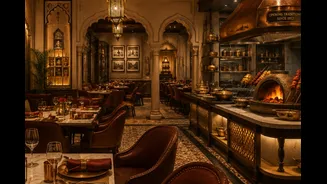
Even design choices inside these restaurants now reflect that philosophy. At Daryaganj GOLD, traditional culinary techniques are no longer hidden behind kitchen doors. Open kitchens place the tandoor at the centre of the dining experience, allowing guests to engage visually with the craft behind the cuisine.
For Bagga, that visibility matters. “We hope this format becomes a reference point,” he says, “demonstrating that North Indian classics can command a premium stage without losing their soul.”
And perhaps that is where the future of Indian luxury dining is headed, not toward distancing itself from tradition, but toward presenting heritage with the depth, care, and reverence it has always deserved.
As Chhabra puts it, “The future of premium dining lies in creating spaces where guests don’t just come to eat, but to pause, connect, and truly experience something memorable.”
In India’s evolving hospitality landscape, emotion may well become the ultimate marker of luxury.