








A fresh political and public health controversy has erupted in Bangladesh after at least 459 children died from confirmed and suspected measles cases till Sunday morning, and over the past two months.
Of these, 75 deaths were officially confirmed as measles-related, while 384 remained classified as suspected cases.
Following the development, a petition was filed before the Bangladesh High Court seeking restrictions on former interim government chief adviser Muhammad Yunus and 24 others from leaving the country over the alleged shortage of measles vaccines during his tenure, according to a report by The Times of India.
According to the report, Supreme Court lawyer M Ashraful Islam filed a public interest litigation (PIL) before the High Court seeking directions for the government to investigate the role of Yunus and others in the vaccine shortage issue.
The matter was likely to be heard on Monday.
Bangladesh’s Directorate General of Health Services (DGHS) data showed that 57,846 suspected measles cases had been recorded since March 15, including 1,274 new suspected infections in just 24 hours.
The country also reported 7,767 confirmed measles infections during the period.
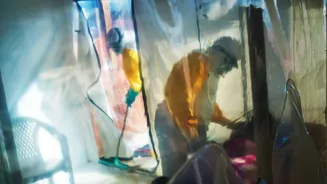
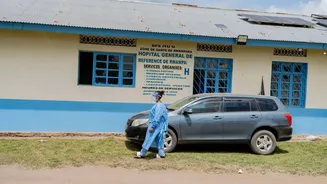
The outbreak has placed enormous pressure on Bangladesh’s healthcare infrastructure, with thousands of children requiring hospitalisation.
More than 42,000 suspected measles patients had also been reportedly admitted to hospitals since mid-March, while over 37,000 had recovered.
ALLEGATIONS OVER VACCINE SHORTAGE
The TOI report stated that Bangladesh allegedly faced a severe shortage of measles vaccines between 2024 and 2025, the period when Yunus headed the interim administration.
Health experts and doctors associated with the ‘Bangladesh Child Protection Initiative’ reportedly blamed the interim government and the then health administration for the shortage, alleging that the crisis contributed significantly to the rapid spread of measles across the country.
The group also demanded legal action against Yunus and former health adviser Nurjahan Begum.
Protests have also intensified over the issue.
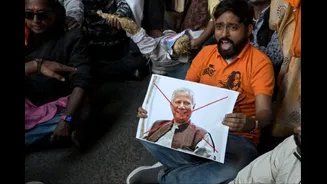
Demonstrators under the banner of ‘Socheton Nagorik Samaj’ formed a human chain in Dhaka earlier this week, demanding a trial against Yunus and Begum over the deaths linked to measles and measles-like symptoms.
They also sought compensation for affected families.
Meanwhile, health experts have urged the Bangladesh government to prioritise vaccination drives and establish dedicated “fever corners” at local health complexes for early diagnosis of measles and pneumonia cases.
HEALTH SYSTEM UNDER PRESSURE
An earlier report by AFP described the outbreak as Bangladesh’s deadliest measles crisis in decades, with hospitals overwhelmed by infected children and doctors struggling to contain the spread.
The report noted that Bangladesh had previously made significant progress in vaccination coverage, but the nationwide upheaval during the 2024 uprising that toppled the Sheikh Hasina government disrupted immunisation programmes.
Authorities later launched an emergency measles-rubella vaccination campaign on April 5 with support from UNICEF, the World Health Organisation (WHO), and security forces.
Nearly 17 million children have reportedly received vaccines under the campaign so far.
However, officials acknowledged that last year’s vaccine coverage stood at just 59 per cent, far below the 95 per cent required to achieve herd immunity.