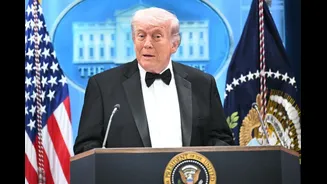


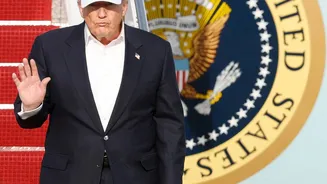
The Commodity Futures Trading Commission (CFTC) is probing a surge in oil futures trading that took place minutes before US President Donald Trump announced to postpone planned strikes on Iran’s energy
infrastructure in March, according to a report by The Wall Street Journal.
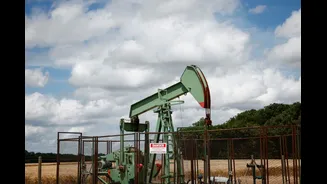
As per the report, a spasm of trades hit the market during off-hours and over $800 million worth of US and international crude futures changed hands within minutes on March 23, shortly before Trump announced that he was postponing strikes on Tehran’s oil facilities. Oil prices later dropped as much as 13%, allowing several firms to book multi-million-dollar gains.
Oil futures markets normally see massive trading volumes every day, with contracts representing future deliveries of crude oil. But on March 23, investors noticed a sudden spike in activity before Trump’s announcement. Trading jumped from a few hundred contracts per minute to several thousand within minutes.
According to the WSJ report citing trading records, at least five firms made profits exceeding $5 million from well-timed crude futures trades. London-based Qube Research & Technologies reportedly earned around $5 million, while Forza Fund Ltd. netted nearly $10 million. Totsa, the trading arm of French energy giant TotalEnergies, posted a smaller gain of about $200,000.
According to documents reviewed by the WSJ, the firms involved used different trading strategies. Some depended on automated systems reacting instantly to news and market signals, while others carried out trades manually.
Among the firms that profited, trading giant Jane Street reportedly made around $19 million from oil futures that day, while Jump Trading lost nearly $15 million. Other firms, including Virtu Financial, Shell, IMC Chicago, Paragon Trading Partners, TTG Capital and Tower Research Capital, also posted significant gains.
The CFTC, which supervises futures markets, is now probing and trying to gauge whether an insider with prior knowledge of Trump’s announcement traded on that information or leaked it to someone who could do so, according to people familiar with the matter.
The regulator is said to be reviewing activity linked to at least three firms, though none have been accused of wrongdoing.
Some of the firms told investigators their trading decisions were triggered by a Semafor headline published roughly 15 minutes before Trump’s Truth Social post. The article suggested the White House was exploring an exit from conflict with Iran despite ongoing attacks.
Qube Chief Operating Officer Stuart Brown wrote in an email that its trading strategies are model-driven and based on multiple data sources, not on a single geopolitical update.
“Qube’s investment decisions are model-driven, taking into account a large variety of data sources on a continuous basis, not a directional trade driven by a specific geopolitical comment/update/outcome,” the email read as quoted by the WSJ.
TotalEnergies said it was unaware of any investigation into Totsa’s trading activities and reiterated its compliance standards. A representative for Metabit Trading, a Chinese firm linked to Forza Fund Ltd., said it hadn’t been contacted by the CFTC.
As per the report, the March 23 incident was not isolated. The CFTC is reportedly investigating other suspicious trading spikes tied to Iran-related developments in April and May, including one on May 6 when around $700 million in crude futures changed hands before reports emerged about talks aimed at ending the Iran conflict.
The report also said that as suspicious trading activity linked to the Iran conflict increased, some Democrats raised concerns that people connected to the administration could be benefiting financially. The White House denied any wrongdoing and said ethics rules prohibit officials from using confidential information for personal gain.
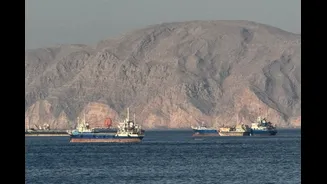
The unusually well-timed oil trades have raised concerns in a market already under pressure because of tensions between the US and Iran. Iran’s disruption of the Strait of Hormuz – a key global oil shipping route – has affected more than 10% of the world’s daily oil supply, making oil prices highly sensitive to geopolitical developments.