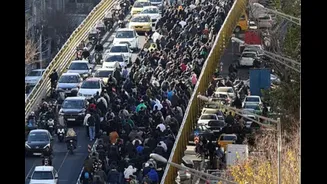






Large-scale protests spread across several Iranian cities amid a collapsing currency, runaway inflation and long-simmering political anger. With the Iranian rial plunging beyond 42,000 to the US dollar
and inflation crossing 42%, the Iranian government led by Supreme Leader Ayatollah Ali Khamenei is facing its most serious unrest since the nationwide protests triggered by Mahsa Amini’s death in 2022.
What’s Happening In Iran?
Protests erupted in Tehran, Mashhad, Isfahan, Shiraz and other major cities, with demonstrators gathering near bazaars, shopping complexes and central business districts. Videos circulating online show crowds chanting slogans such as “Mullahs must leave Iran” and “death to the dictatorship.”
Iranian-American journalist Masih Alinejad shared footage on X (formerly Twitter) showing protesters chanting in unison, calling it evidence that “the people of Iran do not want the Islamic Republic.” In central Tehran, clashes were reported as security forces used batons and tear gas to disperse crowds near government and commercial hubs.
Why Are Protests Happening In Iran?
The immediate trigger is Iran’s economic free fall. The rial’s collapse has wiped out purchasing power and sent prices of food, medicine and daily essentials soaring. Inflation has remained stubbornly high, wages have stagnated and economic hardship has become routine in the country. Iranian state media insists the unrest is primarily economic. Government-run IRNA acknowledged protests but framed them as limited demonstrations over livelihoods, particularly by traders upset over the rial’s depreciation.
What Role Does Donald Trump And US Play In Current Iran Crisis?
Iran’s economic crisis cannot be separated from years of sanctions, particularly those intensified under US President Donald Trump. After withdrawing the US from the 2015 nuclear deal during his earlier term, Donald Trump launched a “maximum pressure” campaign that sharply reduced Iran’s oil revenues and isolated it from global financial systems.
Now back in office, Donald Trump has doubled down on pressure against Tehran, linking Iran’s nuclear ambitions and its regional proxies to US national security concerns. Fresh uncertainty after the Iran–Israel conflict, renewed international sanctions and Donald Trump’s hardline rhetoric have further shaken market confidence inside Iran, accelerating the rial’s collapse.
Is US Seeking Regime Change In Iran?
The US has said that its pressure is aimed at curbing Iran’s nuclear programme and regional influence, not engineering regime change. Although, American officials and former policymakers have openly expressed support for Iranian protesters and Donald Trump has repeatedly framed the clerical regime as illegitimate and dangerous.