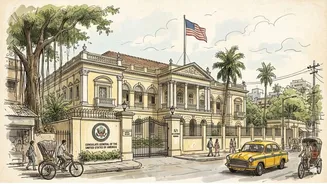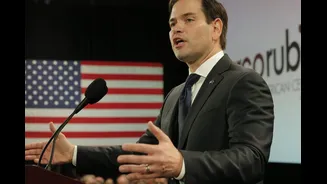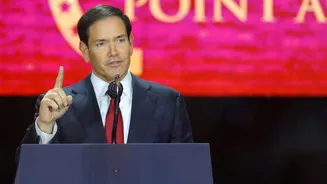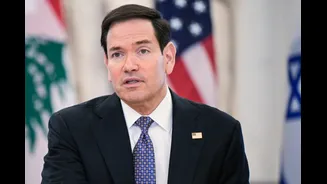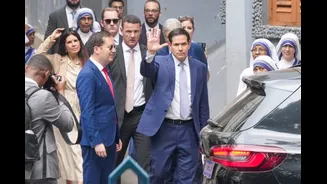



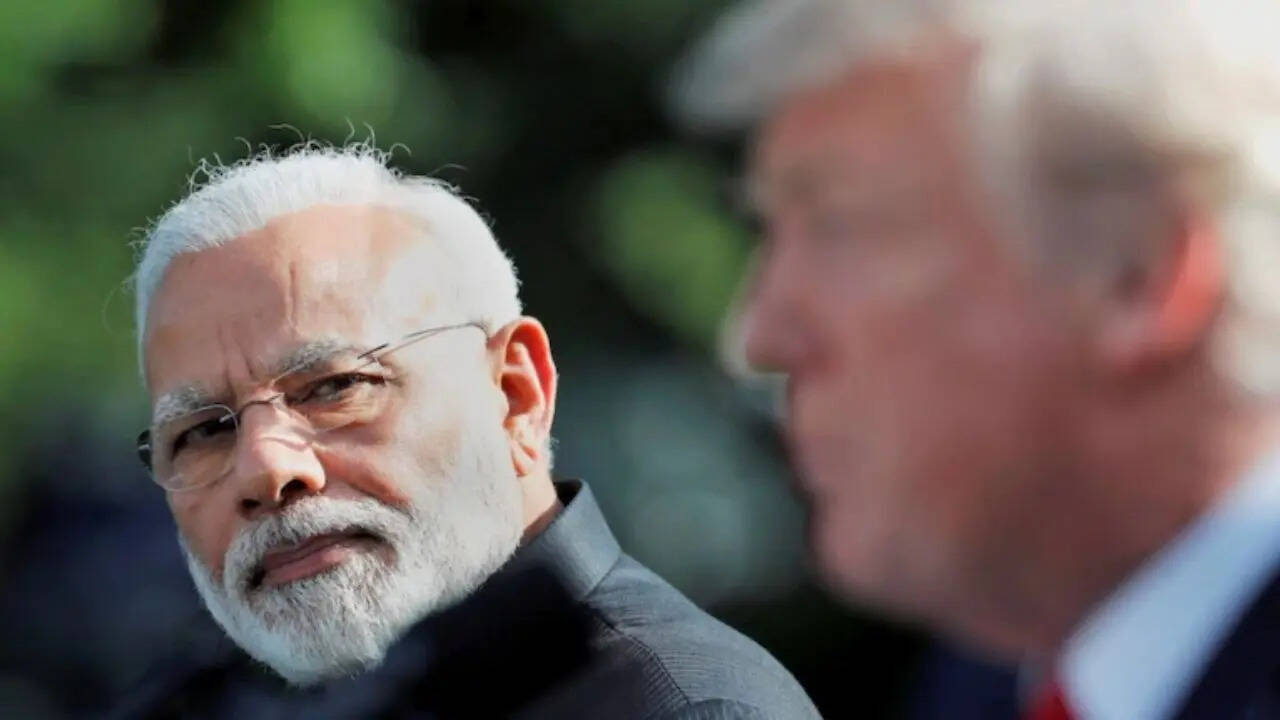
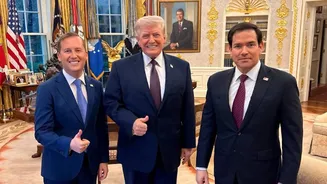

US Secretary of State Marco Rubio arrives in India at a particularly sensitive phase in ties between New Delhi and Washington.
For over two decades, India and the US steadily expanded cooperation across
defence, trade, technology and energy, while also deepening strategic coordination in the Indo-Pacific. Over time, the relationship evolved into what both governments described as a “Comprehensive Global Strategic Partnership”.
But recent months have introduced visible strain into the relationship, with tariff disputes, disagreements over Pakistan, uncertainty around the Quad, the Iran conflict and Donald Trump’s unpredictable foreign policy approach complicating ties between New Delhi and Washington.
Rubio’s India visit is therefore being viewed as far more than a routine diplomatic engagement. Alongside bilateral meetings with Indian officials, the US Secretary of State is expected to attend the Quad foreign ministers’ meeting in New Delhi on May 26 with counterparts from Australia and Japan.
Why Has The Relationship Become More Complicated?
The tensions did not emerge overnight.
Trump’s tariff policies significantly complicated trade discussions between the two countries. His repeated claims about personally helping ease tensions between India and Pakistan during last year’s military operations also caused discomfort in New Delhi, which has consistently maintained that bilateral issues with Islamabad should remain outside third-party mediation.
At the same time, Washington’s recent engagement with Pakistan’s military leadership has triggered concern within sections of India’s strategic establishment.
Former diplomat Achal Malhotra said the “first and foremost” objective of Rubio’s visit would be to “repair and mend ties between India and the US.”
“In short, relations between India and the US today are not what they were at the time President Trump took over,” Malhotra told CNBC-TV18. “Over the last 20–25 years, we have painstakingly built up this relationship, and it culminated in a comprehensive global strategic partnership.”
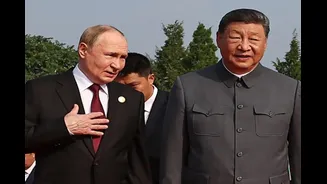
That sense of strategic drift has become more visible over the past year, particularly as Trump simultaneously pursued outreach towards both China and Pakistan while continuing tariff pressure on allies and partners.
Can Rubio ‘Reset’ The Relationship?
India and the United States still remain deeply interconnected strategically despite recent disagreements. Defence cooperation continues, trade remains substantial, and both countries still see China’s rise as a long-term geopolitical challenge.
Yet there are also signs that public perceptions in India may be changing.
An ORF survey of young Indians showed support for the United States dropping from 83 per cent in 2024 to 56 per cent in 2025. Around 71 per cent of respondents also expressed concern over America’s unpredictability, while many increasingly viewed Russia and Japan as more dependable long-term partners.
The findings reflect a broader anxiety emerging in several countries dealing with Trump’s foreign policy approach: whether Washington remains a stable strategic partner.
Rubio may nevertheless be one of the few figures within the Trump administration capable of managing the current unease. While he has strongly defended Trump’s foreign policy positions, he is also viewed as a more conventional diplomat compared to some of the administration’s more hardline political voices.
Trade Negotiations Still Remain A Major Irritant
Trade is expected to dominate Rubio’s discussions in New Delhi.
Despite multiple rounds of negotiations, a bilateral trade agreement remains unfinished, with tariff tensions continuing to overshadow the talks. The uncertainty has grown further after the US Supreme Court invalidated tariffs imposed by Trump using emergency powers, potentially affecting the structure of earlier trade understandings.
US Ambassador to India Sergio Gor recently said another American delegation would visit India in June and indicated that an interim arrangement could potentially be finalised within weeks.
But questions remain over whether tariff threats could continue hanging over negotiations even if an interim understanding is reached.
Energy Security
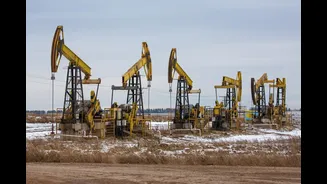
The ongoing instability in West Asia and tensions linked to the Strait of Hormuz have intensified concerns over global energy security. Nearly half of India’s Gulf-linked oil supply routes face potential disruption risks, forcing Indian refiners and policymakers to increasingly diversify suppliers.
Ahead of the visit, Rubio said Washington was willing to sell India “as much” oil as it wanted to buy.
At the same time, Venezuelan Vice President Delcy Rodríguez is also expected to travel to India for talks on oil supplies. India has significantly increased imports of Venezuelan crude in recent months and became the country’s third-largest buyer last month.
Energy expert Narendra Taneja said Indian refiners were already comfortable working with Venezuelan crude. “India does not look at the nationality of crude oil; it only looks at economics,” Taneja told CNBC-TV18.
For India, the objective is straightforward: secure stable energy supplies while reducing vulnerability to geopolitical disruptions.
The energy relationship may also expand into nuclear cooperation.
Recent policy measures, including the Shanti Act (Sustainable Harnessing and Advancement of Nuclear Energy for Transforming India Act), are being viewed as steps that could make India more attractive for American nuclear technology firms and small modular reactor developers. A delegation from the US Nuclear Energy Institute recently visited India for discussions with Indian officials and industry executives.
American and Indian officials have also discussed India’s long-term target of achieving 100 GW nuclear capacity by 2047, with Maharashtra potentially emerging as an early hub for small modular reactors.
What About Quad?
Another major question surrounding Rubio’s visit concerns the future of the Quad grouping involving India, the US, Japan and Australia.
The grouping had emerged as one of the central pillars of Indo-Pacific strategy over recent years. But uncertainty has grown after Trump’s return to office, especially as Washington simultaneously attempts to stabilise ties with Beijing despite continuing disagreements over trade, Taiwan and artificial intelligence.
Trump has notably avoided publicly emphasising the Quad since returning to power, raising questions about how central the grouping remains to his administration’s strategic priorities.
A leaders’ summit also appears unlikely for the second consecutive year.
Yet, analysts believe the Quad may become even more important amid growing geopolitical instability stretching from the Indo-Pacific to West Asia.
Former diplomat Sanjeev Yadav described the grouping as “more important now than ever in a post-Iran world order.”
“What the Quad can really do going forward is serve as a stabilising force of four democratic nations to provide economic, energy and maritime security in the Indo-Pacific,” he told CNBC-TV18.
India’s Broader Strategic Calculation
India continues to value its partnership with Washington across defence, trade, technology and intelligence cooperation. But New Delhi is also trying to preserve its strategic autonomy at a time of growing global instability, particularly amid the US-China rivalry and the Iran conflict.
That is why India has continued strengthening ties with the US while simultaneously avoiding direct involvement in conflicts involving Iran or fully aligning itself with Washington’s broader geopolitical positions.
“I think there is a calculated and considered decision on the part of the Government of India not to get directly involved in these disputes,” former diplomat Achal Malhotra told CNBC-TV18.
Rubio’s India mission therefore carries significance beyond optics. At stake is whether both countries can preserve the momentum of a relationship they spent decades building despite recent strains that have emerged under Trump’s foreign policy approach.