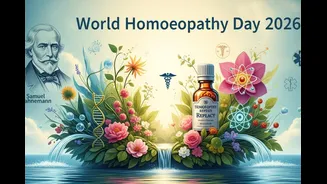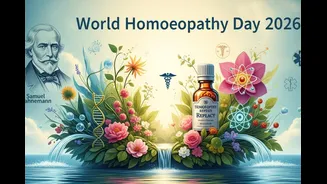








World Homoeopathy Day is observed annually on April 10, to celebrate the contributions of Dr Samuel Hahnemann, the founder of homeopathy. The day is dedicated to raising awareness about the role of homeopathy in modern
healthcare and encouraging individuals to explore its potential benefits. Homeopathy is an alternative healing system that uses highly diluted substances to trigger the body’s natural healing mechanisms.
This day serves as an opportunity for both practitioners and patients to share experiences and discuss how homeopathy has worked for them. While homeopathy remains a popular choice for many, it is important to explore both its advantages and potential risks.
So, what does science say about homeopathy?
World Homoeopathy Day 2026 Theme
The theme for this year is ‘Homeopathy for Sustainable Health,’ as announced by the Central Council for Research in Homeopathy (CCRH) under Ministry of Ayush. This theme emphasizes the role of homeopathy in integrating holistic and sustainable healthcare into public health.
Are you an advocate of indigenous homeopathic drugs? Our expert panelists will share their perspectives on #Cassia fistula and #Persia americana. Be where the action is! Register at https://t.co/XwEBWJfkkB .#WorldHomoeopathyDay #WHD2026 #Homoeopathy #PublicHealth… pic.twitter.com/ac5RM3QtpQ
— Ministry of Ayush (@moayush) April 7, 2026
The event will be marked by a symposium in New Delhi on April 10, 2026, where experts and healthcare professionals will discuss the importance of homeopathy in promoting long-term health solutions.
World Homoeopathy Day 2026: History
World Homoeopathy Day is linked to the birth of Dr Samuel Hahnemann, who was born on April 10, 1755. Hahnemann developed the principle of “like cures like,” which states that substances causing symptoms in a healthy person can be used to treat those very same symptoms in an ill person when administered in highly diluted forms.
The celebration of World Homoeopathy Day began in India in 1997 and quickly gained global recognition.
Dr RK Manchanda, a renowned homeopathic doctor, played a significant role in advocating for the day, and by 2002, the World Homeopathic Day Organizing Committee was established. This committee now helps plan and promote events across the globe.
World Homoeopathy Day 2026: Significance
The special day plays a crucial role in educating the public about homeopathy and raising awareness of its potential as an alternative medical system. This day highlights the benefits of homeopathy while acknowledging the need for more scientific validation and research into its effectiveness.
The day also provides a platform for open discussions about evidence-based treatment and the challenges faced by homeopathy as a medical practice. It advocates for greater access to homeopathic treatments, encouraging more people to choose homeopathy as a career while enhancing its global reach.
Homeopathy is often celebrated for its focus on natural healing and its emphasis on treating the root cause of illness rather than just addressing symptoms. This belief aligns with the modern trend of integrating natural and sustainable medicine into mainstream healthcare.
WORLD HOMOEOPATHY DAY 2026: BENEFITS OF HOMEOPATHY
- Personalised treatment: Homeopathic remedies are tailored to the individual, considering their overall physical, emotional, and psychological state.
- Minimal side effects: Because homeopathic medicines are diluted many times, they are generally considered safe with fewer side effects compared to conventional medications.
- Chronic conditions: Homeopathy is often used to treat chronic ailments like allergies, asthma, and arthritis, offering a natural alternative to long-term medication.
WORLD HOMOEOPATHY DAY 2026: RISKS AND CONSIDERATIONS
- Lack of scientific evidence: Despite its widespread use, there is limited scientific proof to support homeopathy’s effectiveness for many conditions.
- Delayed treatment: In some cases, relying solely on homeopathy may delay the diagnosis or treatment of serious medical conditions.
- Consult a healthcare professional: It is always advisable to consult a licensed homeopath or healthcare provider before beginning any new treatment.
WORLD HOMOEOPATHY DAY 2026: WHAT SCIENCE SAYS ABOUT HOMEOPATHY
The scientific community remains divided on homeopathy’s efficacy. Numerous studies have been conducted, but results have been inconsistent. Some studies suggest positive effects, while others show little or no benefit beyond a placebo effect.
The World Health Organization (WHO) has called for more rigorous clinical trials and scientific evaluation to better understand the potential role of homeopathy in modern healthcare.
Despite this, many patients report positive outcomes from homeopathic treatments, especially for chronic conditions. Homeopathy’s focus on individualized care and holistic healing continues to appeal to people seeking natural alternatives.
As we celebrate the day, it’s essential to recognise the ongoing importance of homeopathy in healthcare. It remains a fascinating medical system that has stood the test of time, offering a holistic approach to health and well-being.
Whether you’re a believer in its principles or simply curious about its role in modern medicine, homeopathy is a topic worth exploring further.