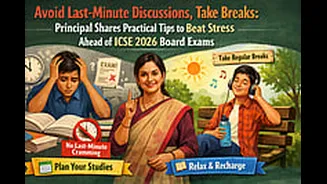









As the CBSE Class 10 English examination draws closer, many students are balancing revision plans, mock tests and last-minute nerves. The final few weeks are not meant for stress or rushed note-making.
This phase is about refining skills, improving clarity in expression and approaching the paper with confidence. A focused strategy centred on practice, precision and time management can make a decisive difference in performance.
CBSE Class 10 English Paper Preparation Tips
1. Reading Comprehension
It tests understanding, interpretation, analysis, inference, evaluation, and vocabulary through two unseen passages of varying styles, including discursive and case-based factual texts supported by visuals such as charts or graphs. To prepare:
• Practice multiple unseen passages regularly to improve speed, understanding, and comfort with different text types.
• A good strategy is to read the questions first, so you know what to look for in the passage, which helps locate answers faster and more accurately.
• Make sure your answers come strictly from the text, rather than from assumptions or prior knowledge.
• Remember that clear, precise responses are far more effective than lengthy explanations, and identifying keywords helps you locate answers quickly.
2. Writing Skills
It is one of the most scoring areas when approached correctly. Students are required to write a formal letter based on a given situation and an analytical paragraph based on inputs such as charts, graphs, maps, or cues, each within a defined word limit. To revise effectively:
• Practise every format regularly so you are familiar with the required structure and language style.
• The focus should be on clarity and organisation rather than fancy vocabulary.
3. Grammar
• You must revise common areas such as determiners, tenses, modals, subject‑verb concord, and reported speech, as regular practice strengthens accuracy and confidence.
• If the paper allows attempting a fixed number out of a larger set, attempt the most confident answers first, followed by the remaining ones.
• Even if additional responses are not evaluated, there is no harm in attempting them, as grammar answers are usually short and do not take much time.
4. Literature
• Both short and long answers require careful preparation. Students should thoroughly know their NCERT texts, including themes, character sketches, key events, and authorial intent.
• Avoid merely summarising prose or poetry and focus instead on analysis.
• For instance, explain why a character behaves a certain way or how a theme develops, and support your answers with relevant keywords from the text.
The final month should include practice with previous years’ question papers and sample papers to familiarise yourself with patterns and examiner expectations. One effective way to revise is by making concise notes or flashcards for key themes, grammar rules, formats, and important quotes, which helps make revision more efficient.
It is equally important to time yourself while practising writing answers, not just while revising, as this builds control and confidence that matter just as much as knowledge on exam day.
On exam day, the most important thing you can do is read the question paper slowly and carefully, especially questions with subparts. It’s important to keep in mind that marks are divided among subparts, so answers must be balanced in length and content. If answers are too short or too long, you risk losing valuable marks and wasting time.
Additionally, writing question numbers neatly and clearly separating sections helps examiners locate answers easily, reducing the chances of any response being overlooked or marks being miscalculated during evaluation
As the exam approaches, trust your preparation and walk in with confidence. Wishing all CBSE Class 10 students the very best. Write clearly, underline wisely, manage your time well, and give the English Exam 2026 your best shot.
(Inputs by Muneeza Abbas, Head of Department – English, Shiv Nadar School, Noida)