


As conflicts and geopolitical tensions test global cooperation, External Affairs Minister S Jaishankar has called for “reformed multilateralism”, urging greater participation and transparency in international
decision-making.
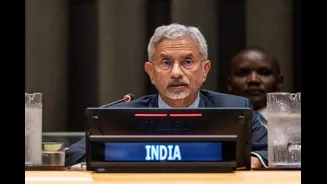
Addressing the inaugural Partners for Multilateralism, International Law, Peace and Prosperity (P4M) Summit on the sidelines of the 81st United Nations General Assembly in New York, Jaishankar said international law, rules and norms must be “scrupulously observed” for multilateralism to work effectively.
‘Reformed multilateralism is essential’
“Multilateralism will be best served when international law, rules and norms are scrupulously observed,” Jaishankar said while addressing the summit.
He said both the advocacy and practice of multilateralism needed to be strengthened. “Reformed multilateralism is therefore essential. More participative deliberations and more transparent decision-making are both overdue,” Jaishankar said.
According to the External Affairs Minister, such changes would provide “the hope and the optimism” needed by the UN system and strengthen the resolve of countries to work together.
Jaishankar said the progress achieved so far had come through collective efforts and called for existing gains to be protected while pursuing further improvements.
“Let us recognize that whatever we have achieved so far is only through collective efforts. The lesson here is to safeguard the good while striving for the better,” he said.
He added that this objective could be achieved through a range of efforts and a combination of initiatives.
On ongoing conflicts, Jaishankar said specific dimensions could be addressed while countries continued to work towards broader peace. “The 4F crisis of fuel, food, fertilizer, and finance cannot be left to itself,” he said.
Jaishankar flags global choke points
Jaishankar also called for frameworks and guardrails as new capabilities and concerns emerge in the world amid the Iran and Ukraine war. “When new capabilities and concerns arise, there is a very powerful case for frameworks and guardrails,” he said.
He also said that where there was a threat of “choke points, dominance, and disruption”, countries should encourage de-risking and diversification.
“And where there is a compelling cause or a powerful case, the like-minded must have the confidence to come together,” Jaishankar said.
Jaishankar meets EU, Ukraine officials
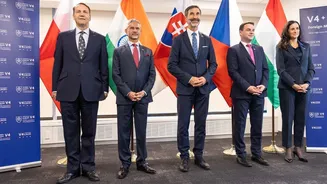
On the sidelines of the 81st United Nations General Assembly, Jaishankar also met with European Union colleagues. Discussions focused on strengthening India-EU cooperation, multilateral issues and key global developments, including the situation in the Gulf, Ukraine and the Indo-Pacific.
Ukraine’s Minister of Foreign Affairs Andrii Sybiha said on X that he was pleased to meet Jaishankar to discuss peace efforts, bilateral cooperation and international developments.
Sybiha said they discussed the situation in the Black Sea and its market implications, adding that restoring freedom of navigation was critical for global food security.
“Ukraine is ready to play a constructive role and we value India’s engagement,” Sybiha said.
They also discussed preparations for the next meeting of the bilateral intergovernmental commission, which Sybiha said would have a strong business component with an emphasis on innovation.
He said Ukraine was interested in developing active partnerships with India in science, education, technology, agriculture, IT, pharmaceuticals and other areas.