







India’s economic fundamentals remain strong enough to withstand global uncertainties and sustain growth through the remainder of the current financial year, the finance ministry said in its October 2026
Monthly Economic Review.
“Supported by a comfortable foreign exchange reserve buffer and steady upgrades to national growth projections, India’s economic fundamentals provide a solid foundation to navigate uncertainties while driving long-term, sustainable growth,” according to the report, released on October 29.
The report highlighted that India’s growth outlook continues to remain strong following stronger-than-expected gross domestic product (GDP) growth of 7.8% in the first quarter of the financial year 2026-27 (Q1 FY27). Several domestic and international agencies have subsequently revised their growth projections upwards, with estimates now broadly around 7% for the full financial year.
“The ministry’s nowcasting model estimates growth at 7.3 per cent,” the report said, adding that domestic demand, investment activity and structural reforms are expected to sustain economic momentum through the rest of FY27.
Recent goods and services tax (GST) process reforms are also expected to ease compliance requirements and working capital constraints for businesses. The Finance Ministry said healthy credit growth and recent trade agreements would provide further support to consumption, investment and exports.
Industrial Activity, Investment To Support Growth
The industrial outlook remains favourable, supported by firm production, improving order flows, stronger manufacturing sentiment and robust credit to the industrial sector.
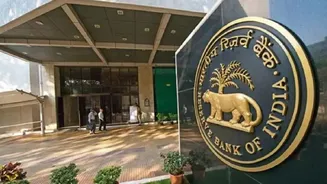
The Finance Ministry’s assessment is also in line with the Reserve Bank of India’s (RBI) October assessment, which highlighted the role of strong capacity utilisation, robust credit flows and the government’s infrastructure push in sustaining investment activity.
“At the same time, uncertainty around energy prices, supply-chain pressures and geopolitical developments remain relevant for manufacturing costs and investment decisions,” the report cautioned.
It added that sustaining industrial momentum would require translating policy support into higher production at scale, greater domestic value addition and improved export competitiveness.
These factors will be important in determining whether the current improvement in industrial activity translates into durable gains in manufacturing output and India’s position in global supply chains.
Food Prices, Crude Oil Remain Key Inflation Risks
Inflation remains a key area of concern, with domestic food supply conditions, global energy prices and liquidity conditions expected to influence the near-term trajectory of prices.
The report highlighted several government interventions aimed at containing food inflation, including the release of Kharif onions through the ‘Kanda Express’, stockholding limits on sugar dealers and cuts in basic customs duty (BCD) on crude edible oils. These measures are expected to ease price pressures on essential kitchen staples.
However, the finance ministry flagged risks from an intensifying El Niño event, which could affect soil moisture during the upcoming Rabi sowing season. Increased demand during the festive period could also exert pressure on prices.
Global developments remain another source of uncertainty. Elevated crude oil prices and disruptions to maritime freight along West Asian transit routes could increase input costs and add to imported inflationary pressures.
The report noted that recent RBI measures to provide direct dollar liquidity to public-sector oil marketing companies (OMCs) and curb currency speculation could help contain extreme exchange rate volatility and mitigate imported inflation.
“Going forward, the efficacy of the recent rate hike in containing secondary inflation effects will depend on the central bank’s active liquidity management,” it said.
The assessment underscores the importance of both supply-side interventions and monetary policy in preventing temporary price pressures from spreading across the wider economy.
Forex Reserves Provide Cushion Against External Risks
India’s external sector has remained resilient despite an uncertain global environment, with merchandise export growth and a steady services surplus helping cushion the trade balance.
According to the report, strong capital inflows, particularly banking capital, helped finance the wider current account deficit during April-August FY27.
Although pressure on the rupee persists, the country’s foreign exchange reserves remain adequate by standard reserve adequacy measures.
India’s reserves currently provide import cover of 10.3 months, offering a buffer against external shocks and supporting confidence in the country’s ability to meet its external payment obligations.
“Taken together, these developments provide a supportive foundation for external sector stability, even as global uncertainties and crude oil price risks continue,” the Finance Ministry said.
The assessment suggests that India’s external position remains manageable, although sustained pressure from elevated oil prices, global financial conditions and currency movements could pose challenges in the coming months.
Structural Reforms, Domestic Demand To Remain Growth Drivers
Looking ahead, the Finance Ministry expects domestic demand, industrial activity and credit growth to remain important drivers of India’s economic performance through the remainder of FY27.
Structural and tax reforms are expected to complement these drivers by improving the business environment, easing compliance and supporting private investment.
However, persistent geopolitical tensions, energy price volatility and tighter global financial conditions remain significant headwinds. Their impact on commodity prices, supply chains and capital flows will be important for the growth and inflation outlook.
The report concluded that India’s economic fundamentals provide a strong base for navigating these uncertainties while sustaining long-term growth.
“Overall, while persistent geopolitical frictions, energy price volatility and global financial tightening remain key headwinds, the Indian economy may remain well-positioned to sustain its expansionary trajectory through the rest of FY27,” it said.
The Finance Ministry added that strong industrial dynamics, resilient services activity and robust domestic credit growth, supported by structural and tax reforms, continue to reinforce domestic demand and private investment.
Proactive supply-side measures and direct liquidity interventions are also expected to help mitigate imported inflationary risks and preserve exchange rate stability.
Summing up the outlook, the report emphasised the importance of continued policy vigilance in managing economic risks.
“Paraphrasing a well-known quote, we can say that eternal vigilance is the price of macro stability in a fractious global environment with high supply uncertainties,” it said.